Waiting is usually the safer move if your high utilization comes from balances you haven't paid down, but a new no annual fee card can make sense if you're keeping your spending flat and paying balances down on purpose. The reason is simple: a new card adds available credit, but it doesn't erase old late payments, and it doesn't pay off a single dollar of what you owe. At a 620 score, you're in a spot where the next move matters, so it helps to know what a new card can fix and what it can't.
Key Takeaways
- A new card can lower your utilization percentage, but it can't remove old late payments or fix balances you still owe.
- Paying down your current balances usually does more for utilization than adding a new card, and it carries no inquiry or new-account risk.
- If you do apply, pick a no annual fee card recommended for fair credit and use it lightly, instead of treating the extra limit as spending room.
What does a new card actually fix at a 620 score?
A 620 sits in the range the CFPB calls near-prime.[1] That's better than where many people start rebuilding, but it often means lenders see some risk in your history, such as old late payments or high balances. Compare current offers.
Here's the part a new card touches. FICO assigns 30% of the score to amounts owed, which includes revolving utilization, and 35% to payment history.[2] A new card can help the first piece by adding available credit. It can't touch the second piece, because those late payments already happened and they stay on your report.
So think of a new card as a tool for one problem, not both. If your score is held down mostly by old lates, a new card won't move it much. If high utilization is the bigger drag, it might help, but only under certain conditions.
Already know what you want? Not sure whether another card helps or hurts at a 620? Here's how to decide.
Learn MoreHow does a new card change your utilization?
Utilization is just your balances divided by your limits. Say you owe $2,700 across cards with $3,000 in total limits. That's 90% utilization. Add a new card with a $1,000 limit, keep the same $2,700 balance, and you're at $2,700 out of $4,000, or about 68%. Better, but still high.
Now compare that with paying down. Pay $1,500 toward the same balances and you owe $1,200 on $3,000 in limits, which is 40%. No new account, no inquiry, and you owe less money too.
That's the key comparison. A new card shrinks the percentage on paper. Paying down shrinks the actual debt. Doing both is great, but if you can only do one, paying down is the one that helps both your score and your budget.
If the new card's limit is small compared with what you owe, it won't move your utilization much. Run the numbers on your own balances before you apply.
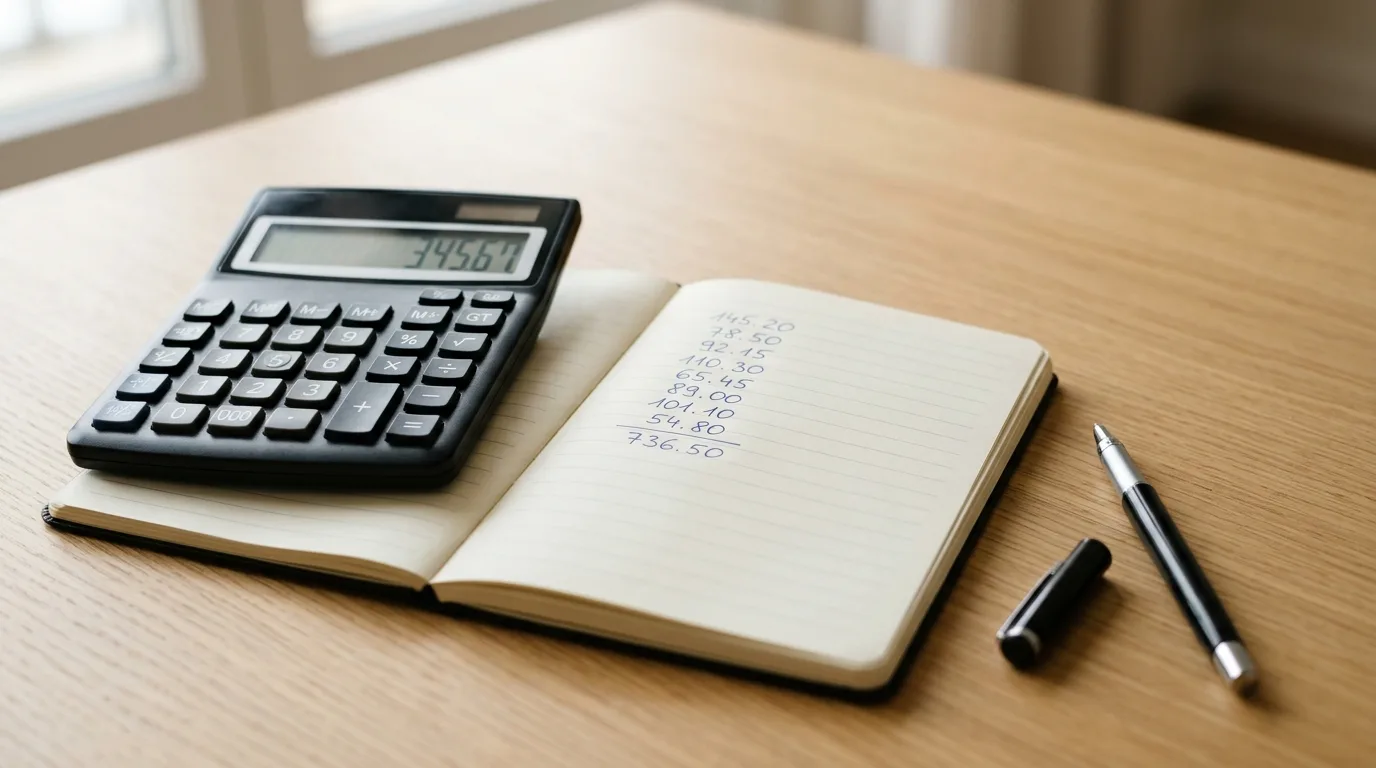
Working out a paydown plan on paper shows how much it could lower your utilization.
When can applying for another card backfire?
Every application can add a hard inquiry. For most people, one additional hard inquiry lowers a FICO Score by fewer than five points, though the effect can be greater with few accounts or a short credit history.[3] That's small on its own, but at a 620 you may be close to a cutoff that matters to you, so small drops are worth respecting.
The bigger risk is behavioral. A new limit can feel like new spending room. If balances creep up on the new card, you've ended up with more debt and the same utilization problem, just spread across more accounts.
A new card can also backfire if you've recently had limit increases and your balances grew along with them. Higher limits that got filled up don't help utilization. They just mean more debt. And if your report shows several closed accounts, remember that closed accounts with balances paid off don't count toward your limits the way open ones do, so your remaining open cards carry more of the weight.
- You're still carrying balances you haven't started paying down
- You'd be tempted to spend the new limit
- You've applied for other credit recently
- Your budget is tight enough that a missed payment is a real risk
No Annual Fee Offers
Thinking about a no annual fee card for fair credit?
| Situation | Better move | Why |
|---|---|---|
| Balances still high, budget tight | Wait and pay down | Lowers the debt itself, with no new inquiry |
| Balances falling, steady budget | A new no annual fee card could fit | Adds available credit if you don't spend it |
| Recent limit increases and growing balances | Wait | Extra limit may just mean extra debt |
| Mostly old late payments, low utilization | Wait and keep paying on time | A new card won't change the lates |
What about credit limit changes on cards you already have?
Your existing cards matter as much as any new one. A CFPB study found that after a credit-line decrease, median utilization on the affected card exceeded 90% for prime-and-below-scored consumers, and scores declined afterward, with a significantly greater drop for consumers with a recent card delinquency.[4]
That's a good reason to be careful at this stage. If you've recently gotten limit increases, keep the balances from rising to match. If a lender later lowers a limit, a high balance could push your utilization up fast. Keeping balances low on the cards you already have gives you a cushion either way.
You don't need to chase more limit to protect yourself. A steady payment pattern on a few open accounts is a stronger base than a pile of new ones.
Should you apply now or wait?
Here's a simple way to decide. Wait if your balances are still high, if you've opened accounts lately, or if your budget has little room. Use that time to pay on-time every month and push balances down. A few months of lower balances can change the picture, and you'll apply from a stronger spot.
Consider a new card if your balances are already coming down, you have a stable budget, and you want an extra open account with no annual fee that you'll use lightly. For a 620, these are generally cards recommended for fair credit. Putting one small recurring bill on it and paying it in full each month keeps the account active without adding debt.
Either way, the old late payments will fade in importance as they age and as new on-time months pile up. That's slow, but it's the part a new card can't speed up.
Ask yourself: if I got this card tomorrow, would my total balances be lower in three months? If the answer is no, paying down first is the better move.
Compare Current Offers
Ready to look at your options?
If you've paid balances down and decided a new card fits your plan, check out top offers available now.

Keeping just a few open cards with low balances can be easier to manage while you rebuild.
Learn More About Top OffersFrequently Asked Questions
Should I apply for a new card to lower my utilization at a 620 score?
Will a new card fix old late payments?
When is waiting the better choice?
How many points does a hard inquiry cost?
Is paying down balances better than adding a card?
What kind of card is recommended for a 620 score?
The Bottom Line
If you're at a 620 with old late payments and high utilization, paying down your balances is usually the better first move than adding a new card. It lowers what you owe, avoids another inquiry, and doesn't depend on you resisting a new limit.
A new no annual fee card can be a reasonable add once balances are coming down and your budget is steady. Look for one recommended for fair credit, use it lightly, and pay it in full. That way it could help your utilization without adding to the problem.