The short answer: applying now can still make sense — but only if you go in with the right card and a clear plan. Medical debt showing on your report does hurt your profile, but it doesn't automatically disqualify you from every card, and waiting indefinitely has its own cost. The real decision comes down to one question: will a new card help you make financial progress right now, or will it just add noise to a file that needs to be cleaned up first?
Key Takeaways
- Medical collections still active on your report lower your score, but newer scoring models treat them differently — understand which model a lender uses before assuming the worst.
- A 0% intro APR card opened now could let you stop paying interest on existing balances while you work down the medical debt — turning the wait into productive time.
- Once your last medical collection is removed, a meaningful score jump is possible, which could open better card terms — so timing that application can pay off too.
How Common Is Medical Debt on a Credit Report?
More people are in this situation than you might think. The CFPB reported in April 2024 that 15 million Americans still had medical bills on their credit reports, totaling more than $49 billion in outstanding medical bills in collections.[1] You are not in a rare edge case — you're in a category that lenders and card issuers see constantly. Compare current offers for fair credit.
Separately, the Federal Reserve found that 18% of U.S. adults carried debt from their own medical care or a family member's, a share that has ranged between 15% and 18% every year since 2019.[3] That persistence matters. It means your credit profile is one that scoring models and underwriters are genuinely familiar with.
Still, familiarity doesn't mean it's consequence-free. KFF found that 35% of adults with health care debt said it had negatively affected their credit score.[4] A hit to your score is real. But 'negatively affected' spans a wide range — from a minor dip to a significant drop — and where you land determines what you should do next.
Already know what you want? Medical debt on your report is more common than most people realize — and it doesn't always stop you from getting approved for a useful card. The real question is which type of card fits your situation right now, and whether applying today helps or hurts your longer-term rebuild.
Learn MoreWhat Does Medical Debt Actually Do to Your Application?
Not all scoring models treat medical collections the same way. Older models weigh medical collections the same as any other collections. Newer models, however, give less weight to medical debt specifically — recognizing that a hospital bill is a different kind of financial stress than, say, a defaulted loan. The catch: you don't always know which scoring version a particular lender uses.
Say your score is sitting at 620 because of a $1,800 ER bill that went to collections two years ago. Under an older model that score might keep you out of most unsecured cards. Under a newer model, the same profile could look meaningfully better. This is why checking your score across multiple models — not just one — gives you a more accurate read before you apply.
The other factor is recency. A medical collection from five years ago carries less weight than one reported six months ago. If your collection is aging and your other credit behaviors are solid — on-time payments, low utilization (meaning the percentage of your available credit you're using) — your overall profile may be stronger than the headline score suggests.
Before applying, look at the card issuer's credit-range recommendations and, if possible, identify whether they use a newer scoring model. A score of 620 under one model might read closer to 640 under another — enough to change which cards are available to you.

Reviewing your credit report for errors before applying can be one of the fastest ways to improve your score — and it costs nothing.
The Case for Applying Now — and How a 0% intro APR Card Fits In
Here's the scenario worth running through: you have $1,800 in medical debt in collections and another $2,400 on a high-interest card you've been carrying month to month. Waiting until the medical collection clears could take a year or more. Meanwhile, that $2,400 keeps accruing interest every single month.
A 0% intro APR card changes that math. If you can transfer that $2,400 balance to a card with a 0% intro APR period, you stop the interest clock entirely for the length of that period. That's not a guarantee of savings — it only works if you're actually paying the balance down during the intro window, and you'll need to check for any balance transfer fee. But used correctly, a 0% intro APR card could help you save significantly on interest while you're also working on the medical debt.
The deeper point: waiting doesn't automatically improve your situation. Applying strategically — choosing a card recommended for fair credit, keeping the balance low, and making every payment on time — starts building positive history immediately. That positive history is exactly what your file needs to offset the collections account.
Cards recommended for fair to good credit often include no annual fee options and sometimes even 0% intro APR offers on purchases or balance transfers. They won't have the most generous rewards, but they serve the actual job at hand: giving you a responsible credit tool while your profile is mid-rebuild.
0% Intro APR Offers
See Which Cards Fit a Profile With Medical Collections
| Situation | Likely Better Move | Why |
|---|---|---|
| Score below 580, active collection | Wait or use a secured card | Unsecured applications may result in denials; secured card builds history with less risk |
| Score 580–669, high-interest debt accumulating | Apply now for a 0% intro APR card | Stopping interest on existing balances outweighs the timing cost of waiting |
| Score 580–669, no other high-interest debt | Weigh waiting for collection removal | A 25-point score jump post-removal could unlock better card terms |
| Collection settled, aging on report | Apply now | Worst score damage is likely past; positive history helps from here |
| Collection about to age off (6–12 months) | Wait it out | Natural removal + score bump may be the fastest path to top-tier offers |
The Case for Waiting — When a Cleaner Profile Pays Off
Waiting has real upside too, and the numbers back it up. When the last medical collection was removed from a consumer's report, the average credit-score increase in the first quarter after removal was 25 points, according to CFPB analysis.[2] Twenty-five points is not trivial — it can move someone from fair credit to good credit, which unlocks meaningfully better card terms.
Better terms mean lower ongoing APRs, longer 0% intro APR periods, and potentially higher credit limits right out of the gate. In our running example, a 25-point bump could mean the difference between a 0% intro APR period of 12 months and one of 18 months — giving you six more months to pay down that $2,400 before interest kicks in.
Waiting also makes sense if applying now would likely result in a denial. A hard inquiry — the credit check that happens when you apply — does ding your score slightly, typically by a few points. If your score is already strained, collecting denials makes things worse. The smarter move in that case is to focus on paying down or settling the medical debt, let it age or be removed, and then apply from a position of genuine strength.
- If your score is below 580, waiting to clear or pay off the collection often makes more sense than applying and risking denials.
- If the medical collection is recent (under a year old), its score impact is at its peak — clearing it first may produce the fastest score improvement.
- If you have no other high-interest debt stacking up, the urgency to open a 0% intro APR card is lower — waiting costs less.
- If the collection is scheduled to age off your report within the next 6-12 months, waiting for natural removal could be the lowest-effort path to a better profile.
How to Decide: A Simple Framework
The decision comes down to three honest questions. First, do you have other high-interest debt accumulating right now? If yes, a 0% intro APR card could help you stop the bleeding while you address the medical debt — applying now may make sense. If no, the urgency drops and waiting for a cleaner profile is easier to justify.
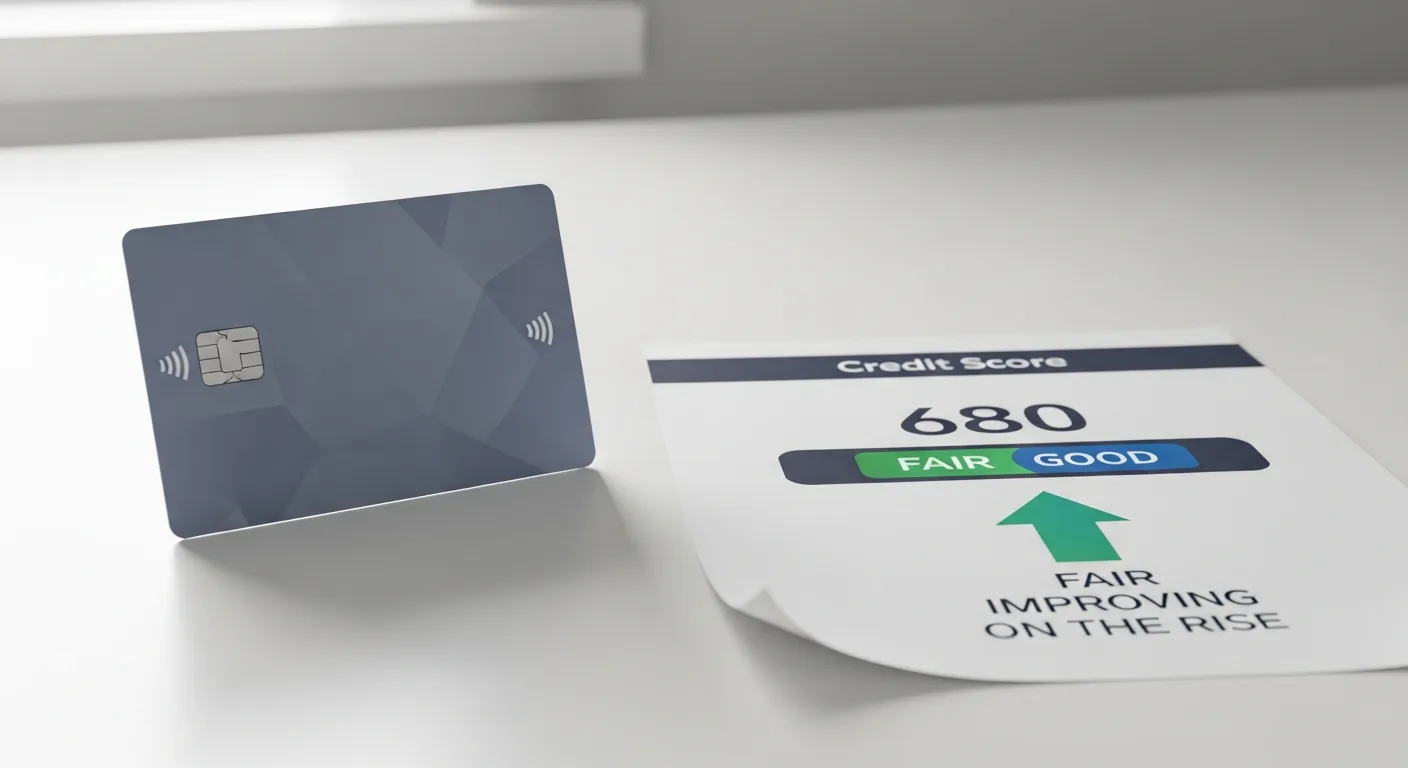
Second, where does your score actually sit today? If it's in the fair range — roughly 580 to 669 — there are cards recommended for that range, and applying strategically is reasonable. If it's below 580, a secured card (one where you put down a deposit that becomes your credit limit) may be a better starting point than an unsecured card. It's less likely to result in a denial and still builds positive history.
Third, is your medical debt in active collections or already paid/settled and just aging on your report? If it's settled and aging, a 0% intro APR card application now has less downside — the worst of the score damage is likely already behind you. If it's still active and growing, resolving it first (even settling for a reduced amount) before applying tends to produce a stronger overall outcome.
Before applying for anything, pull your credit reports from all three bureaus and look specifically at the medical collection entry. Errors in medical billing are common — wrong amount, wrong date, wrong account status. A successful dispute that removes or corrects an inaccurate entry could improve your score faster than any card strategy, and it costs nothing.
If You Apply Now: What to Look for in a Card
You're not looking for the flashiest card on the market. You're looking for a card that does a specific job: either give you a 0% intro APR window to manage existing balances, or simply provide a responsible credit line you can use and pay off monthly to build positive history.
Prioritize no annual fee. Adding a yearly cost to a profile that's already under financial pressure doesn't make sense unless the card offers something concrete that offsets it. A no annual fee card with a 0% intro APR on balance transfers lets you reduce your interest costs without adding a fixed expense.
Keep your utilization low once you have the card. Using more than 30% of your available credit limit shows up negatively in scoring models — so if you open a card with a $1,500 limit, try to keep the balance under $450 at any given time. That discipline, combined with consistent on-time payments, is how a new card becomes a net positive on your file rather than just another account.
- No annual fee — avoid adding fixed costs during a financially tight period.
- 0% intro APR on balance transfers or purchases — gives you interest-free breathing room if you have balances to manage.
- Recommended for fair to good credit — ensures the card is realistic for your current score range.
- Low or no balance transfer fee — worth checking if you plan to consolidate existing balances.
- Reports to all three major credit bureaus — essential for building positive history across your full profile.
Compare Current Offers
Ready to Find a Card That Fits Where You Are Now?
Whether you decide to apply now or wait for a cleaner profile, the best move is to know your options. Compare current offers and find cards recommended for your credit range — no guessing required.

A 0% intro APR period works best when you pair it with a concrete payoff timeline — know the end date and plan your monthly payments around it.
Learn More About Top OffersFrequently Asked Questions
Can I get a credit card while medical debt is still on my report?
Will paying off medical debt improve my score before I apply?
Is a 0% intro APR card a good idea while carrying medical debt?
Does a hard inquiry make my situation worse if I have medical collections?
Should I settle the medical debt before applying for a card?
What type of card makes sense if I can't qualify for an unsecured card yet?
How long does a medical collection stay on my credit report?
The Bottom Line
Medical debt on your credit report is a genuine obstacle, but it's not a stop sign. Fifteen million Americans are navigating this same file right now.[1] Whether you apply today or wait for a cleaner profile depends on one honest assessment: is there interest-bearing debt piling up that a 0% intro APR card could freeze, or is your main job right now to let the medical debt resolve and then apply from a stronger position?
If you do apply now, pick a no annual fee card recommended for fair credit, keep your balance well below 30% of the limit, and pay on time every month. If you wait, dispute any errors on your medical collection first, and plan your application for shortly after the collection is removed — when a meaningful score bump may be on the way. Either path can work. The one that doesn't work is doing nothing while interest accumulates and the collection ages without any positive history being added to offset it.