You can apply for a credit card the day after your bankruptcy is discharged — but whether that's the right move depends entirely on which card you're targeting. A no-fee secured card is a genuinely smart first step, often worth opening within the first month. An unsecured rewards card from a major issuer? That conversation gets easier with at least a year or two of post-discharge history behind you.
Key Takeaways
- You can open a no-fee secured card almost immediately after discharge — it's one of the fastest ways to start rebuilding.
- Unsecured cards become a realistic option after one to two years; the gap in card offers narrows significantly by year two to five post-filing.
- The bankruptcy mark stays on your credit report for up to 10 years, but your score can recover well before it drops off.
The honest answer: right away — if you pick the right card
The day your bankruptcy is discharged, the rebuild clock starts. Every month you sit without any active credit account is a month you're not building the payment history that scoring models care about most. Compare secured and unsecured rebuild cards.
A no-fee secured card — one where you put down a refundable deposit, typically around $200 to $500, that becomes your credit limit — is available to most people almost immediately after discharge. There's no benefit to waiting on this type of card. The sooner you open it, pay it in full each month, and keep your balance low relative to the limit (under 30% utilization — meaning if your limit is $300, keep your statement balance under $90), the sooner you start generating positive history.
Where the calculus changes is for unsecured cards, especially those with rewards or cash back. Those issuers weigh your post-discharge track record heavily. Walk in with zero months of rebuilt history and even a decent deposit won't help — there's no deposit to offer. Give it twelve to twenty-four months of clean secured-card usage first.
Opening a no-fee secured card within 30 days of discharge is one of the highest-leverage moves you can make. Every on-time payment from day one compounds into your credit history. Waiting six months to 'feel ready' just delays the payoff.
Already know what you want? Bankruptcy discharge is the starting line, not the finish line. The right card at the right time can compress years of credit rebuilding into months.
Learn MoreWhat the data actually says about your options over time
Bankruptcy information can remain on your credit report for up to 10 years from the order or adjudication date, so lenders may still see the filing long after discharge.[1] That sounds discouraging. But lenders don't treat a one-year-old filing the same as a nine-year-old filing.
One Federal Reserve study found that a household that filed for bankruptcy one year earlier had only about 14% of the likelihood of a comparable non-filer getting a new credit card. That figure rose to 49% for filers two to five years out, and reached 66% for filers six to nine years out, becoming statistically indistinguishable after nine years.[3] In plain terms: your options roughly triple between year one and year two-to-five.
Separately, over one-fifth of personal bankruptcy filers received at least one credit card offer in a given month, with the likelihood even higher for more recent filers.[2] Issuers actively market to people in rebuild mode — which means if you're getting offers in the mail, it's not a scam. It's a calculated business decision on their end. Your job is to evaluate those offers carefully, not just accept the first one.

Reviewing your credit report within days of discharge is one of the highest-value moves you can make.
Why a no-fee secured card beats waiting
Here's the non-obvious insight most people miss: waiting passively for your score to recover on its own is far slower than actively using a secured card. Your score doesn't improve much while you sit on the sidelines. It improves when positive payment data accumulates.
Think about someone discharged in January. If they open a no-fee secured card in February and pay it in full every month, by January of the following year they have 11 months of perfect payment history. That history is real and visible to the next issuer they apply to. Someone who waited the same twelve months has none of it.
An NBER study on credit score recovery found that removing a bankruptcy flag was associated with credit scores rising by about 7.1 points in the first year, credit limits about 25% higher by year four, and card availability about 14% higher by year four.[4] The trajectory is real — but you accelerate it by being active, not passive.
The no-fee part matters too. An annual fee on a secured rebuild card is a sunk cost. You're already putting up a deposit. There's no reason to also pay a yearly fee for the privilege of rebuilding credit — no-fee secured cards do the exact same job.
- No annual fee means zero cost to keep the account open long-term, which helps your average account age over time.
- A refundable deposit means you get your money back when you upgrade or close the account responsibly.
- Low utilization on a secured card reports to bureaus the same as low utilization on any card — the benefit is identical.
- Some secured cards graduate to unsecured after consistent on-time payments, which keeps your account history intact.
Cash Back Offers
Ready to find a card that fits your rebuild stage?
| Stage | Time After Discharge | Best Card Type | Primary Goal |
|---|---|---|---|
| Immediate rebuild | 0–3 months | No-fee secured card | Start payment history from day one |
| Early rebuild | 3–12 months | Keep secured card, no new apps | Grow history, correct report errors |
| Mid rebuild | 12–24 months | No-fee unsecured (fair credit) | Add account type, keep utilization low |
| Active rewards stage | 24+ months | No-fee cash back card (good credit range) | Earn rewards while maintaining clean history |
When does it make sense to apply for an unsecured card?
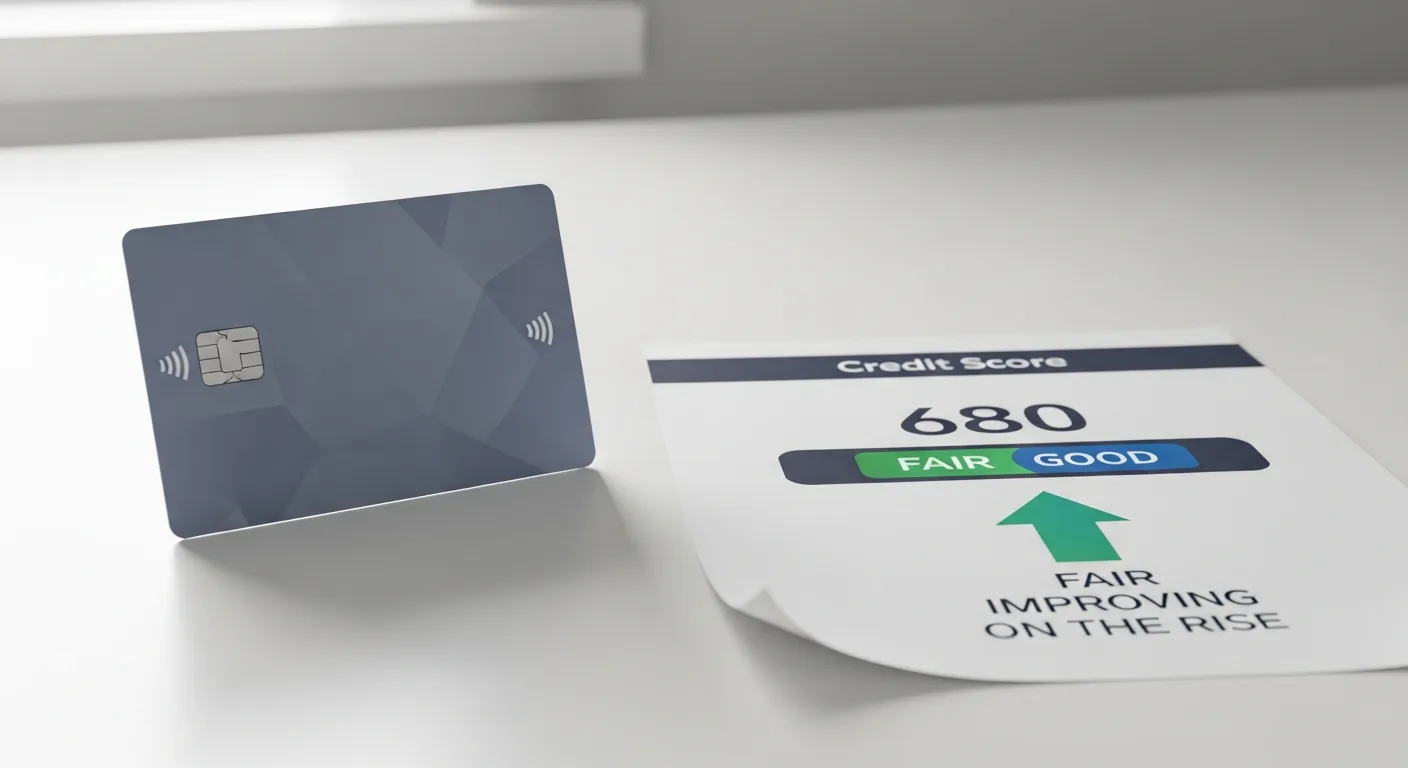
Use this simple benchmark: one to two years of post-discharge, on-time payments on at least one account, a credit score back above the fair range (generally considered 580 to 669), and ideally no new negative marks since discharge.
At that stage, unsecured cards recommended for fair credit become realistic. These typically carry no annual fee or a modest one, and some offer straightforward cash back — a flat rate on all purchases, or a slightly higher rate in a category like groceries or gas. The rewards won't be spectacular, but that's fine. The goal at this stage is still to build history and demonstrate you manage credit differently than you did before.
A single well-managed unsecured card after year two, layered on top of the secured card you opened at discharge, gives you a credit mix and a longer average account age. Both help your score. Don't close the secured card when you open the unsecured one — keep both open and let time do its work.
Each application triggers a hard inquiry — a temporary score dip. After bankruptcy, your score is already working from a lower baseline. Applying for three cards in one month to 'see what sticks' could actually set you back. Pick one, use it well, then revisit in six to twelve months.
The hidden cost of moving too fast to rewards cards
Once people hit the two-year mark and start seeing unsecured approvals, there's a temptation to jump straight to a cash back card with a sign-up bonus and a higher limit. That can work, but there's a trap: cards designed for good to excellent credit often come with higher interest rates for those approved at the lower end of their range.
If you're not paying your balance in full every month — which you absolutely should be after bankruptcy — that rate eats any cash back you earn and then some. A 2% cash back rate on a $1,000 balance earns you $20. Carrying that balance at a high interest rate for even one month costs far more.
The smarter sequence: secured no-fee card immediately after discharge, unsecured no-fee card in the fair-credit range after one to two years, then a rewards card with meaningful cash back once your score is solidly in the good range and you're confident you'll pay in full every cycle. Three cards over three to four years, not three cards in three months.
Practical steps to take in the first 90 days after discharge
Pull your credit reports from all three bureaus as soon as possible after discharge. Accounts included in the bankruptcy should be marked as discharged — not still showing as past due or with balances owed. Errors here can hurt your score for years and take time to dispute and correct. Flag anything that looks wrong immediately.
Once your reports are clean, apply for a single no-fee secured card. Use it for one small recurring expense — something like a streaming subscription or a weekly grocery run — and set up autopay for the full statement balance. You never want to carry a balance; you want the positive payment history without the interest.
After six months, check your score again. Most secured card issuers report to all three major bureaus, so you should see movement. After twelve months, you'll have a real baseline to decide whether an unsecured card makes sense yet, or whether you stay the course for another six to twelve months.
- Pull credit reports immediately after discharge and dispute any discharge-related errors.
- Open one no-fee secured card within the first 30 days.
- Use it for a small, recurring charge and autopay the full balance monthly.
- Check your score at the six-month and twelve-month marks to gauge progress.
- Apply for an unsecured card only after at least twelve months of clean history — ideally closer to twenty-four.
Compare Current Offers
Compare cards recommended for rebuilding credit
Whether you're one month or two years out from discharge, there are cards designed for exactly your situation. Check out current offers and find the right starting point.

A secured card's deposit is refundable — and the credit history it builds is permanent.
Learn More About Top OffersFrequently Asked Questions
How soon after bankruptcy discharge can I apply for a credit card?
Will lenders even consider me right after bankruptcy?
Does waiting longer actually help my odds?
Should I start with a secured or unsecured card after bankruptcy?
Will the bankruptcy still show up on my report even after I rebuild?
Is it worth getting a cash back card during the rebuild phase?
How many cards should I open after bankruptcy?
The Bottom Line
The best time to apply for a credit card after bankruptcy is almost always sooner than people think — as long as you're applying for the right card. A no-fee secured card opened within the first month of discharge puts positive payment history to work immediately, which is exactly what your score needs. Waiting passively doesn't speed up the recovery; consistent, responsible usage does.
The path looks like this: secured card now, unsecured fair-credit card in a year or two, cash back rewards card once you're solidly in good-credit territory. Each step earns its place by actually improving your profile for the next one. Take it one card at a time, pay in full every month, and the ten-year bankruptcy mark on your report will matter far less than the clean track record you've built on top of it.