If you want to keep your own credit history after you get married, open your own no annual fee card instead of relying only on an authorized user spot. A card in your name builds your record, and you can still use it for shared bills. Becoming an authorized user is easier and can work well for simple household spending, but the account belongs to someone else, and you give up control over it. The best setup for many couples is a mix: one card each, plus a clear plan for who pays which bills.
Key Takeaways
- Your own no annual fee card gives you control and a credit history that is fully yours, which matters if you both want to stay independent.
- An authorized user spot is simple for shared spending, but the primary cardholder owns the account and is responsible for the balance.
- You don't have to choose just one: many couples keep a card each and add each other as authorized users on one shared card for household bills.
What's the difference between your own card and an authorized user spot?
When you open your own card, the account is in your name. You apply with your own information, you're responsible for the balance, and the account builds your credit history on its own. Compare current no annual fee offers.
When you become an authorized user, you get a card tied to someone else's account. You can spend on it, but the primary cardholder is the one legally responsible for the bill, and they decide whether the account stays open, what the limit is, and who gets added or removed.
Sharing cards is common. The CFPB found that 24.7% of consumers with a credit record shared at least one credit card with a credit-linked household member, equal to about 30.7% of consumers who had a credit card.[1] So if you're thinking about it, you're far from alone.
Already know what you want? Combining finances doesn't mean combining credit. Here's how to pick the setup that fits your household.
Learn MoreWhich one protects your separate credit history?
Your own card does. The payment history, the limit, and the balances all belong to you. If your spouse makes a late payment on their card, it doesn't touch yours.
An authorized user account is different. You depend on someone else's habits. If they keep the balance low and pay on time, that can help your record. If they run up the balance or miss a payment, it could hurt you too, even though you didn't cause it.
Authorized user status is also more common as a starting point than as a long-term plan. In one CFPB study, about 9.6% of consumers who established a credit history did so by becoming an authorized user, compared with roughly 38% who became credit visible through a card account of their own.[2] If you already have credit, your own card is usually the stronger move.
Before you accept an authorized user spot, ask your spouse about their payment habits and balance. That account could appear on your report, so you want to be comfortable with how it's handled.

Walking through the monthly bills first makes it easier to pick which card should handle them.
When does becoming an authorized user make sense?
It works well when one of you has little or no credit history and the other has a long, clean record. It can also work when you just want a second card for groceries and bills without another application.
It's a simple setup, too. Authorized user cards don't take a separate application for each person, and one monthly statement shows everything. That makes it easy to see where the money went.
Many people end up here. The CFPB found that more than 12 million consumers were authorized-user-only cardholders in its mid-2017 data, roughly 5% of the adult population.[3]
- One of you is new to credit and the other has a solid history
- You want one card and one statement for household bills
- You trust the primary cardholder's payment habits
- You don't mind that the account isn't yours
No Annual Fee Offers
Ready to look at no annual fee options?
| Setup | Who owns the account | Credit history | Best for |
|---|---|---|---|
| Your own no annual fee card | You | Builds your own record | Couples who want separate credit |
| Authorized user on a spouse's card | Your spouse | May show on your report, but you don't control it | Simple shared spending or a thin credit file |
| Card each plus one shared card | Each person owns their own; the shared card has one owner | Each person keeps their own record | Couples who want independence and simple bills |
When is your own no annual fee card the better move?
Open your own card if you want independence, if you already have your own credit history to protect, or if you want to earn rewards in your own name. With no annual fee, you can keep the card open for years without paying to hold it, and that long history can help your credit.
It's also the safer pick if you could ever be in a different spot financially than your spouse. A card in your name stays with you regardless of what happens to someone else's account.
Keep in mind that applying creates a hard inquiry, which can cause a small, temporary dip in your score. These cards are recommended for good to excellent credit, so look at your own credit range before you apply. You can compare current offers to see what's out there.
Can you do both and keep household spending simple?
Yes, and it's often the best answer. Each of you keeps a no annual fee card in your own name for personal spending. Then you choose one card for shared bills like groceries, utilities, and streaming, and add the other person as an authorized user.
Sharing more than one card is common. Among credit-linked consumers who shared a credit card, 54.1% also shared at least one additional credit card.[4]
Here's a simple example. Say your shared household bills come to $2,000 a month. You put them all on the shared card, and your spouse has a card on the same account. At the end of the month, you pay the full $2,000 statement from your joint checking account. Each of you still has a personal card, so your own credit stays active and separate.
If one card handles all household bills, set up autopay for the full statement balance from the account you both fund. That avoids interest and keeps one person from carrying the burden.
How do the options compare?
Here's a quick side-by-side to help you decide which setup fits your situation.
Compare Current Offers
Find a no annual fee card that fits your household
Check out top offers available now and compare features side by side before you decide.
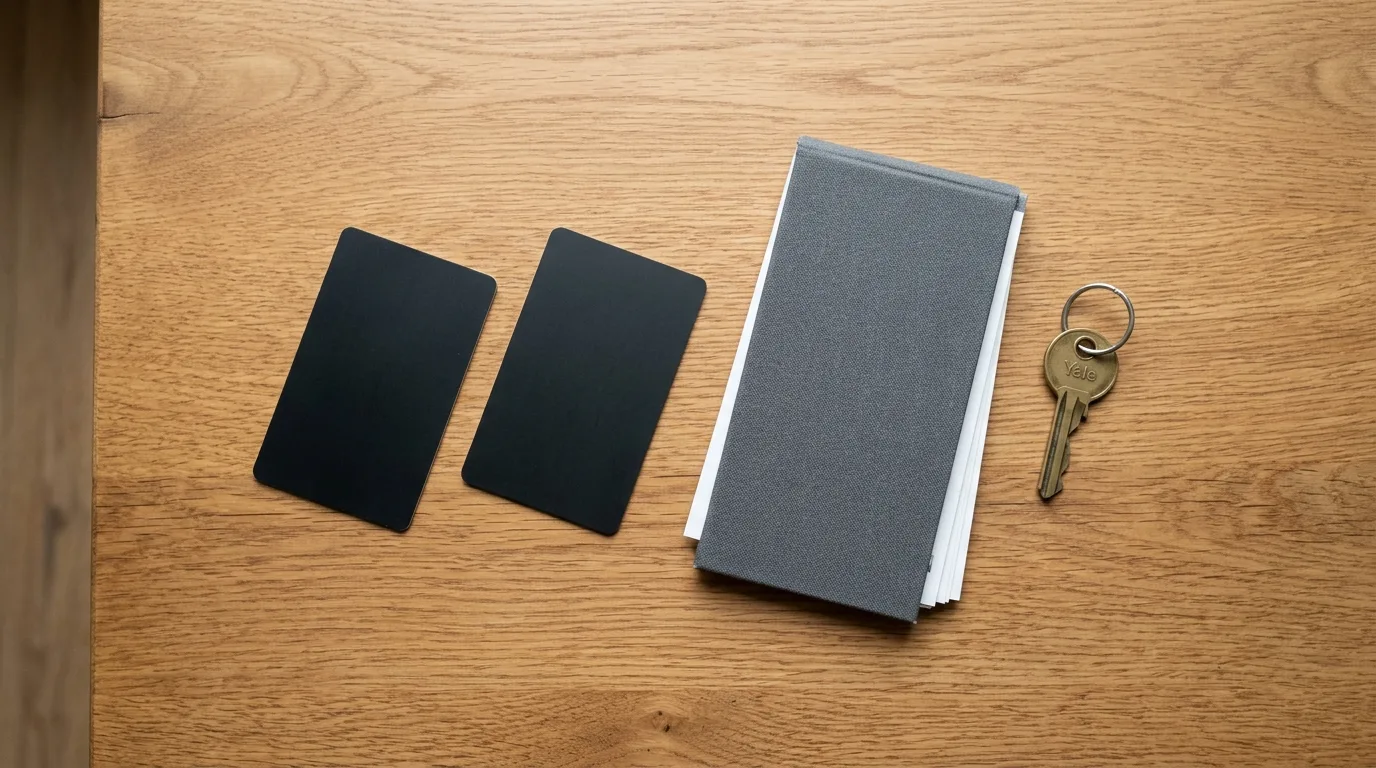
Keeping a card in each name while sharing one for household bills can give you both independence and simplicity.
Learn More About Top OffersFrequently Asked Questions
Should I open a new no-fee card or become an authorized user after getting married?
Does becoming an authorized user keep my credit separate?
Can we simplify household spending without merging all our credit?
Who is responsible for the bill on an authorized user card?
Is a joint credit card a better option?
Does a no annual fee card make sense for a shared card?
Will opening a new card hurt my credit?
The Bottom Line
If you're combining finances and want to keep your own credit history, open your own no annual fee card. It's yours, it builds your record, and it costs nothing to keep. An authorized user spot is a fine add-on for shared bills, but it works best as a supplement rather than your only card.
The simplest plan for many couples is a card each, plus one shared card for the household. Pay it in full each month, and you could keep your spending organized without giving up your independence.