Yes, a no-fee card can make sense after travel drops if your annual fee no longer matches the value you use. The key question is whether your current card still earns back its cost. If flights, hotel stays, and restaurant tabs are no longer a regular part of your life, a no-fee card built around your actual spending can outperform a premium card that charges you every year for perks you rarely redeem.
Key Takeaways
- If your travel and dining spending has dropped significantly, you're likely paying an annual fee for perks you no longer use enough to justify the cost.
- No annual fee cards can earn strong, flat-rate or category rewards on everyday spending like groceries and gas — the categories that tend to rise when dining out falls.
- Downgrading to a no-fee version of your existing card, rather than canceling, protects your credit history and keeps your account open at no cost.
The myth: no annual fee means giving something up
Most premium travel cards are designed around a specific kind of lifestyle — frequent flights, hotel stays, and regular restaurant spending. When that lifestyle is yours, the math works. A generous annual fee can be offset by lounge visits, travel credits, and bonus points on dining. Compare no annual fee cash back cards.
But here's what the marketing glosses over: annual-fee cards make up only 16% of general-purpose credit card accounts, yet they collectively generated $8.7 billion in annual fees in 2024.[2] That's a lot of people paying for a card built around a lifestyle that may no longer reflect their actual week.
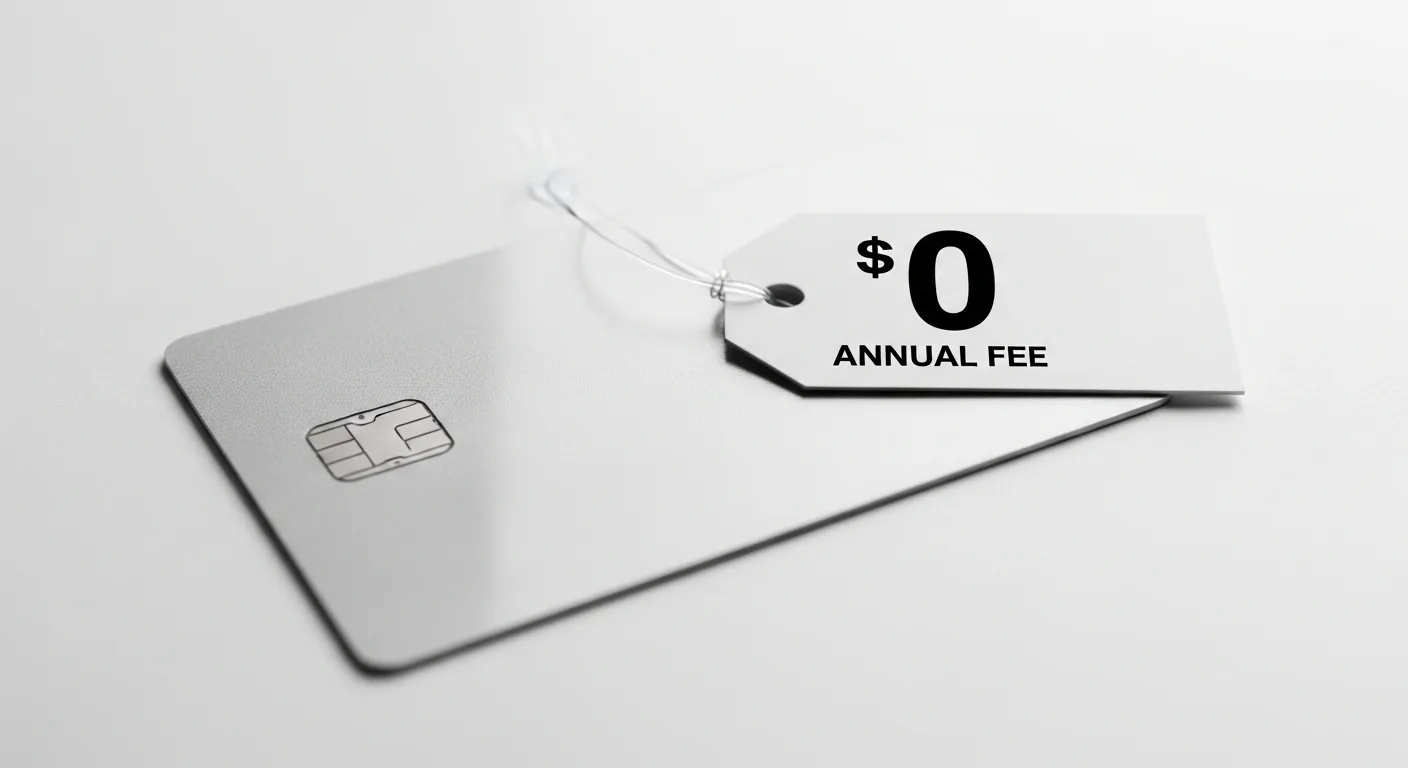
no annual fee card doesn't mean settling. It means aligning your card to your real spending — and stopping the quiet drain of paying for perks that collect dust.
Already know what you want? Life changed. Your card setup should too. Here's how to decide whether a no-fee card makes sense — and how to make the switch without losing anything.
Learn MoreWhen does the math actually flip in favor of no-fee?
Picture this scenario: you used to fly several times a year and eat out frequently. Your premium card rewarded those habits generously. Now, you've moved, changed jobs, had a child, or simply shifted priorities — and restaurant meals have become an occasional treat rather than a weekly routine.
U.S. households spent an average of $3,945 per year on food away from home in 2024.[1] If your household has dropped well below that — say, you're cooking at home most nights now — the bonus dining rewards on your travel card are doing much less work for you than they used to.
The flip point is straightforward: add up every concrete dollar of value you actually extracted from your premium card last year — travel credits you used, points you redeemed, perks you genuinely touched. If that number is less than the annual fee, the card is costing you money. A no-fee card with honest everyday rewards would have come out ahead.
Pull up last year's card statement. Count the number of times you redeemed a travel-specific benefit. If you can count them on one hand, run the math. Annual fee minus actual redeemed value = your true cost of keeping that card.

Running the numbers on your current card's value only takes a few minutes — and can save you money every year.
What no annual fee cards can actually earn you now
Here's what surprises most people making this switch: the rewards landscape on no-fee cards has gotten genuinely strong. About three in four general-purpose credit card accounts are rewards cards, and consumers earned more than $40 billion in rewards on major issuers' cards in 2022.[3] A significant slice of that came from no-fee products.
When travel and dining drop, grocery, gas, and household spending typically rise — or at least hold steady. No-fee cash back cards are frequently designed around exactly those categories. A card earning elevated cash back on groceries and gas, with a flat rate on everything else, could deliver real annual value on the spending you're actually doing.
58% of cardholders use cash back cards rather than points or miles cards, and a common reason for making that shift is moving to lower or no annual fees.[4] That's not a downgrade — for most people in a post-travel phase, cash back on everyday spending is a cleaner, more tangible reward than accumulating miles you might not redeem for years.
Going back to the scenario above: if you're now spending heavily on groceries, a no-fee card earning strong cash back in that category could put a meaningful amount back in your pocket each year — with no fee working against you.
- Flat-rate cash back on all purchases — simple, predictable, no category tracking needed.
- Elevated rates on groceries or gas — strong fit if those now dominate your monthly spend.
- No foreign transaction fees — useful if you still travel occasionally, even without a premium card.
- Purchase protection and extended warranty — solid everyday benefits that don't require a travel lifestyle to use.
No Annual Fee Offers
Ready to find a no-fee card that fits your new spending pattern?
Should you cancel your travel card or downgrade it?
This is the most important tactical question — and most people get it wrong by defaulting to cancellation. Closing a credit card reduces your total available credit, which can raise your credit utilization ratio (the percentage of your available credit you're using). It also means that card's history eventually ages off your report. Both effects can ding your credit score.
The smarter move in most cases is a product change, sometimes called a downgrade. Many issuers let you switch your premium card to a no-fee version within the same card family. You keep the account number, the credit history, and the credit limit — you just stop paying the annual fee. The account stays open, your utilization stays low, and nothing closes.
There's one catch worth knowing: if your premium card has a large stash of points tied to a travel program, downgrading may change what you can do with those points. Some issuers let you keep and transfer them; others reduce your redemption options when you move to a no-fee product. Check the issuer's policy before you request the downgrade so you don't lose value you've already earned.
Request a product change before your next annual fee posts — not after. Once the fee hits your account, you may need to request a refund, which isn't always guaranteed. Call or chat with your issuer a week or two before the renewal date.
How to build a simple, keep-forever no-fee setup
The goal after a life change like this isn't to find the flashiest card — it's to build a setup you never have to second-guess. A keep-forever no-fee card does a few things well: it earns steady rewards on your real spending, it costs nothing to hold when spending drops for a month, and it keeps your credit profile healthy over the long run.
For most people in this situation, the ideal setup is one primary no-fee card that earns well on your top one or two spending categories, plus the downgraded version of your old travel card kept open at zero cost. Two open accounts, no annual fees, healthy utilization, and rewards that actually match your life.
If you want to optimize a little further, consider whether a second no-fee card covering a complementary category — gas, for instance, if your primary card rewards groceries — could add meaningful value. Keep it simple: two cards maximum, no fees, and a clear picture of which card goes in your wallet for which purchase.
What to watch out for when you make the switch
A few things can trip people up in the transition. First, don't apply for a new no-fee card and cancel your old one on the same day. Apply first, get approved, then decide what to do with the old card — ideally downgrade rather than close it, as we covered.
Second, watch for deferred interest offers. These are sometimes bundled into card promotions and are not the same as a 0% intro APR offer. With deferred interest, if you carry any balance at the end of a promotional period, interest is charged retroactively on the original amount — unlike a true 0% intro APR offer, where interest only applies to any remaining balance going forward. If you're drawn to a card with a promotional financing offer, make sure you understand which type you're looking at.
Third, give yourself a full 30 days with the new card before deciding your old one goes. Use the new card for a normal month of spending, track what you earned, and compare. The numbers will tell you clearly whether the switch made sense.
Compare Current Offers
Find the right no-fee card for everyday spending
The best card for your current life isn't the one with the most perks — it's the one whose rewards actually match where your money goes. Compare no annual fee options recommended for good to excellent credit and see what fits.

A simple two-card setup — one for everyday rewards, one kept open at no cost — covers most post-travel needs cleanly.
Learn More About Top OffersFrequently Asked Questions
Should I switch to a no annual fee card if I'm traveling and dining out less?
Will closing my travel card hurt my credit score?
What rewards should I look for on a no annual fee card if I'm spending more on groceries and gas now?
Is it ever worth keeping a premium travel card even if I travel less?
Can I lose my rewards points when I downgrade a card?
How many no annual fee cards should I have?
Do no annual fee cards come with travel perks at all?
The Bottom Line
If travel and dining have genuinely dropped out of your regular life, keeping a premium travel card is probably costing you more than it's earning you. A no annual fee card built around groceries, gas, or flat-rate cash back aligns with the spending you're actually doing — and stops the quiet drain of paying for perks you rarely touch.
The smartest move is usually a product change, not a cancellation — downgrade your existing card to a no-fee version, keep the account open, and let a new no-fee card do the heavy lifting on everyday rewards. Simple, cost-free, and built for the life you're actually living now.