Here's the myth worth busting right away: being an authorized user for three years does NOT mean you have to start from scratch with a secured card at 18. Most generic first-card guides assume you're credit invisible — but you're probably not. That authorized user history often shows up on your own credit report, and if it does, it changes which cards you can realistically target and how you should approach the application.
Key Takeaways
- Three years as an authorized user may have given you a credit file and score already — check before you assume you need a secured card.
- Your AU history can show years of account age on your report, which puts you ahead of most 18-year-olds applying for their first card.
- Start with a no annual fee cash back card recommended for fair-to-good credit rather than defaulting to a secured card you probably don't need.
Why Your AU History Makes You Different From Most 18-Year-Olds
Most people turning 18 face a real problem. As of 2010, 64.5% of 18- to 19-year-olds were credit invisible, meaning the bureaus had no file on them at all, and another 18.9% had records too thin to score.[1] That's more than 80% of new adults starting completely blind. You are probably not in that group. Compare current cash back starter offers.
In the CFPB's analysis, consumers under 25 who became credit visible through an authorized user account gained roughly five years of account history the moment that account was added to their file.[2] If you were added at 15 and that account has been reporting ever since, you may be walking into your first application with what looks like a five-year-old account on your report. That is a significant head start on credit age — one of the key factors in your score.
That said, 'may have' is doing real work in those sentences. Not every issuer reports authorized user accounts to the bureaus. Some report to all three; some report to one or two; a handful don't report at all. Before you apply for anything, pull your free reports at AnnualCreditReport.com and confirm the account actually appears. If it does, you may have a score. If it doesn't, you're back to square one — and a secured card becomes the right first step.
Pull your reports at AnnualCreditReport.com before applying for any card. Look for the authorized user account by name, check whether it shows the full history, and note the credit limit and payment record. That's the foundation your application will rest on.
Already know what you want? Your authorized user history is a real asset — most 18-year-olds don't have it. The right move is knowing exactly what it's worth before you apply.
Learn MoreDoes Your AU History Actually Boost Your Score?
Let's use a concrete example. Say you were added as an authorized user at 15 on an account that had a low balance, a high limit, and a spotless payment record. Three years later, your credit file shows a long-standing account with no late payments and low utilization — utilization meaning the percentage of the credit limit that's being used. Scoring models read that positively.
The two biggest scoring factors are payment history and utilization. As an authorized user, you inherit both from the primary account. If the primary cardholder paid on time every month and kept the balance low, your file reflects that — even though you never made a payment yourself. A $5,000 limit with a $500 balance is 10% utilization, and that looks great to a lender reviewing your file.
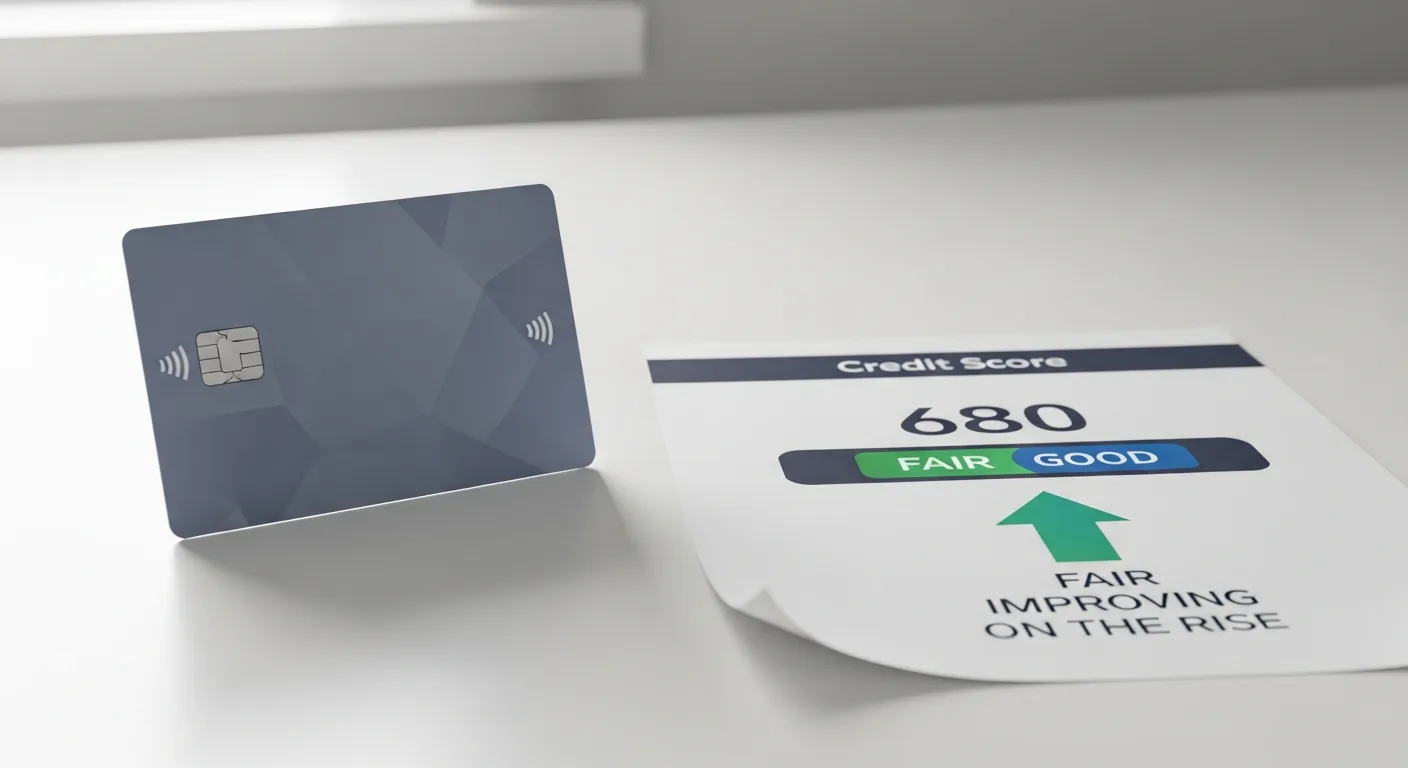
One non-obvious wrinkle: some scoring models and some lenders discount authorized user accounts when making decisions, precisely because the AU didn't personally manage the account. You might have a score of, say, 680, but an issuer's internal model could treat your AU history with less weight than a primary account of the same age. This is why applying for cards that fit your credit range — not premium cards that require pristine primary history — is the smarter first move.

Checking your credit report before applying tells you exactly what your AU history is worth.
What Should Your First Card Actually Be?
Skip the secured card unless your credit report comes back empty. A secured card requires a cash deposit as collateral — it's designed for people with no history. If your AU account is reporting, you don't need that friction or that tied-up cash.
The right target is an unsecured no annual fee cash back card. Many issuers offer cards in this category specifically designed for people with limited-but-present credit history. Student cards are worth a close look even if you're not in college — they're often underwritten more leniently on income, which matters when you're 18 and your earnings are modest. These cards are generally recommended for fair to good credit, which aligns with where most AU-history holders land at 18.
On cash back structure: a flat-rate card — one that earns the same percentage back on everything — is the easiest to manage when you're just getting started. You don't need to track categories or activate quarterly bonuses. Earn a consistent rate on whatever you spend, pay the balance in full each month, and let the account age. That's the whole game right now.
Starting your own primary account at 18 also sets a longer clock ticking. Federal Reserve research found that consumers who entered credit bureau data at age 18 had average scores at age 30 that were 10 points higher than those who entered at 19, and 18 points higher than those who entered at 20.[3] Opening your first primary card now — not next year — is worth doing for exactly that reason.
- Unsecured no annual fee cash back card: the default first card for AU-history holders at 18
- Student cash back card: often more lenient on income; recommended for fair-to-good credit
- Secured card: only necessary if your AU account never reported to the bureaus
- Premium rewards card: save this for year two or three, once your primary account has some age
Cash Back Offers
Ready to Use That AU History?
| Credit Situation at 18 | Recommended First Card Type | Why |
|---|---|---|
| AU account reporting to bureaus, fair-to-good score | Unsecured no annual fee cash back card | AU history is enough to support a first unsecured card; no deposit needed |
| AU account reporting, enrolled in college | Student cash back card | Lenient on income; recommended for thin-but-present credit files |
| AU account NOT reporting; no credit file | Secured card | Build a file first; upgrade after 6-12 months of on-time payments |
| AU account reporting, strong score (good to excellent) | Unsecured cash back card with category rewards | Score may support richer rewards; still avoid premium annual-fee cards year one |
The Hidden Risk: What Happens If the AU Account Goes Away?
Here's something most first-card guides skip. Your AU history is borrowed. If the primary cardholder closes that account, pays it off and it ages off, or removes you as an authorized user, that account can disappear from your credit file. When it does, your average account age drops — possibly sharply — and your score could fall with it.
This is exactly why opening your own card at 18 matters, not optional. The sooner you establish a primary account, the sooner your own account starts aging independently. Think of it as hedging. Right now your credit file is one account: someone else's. Adding your own account means that even if the AU history evaporates, you still have a file with history in it.
Keep the AU account open if you can — being removed from it before you have a year or two of primary history could sting. But don't count on it being there forever. Your own card is the real foundation.
If the primary cardholder is a parent, have a quick conversation before you open your own card. Ask them to keep you on as an authorized user for at least another 12 months while your new account builds its own history. After that, it matters much less.
How to Actually Use Your First Card Once You Have It
The mechanics are simple, but most people mess at least one of them up in year one. Put one or two regular, small purchases on the card each month — a streaming subscription, gas, whatever you'd buy anyway. Pay the full statement balance before the due date every single month. Never just pay the minimum.
Keep your utilization low. On a card with a low limit, try to keep your balance under 30% of that limit — that's a common guideline, not a hard rule. Lower is better. If your limit is low and your spending is higher, pay it down mid-cycle before the statement closes, not just before the due date.
Carrying a balance does not help your score. That's one of the most persistent myths in personal finance. Interest accrues from the day a charge is made if you carry a balance forward, and that cost eats into any cash back you've earned. Pay in full, every month, and the card costs you nothing while your history grows.
A TransUnion survey found that 19% of teens had been added as authorized users on a parent's card, with 54% added by age 14.[4] That means a meaningful share of new 18-year-olds are in exactly your position — but most don't realize they can skip straight to a real rewards card. Using that advantage well is the whole opportunity.
When Should You Upgrade or Add a Second Card?
After 12 months of on-time payments on your own primary card, reassess. Your score should be meaningfully higher — potentially in the good-to-very-good range depending on what you started with. That's when a card with slightly richer rewards or a higher cash back rate in a category you actually spend in starts to make sense.
The classic next move is adding a card that rewards your biggest spending category — groceries, dining, or gas, for instance — while keeping your original no annual fee card open for account-age credit. Two cards managed well beats one card perfectly, because you're spreading your credit mix and keeping utilization lower across a higher total limit.
Don't rush this. The biggest mistake young adults make is applying for multiple cards in the first year, stacking hard inquiries, and confusing activity for progress. One card, used responsibly, for the first year. Then optimize.
Compare Current Offers
Find Your First Cash Back Card
You've spent three years building a credit foundation as an authorized user. Now it's time to open a card in your own name and start earning on your own spending. Compare no annual fee cash back options recommended for your credit range.

Opening your own primary account at 18 starts the clock on your independent credit history.
Learn More About Top OffersFrequently Asked Questions
Does being an authorized user count as credit history when I apply at 18?
Do I still need a secured card if I've been an authorized user for three years?
What kind of first card should an 18-year-old with AU history apply for?
Will I lose my credit history if I'm removed as an authorized user?
Does carrying a balance help build credit faster?
How low should I keep my credit card balance?
When should I apply for a second credit card?
The Bottom Line
Three years as an authorized user is a real advantage — but only if you know how to use it. Pull your credit report, confirm that AU account is showing up, and skip straight to an unsecured no annual fee cash back card. You've likely already earned that step.
Open your own primary account now, keep utilization low, pay in full every month, and let the account age. The AU history gave you a head start. What you do in the next 12 months determines how far ahead you actually get. Compare current cash back starter offers and put that foundation to work.