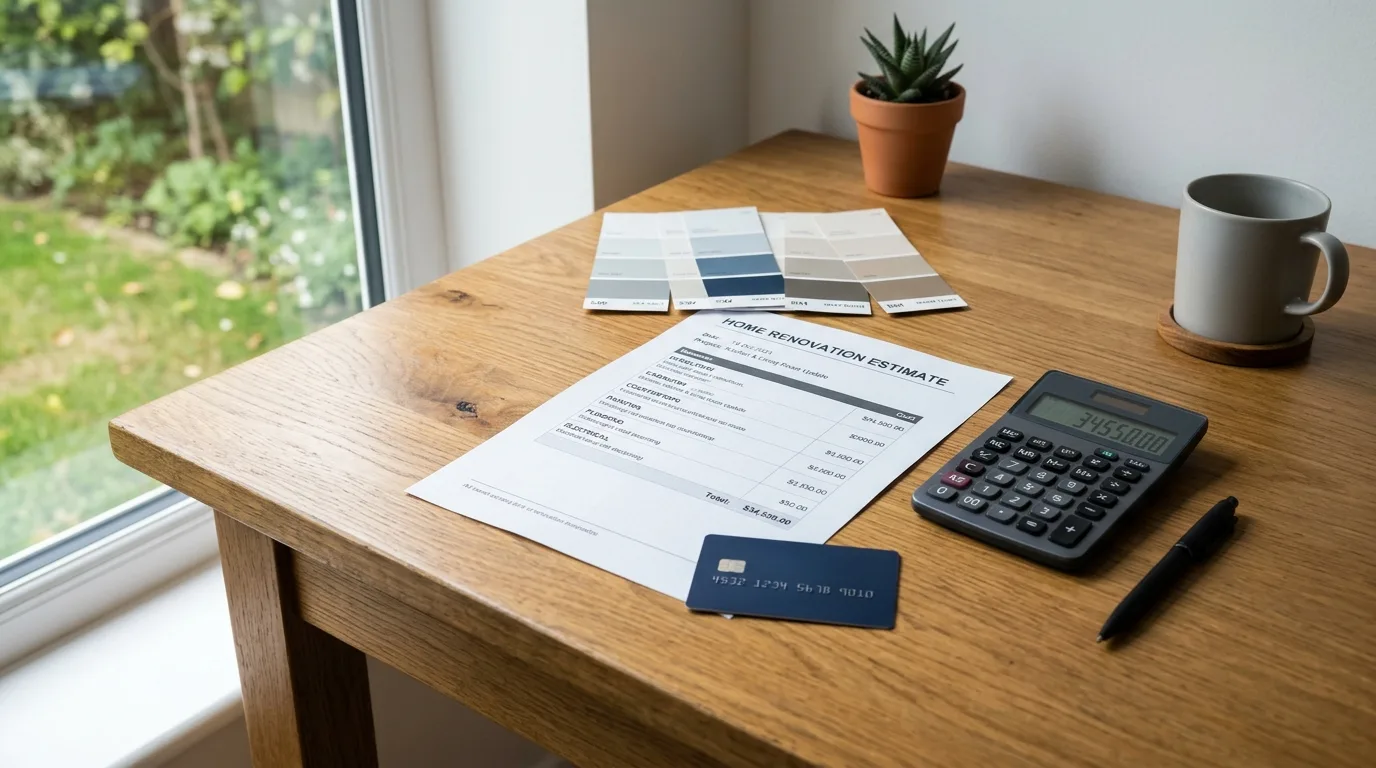
You can try, but for most people it's a poor trade. A 0% intro APR balance transfer card is built to move credit card debt, not to send money to a mortgage servicer, and even when a workaround exists, the fee and the cash advance risk can eat up most of what you'd save. The core problem is that you'd swap a secured loan with a steady rate for unsecured debt with a deadline. This article walks through how the money would actually move, the math on a real example, and what could go wrong if your income changes.
Can you actually pay a mortgage with a balance transfer?
A balance transfer is designed to move a debt from one lender to a credit card. Card issuers usually set rules about which accounts they'll pay, and many don't allow transfers to a mortgage, especially one with the same company. Mortgage servicers also commonly don't accept credit cards directly. Compare current offers.
That leaves a few workarounds. Some cards send you a balance transfer check that you can deposit or send to your servicer. Others let you request a transfer to a bank account. Third-party bill payment services will charge a card and pay your servicer, usually for their own fee.
The catch is how the issuer labels the transaction. If it counts as a cash advance rather than a balance transfer, it typically doesn't get the 0% intro APR. Cash advances often carry their own fee and start collecting interest right away. Read the card's terms and ask the issuer how a payment to a mortgage account would be coded before you move any money.
Call the issuer or read the cardholder agreement and ask one question: would a payment to my mortgage servicer be treated as a balance transfer or a cash advance? Get the answer first, since the fee and interest are very different.
Already know what you want? Before you move a big chunk of debt, see how the math and the payment mechanics really work for a mortgage.
Learn MoreWhat does the math look like on a real example?
Say you want to put $10,000 toward your mortgage principal and your card has an 18-month 0% intro APR. If the transfer fee is 4%, you'd pay $400 upfront, so you'd owe $10,400. The fee isn't unusual: balance transfers at the 25 largest issuers averaged a fee of 4.3% of the transferred balance in the second half of 2024.[1]
To clear $10,400 in 18 months, you'd need to pay about $578 a month. If you paid less, whatever is left when the intro period ends starts collecting interest at the card's regular APR.
Now look at what you gain. If your mortgage rate is 6%, $10,000 less principal saves roughly $600 in interest per year, or around $900 over 18 months at the most. Subtract the $400 fee and you're left with a few hundred dollars, and that's before any workaround fees.
The comparison that matters is simple. You'd be paying $578 a month to the card anyway. That same money could go straight to your mortgage as extra principal, with no fee and no deadline. The card only helps if you truly can't put the lump sum down today but are confident you can repay it on schedule.

Working out the monthly payment you'd need shows quickly whether the intro period is long enough.
How do fees and minimum payments change the picture?
The upfront transfer fee is the first cost, but the minimum payment is a trap too. Issuers usually calculate it as a percentage of the balance plus any interest and fees, and a review of issuers found most used 1% with a fixed floor, commonly $35.[2] On a $10,400 balance, a minimum payment around 1% would be roughly $104, which is far less than the $578 you'd need to clear it in time.
That gap is why people get caught. The minimum payment keeps the account in good standing, but it won't get you to zero before the intro period ends. Treat the minimum as a floor, not a plan.
Also keep in mind that a new card means a new hard inquiry and a new account on your credit report. If you're planning to refinance or buy another home soon, that matters. A lender looking at your file will see both the new card and the balance.
- Transfer fee: paid upfront and added to the balance.
- Possible cash advance fee and immediate interest if the issuer codes the payment that way.
- Third-party payment service fees, if you use one to reach your servicer.
- Interest at the regular APR on anything left after the intro period.
0% Intro APR Offers
Weighing a 0% intro APR card? Check out top offers available now
What happens to your credit utilization?
Credit utilization is the share of your available credit you're using. If you open a card with a $12,000 limit and move $10,400 onto it, you're using about 87% of that card. Even if you pay it down quickly, a high balance can lower your score while it's reported.
For comparison, average utilization across revolving accounts was 30% in 2024.[3] Staying near or under that mark is a common goal for people trying to protect their score. A large balance on a single card goes well past it.
This matters most if you plan to apply for a mortgage refinance, a car loan, or another card soon. Paying down mortgage principal doesn't show up as a credit score benefit the way it would on a revolving account, so you'd take the utilization hit without getting a score boost back.
What if your income changes before the intro period ends?
This is the risk most guides skip. A mortgage is secured by your home and usually has a fixed payment you can plan around. A card balance is unsecured debt with a deadline. If your hours get cut, you lose a job, or a big expense hits, you still owe the card payments and you can't easily get that principal money back out of your house.
Here's what that looks like. Say you've paid $4,000 of the $10,400 and then lose income. You'd owe $6,400 with months to go, and anything left at the end starts collecting interest at the regular APR. Late payments can also cost you the intro rate in many card agreements, so check yours.
The risk isn't rare. Credit card balances moving into serious delinquency, 90 or more days late, made up 6.97% of eligible balances in the second quarter of 2026.[4] A cash cushion is more flexible than a smaller mortgage, so many people are better off keeping the money available.
Money paid into principal is hard to get back out. If using a card would leave you with less cash on hand, the trade usually isn't worth it.
Is there a better way to pay down principal?
For most people, yes. Sending extra cash with each payment, marked as principal-only, does the same job with no fee, no deadline, and no new account. If you want to pay faster but don't have a lump sum, adding a fixed extra amount each month works the same way over time.
A 0% intro APR card works best for purchases or debts you were going to pay anyway, where the intro period gives you time to spread out a payment. That's why a balance transfer from higher-interest card debt usually makes more sense than a transfer to a mortgage. If you're comparing options, check out top offers available now and weigh the fee against how long the intro period lasts.
Compare Current Offers
Compare 0% intro APR cards before you decide
If you have a plan for a transfer, check out top offers available now and read the fee and cash advance terms first.

Reading the card's terms about cash advances and transfers is worth doing before you move any money.
Learn More About Top OffersFrequently Asked Questions
Can I use a 0% intro APR balance transfer card to pay my mortgage principal?
Does it save money?
What's the biggest risk?
Will it hurt my credit score?
Is a balance transfer the same as a cash advance?
What's a better way to pay down principal faster?
The Bottom Line
Using a 0% intro APR balance transfer card to pay down mortgage principal is possible in some cases, but it's rarely the smart move. The transfer may be treated as a cash advance, the fee can wipe out most of the interest you'd save, and a big new balance can push your utilization well above the usual 30% mark.
If you have spare cash, send it to your servicer as extra principal. If you're thinking about a card, confirm how the issuer treats the payment, work out the monthly amount needed to clear the balance, and make sure it still fits your budget if your income changes.