
A 0% intro APR card is usually better if you can pay off the project within the intro period, and a HELOC is usually better if the bill is large and you need years to repay it. The reason is simple: a card gives you a short stretch of no interest but a limit that may be too small, while a HELOC gives you a bigger line and a longer runway but puts your home on the line. This guide walks through both choices for solar and for a $30,000 kitchen remodel, including which kind of card to look for and when a HELOC is the safer pick.
Key Takeaways
- Choose a 0% intro APR card if you can realistically pay the whole project off before the intro period ends; choose a HELOC if you need years to repay.
- A single card's limit may not cover a big solar or remodel bill, and a HELOC uses your home as collateral, so each option has a different kind of risk.
- For a $30K kitchen, look for a high limit, a long 0% intro APR period, and a welcome bonus you can earn with spending you already need to do.
What's the real difference between a card and a HELOC?
A 0% intro APR card lets you carry a balance for a set number of months without interest. After that, whatever you still owe starts collecting interest at the card's regular rate. It's unsecured, so your home isn't at stake. Compare current offers.
A HELOC is a line of credit secured by your home's equity. You borrow as you go, usually at a variable rate, and you repay over a longer period. The rate can change, and if you stop paying, the lender can go after your house.
So the tradeoff is short-term interest savings with a limit that may be too small (the card) against a bigger, longer line with your home as collateral (the HELOC).
Already know what you want? Big home projects need a plan for the limit, the timeline, and the risk. Here's how to pick between a card and a HELOC.
Learn MoreWhat card would you choose for a $30K kitchen renovation?
Start with what you need the card to do. For a bill this size, three things matter most: a credit limit high enough to hold it, a long 0% intro APR period, and a welcome bonus you can reach with the spending you're already planning.
The limit is the part you can't control. The issuer decides it based on your income, debts, and credit history, so there's no way to know in advance whether one card will cover $30,000. If it doesn't, you may need a second card or a different funding source for part of the cost. Cards like this are generally recommended for good to excellent credit.
A welcome bonus is a nice extra, but it shouldn't drive the decision. A bonus is worth little if you pay interest because the intro period ran out. Pick the card for its intro period and limit first, and treat the bonus as a bonus. Kitchen remodels are also not cheap: the median kitchen remodel cost $22,000 in 2024, and the median for kitchens 200 square feet or smaller was $35,000.[1] A $30K budget is realistic, and it's easy to go over.
- Intro period long enough to match your payoff plan
- Limit large enough to hold the contractor's bill
- Welcome bonus spending requirement that fits the project
- Check whether the card charges interest only on what's left or on the whole original balance
Some store-style financing is deferred interest, which can charge back interest on the full amount if any balance remains. A true 0% intro APR card only charges interest going forward. Always read which one you're being offered.

A kitchen remodel is a common project where a card's limit and intro period both matter.
Should you use a HELOC or a 0% intro APR card and pay it off in a year?
Run the math first. Say your remodel costs $30,000 and your card has a 15-month 0% intro APR period. Dividing $30,000 by 15 gives $2,000 a month. If $2,000 fits your budget, the card could help you avoid interest entirely. If you can only manage $1,200 a month, you'd still owe about $12,000 when the intro period ends, and that balance would start collecting interest at the regular rate.
That's the dividing line. If you can pay it off inside the intro window, the card is usually simpler and keeps your home out of the picture. If you can't, a HELOC's longer repayment may be easier to manage, even though you'll pay interest.
The risk is real on both sides. Cards can carry high regular rates once the intro period ends, which is why 45% of U.S. credit-card owners carried a balance at least once during the prior 12 months in 2025.[2] A HELOC's rate is often lower, but it's variable and tied to your home.
0% Intro APR Offers
Want to see which 0% intro APR cards are out there?
| Factor | 0% intro APR card | HELOC |
|---|---|---|
| Interest | No interest during the intro period, then the regular rate | Variable interest from the start |
| Limit | Set by issuer; may not cover a large project | Based on home equity, income, and credit |
| Repayment time | Limited to the intro period to avoid interest | Longer repayment period |
| Collateral | None | Your home |
| Welcome bonus | Possible, with a minimum spend | None |
| Best for | Projects you can pay off quickly | Larger projects that need more time |
Does solar change the answer?
Solar projects can run larger than a kitchen, and they're often paid in stages: deposit, equipment, installation. That makes the limit the first question. If the total is well above what one card could hold, you'd need to split it across several cards, each with its own application, due date, and intro deadline.
Splitting also raises your credit utilization, which is the share of your limits you're using. Keeping it low can help limit the impact on your score, and a big project on new cards can push it far above your available limits, which could lower your score for a while.
A HELOC is often a better fit for a large solar project because one line can cover the whole thing and you can draw as each stage is billed. A middle path also works: use a card for a clearly defined slice you can pay off during the intro period, and a HELOC for the rest.
How do the two options compare side by side?
Here's a quick view of how they stack up for a large home project. Use it as a starting point and check actual terms before you commit.
How do most homeowners actually pay?
Many people use savings to help pay for renovations. Among U.S. homeowners who renovated in 2024, 84% used savings, 29% used credit cards, and 6% used a HELOC.[3] Some used more than one source.
That's a useful reality check. If you have savings set aside, using them for part of the project could shrink what you need to finance. A HELOC has been a common choice for bigger jobs too: in 2019, 35.1% of reported HELOC originations were for home improvement.[4]
Whichever route you choose, line up the money before you sign a contract. Know how much each source will cover, and when each payment is due.
Compare Current Offers
Ready to compare your financing options?
Check out top offers available now, then match the intro period and limit to your project's timeline.
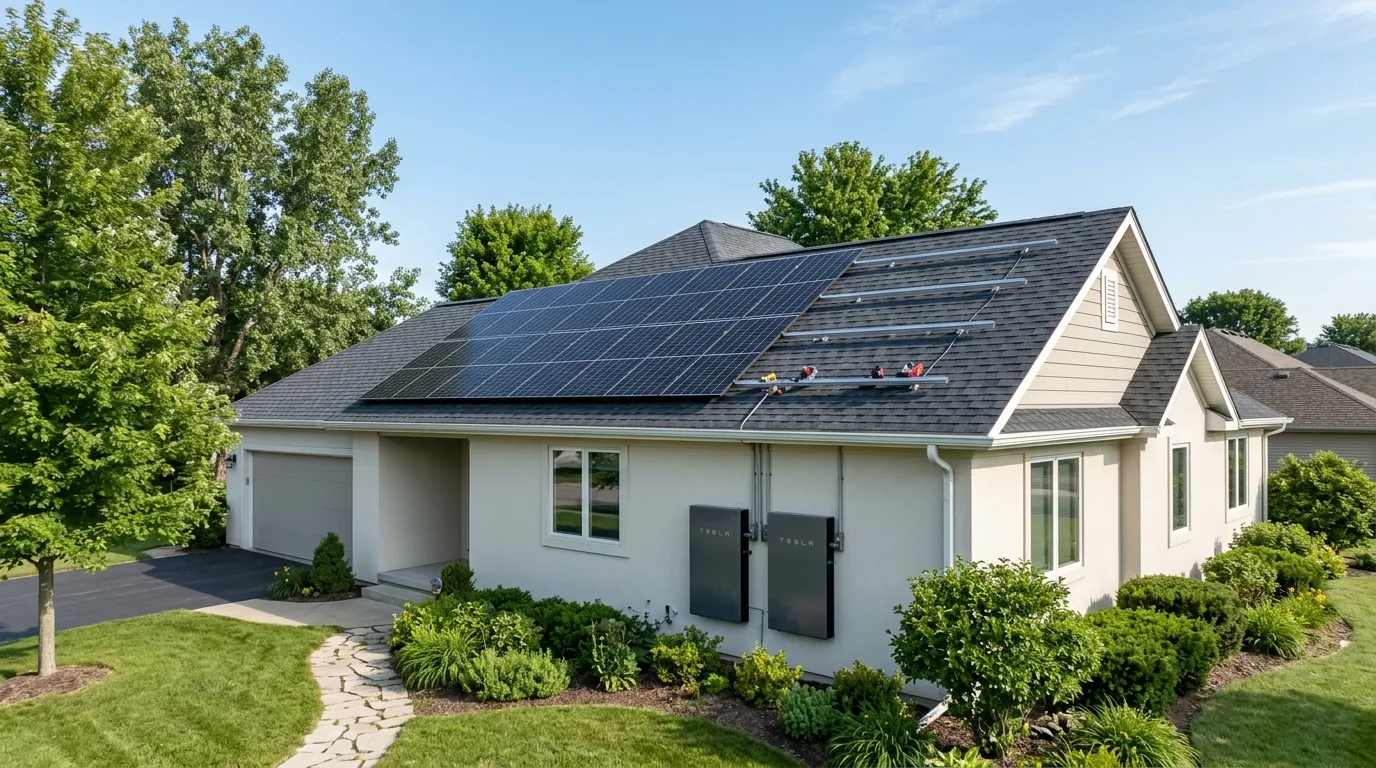
Solar installs can run large enough that a single card's limit becomes the main obstacle.
Learn More About Top OffersFrequently Asked Questions
Is a 0% intro APR card or a HELOC better for solar?
What card would you choose for a $30K kitchen renovation?
Is a HELOC or a 0% intro APR card better for a kitchen remodel you'll pay off within a year?
What happens if I don't pay off the card before the intro period ends?
Can I split a large project across more than one card?
What's the main risk of a HELOC?
Can I use both a card and a HELOC?
The Bottom Line
If you can pay the project off within the 0% intro APR period and the limit fits, a card could help you save on interest without putting your home at risk. If the bill is large or you need years to repay, a HELOC is usually the more workable choice.
Before deciding, divide the total by the intro months, check that the payment fits your budget, and confirm how much each source can actually cover. A blend of the two works for many homeowners.