
No single card is guaranteed to give you a roughly $10,000 limit just because you found the right search term. A strong score is only one factor; issuers also consider your income and how much of your existing credit you're using. If your other cards have high balances and your income is around $45,000, a new card's starting limit could still fall well below the amount you need for an $8,000 repair. Understanding why that happens can help you plan for a limit that works.
Key Takeaways
- A high FICO score doesn't set your starting limit — income, existing debt, and utilization do, and issuers cap new limits against those numbers.
- Carrying high balances on store cards can undercut your application even with excellent scores, since issuers look at total exposure, not just one score.
- A realistic strategy — pairing a 0% intro APR card with a plan to pay down existing balances first — often beats chasing one card for the full $8,000.
Why a good score doesn't automatically mean a big limit
It's a common assumption: strong FICO score in, big credit limit out. That's not how underwriting works. Your score tells an issuer how reliably you've handled credit in the past — on-time payments, account age, mix of accounts. It says very little about how much new debt you can safely take on right now. compare current 0% intro APR offers
That second question is answered by your income and your current obligations. Say you're earning $45,000 a year and you're already carrying meaningful balances on a couple of store cards. An issuer reviewing your application sees your income, estimates your existing monthly debt payments, and calculates how much additional credit fits your capacity. A $10,000 limit on top of existing revolving debt may simply exceed what their formula allows, even with excellent payment history.
That outcome is not unusual. In 2025, one-third of applicants said they were denied or approved for less credit than they requested.[1] A request for a limit that's large relative to your income may be one reason an issuer offers less than you asked for.
Already know what you want? Before you apply for a single card hoping it covers the whole $8,000, understand what actually drives your starting limit — because it's rarely the score alone.
Learn MoreHow your existing store card balances work against you
If you're carrying high balances on store cards, that can matter. Average U.S. credit-card utilization was 29.1% in September 2025, and Experian identifies utilization above 30% as a level that can have a more negative effect on credit scores.[3] If your store cards are near their limits, your utilization may be above that level.
High utilization signals two things to an issuer: you're leaning heavily on available credit, and you may already be stretched relative to your income. Both work against approval for a large new limit, even if your payment history is spotless.
There's a silver lining here, though it's counterintuitive. Store cards tend to approve more easily than general-purpose cards — the CFPB found store-card approval rates of 50%, compared with 44% for general-purpose cards.[2] That's useful context if you're wondering why you were approved for store credit in the past but might face more scrutiny applying for a large general-purpose limit now. Store cards may have different underwriting criteria and smaller starting limits, so approval there doesn't predict approval for a $10,000 line elsewhere.
If you can pay your store cards down before applying, it may help lower your reported utilization. Card balances are generally reported periodically, so timing can vary; a lower reported balance may affect how an issuer views your application, though results depend on the rest of your credit profile.
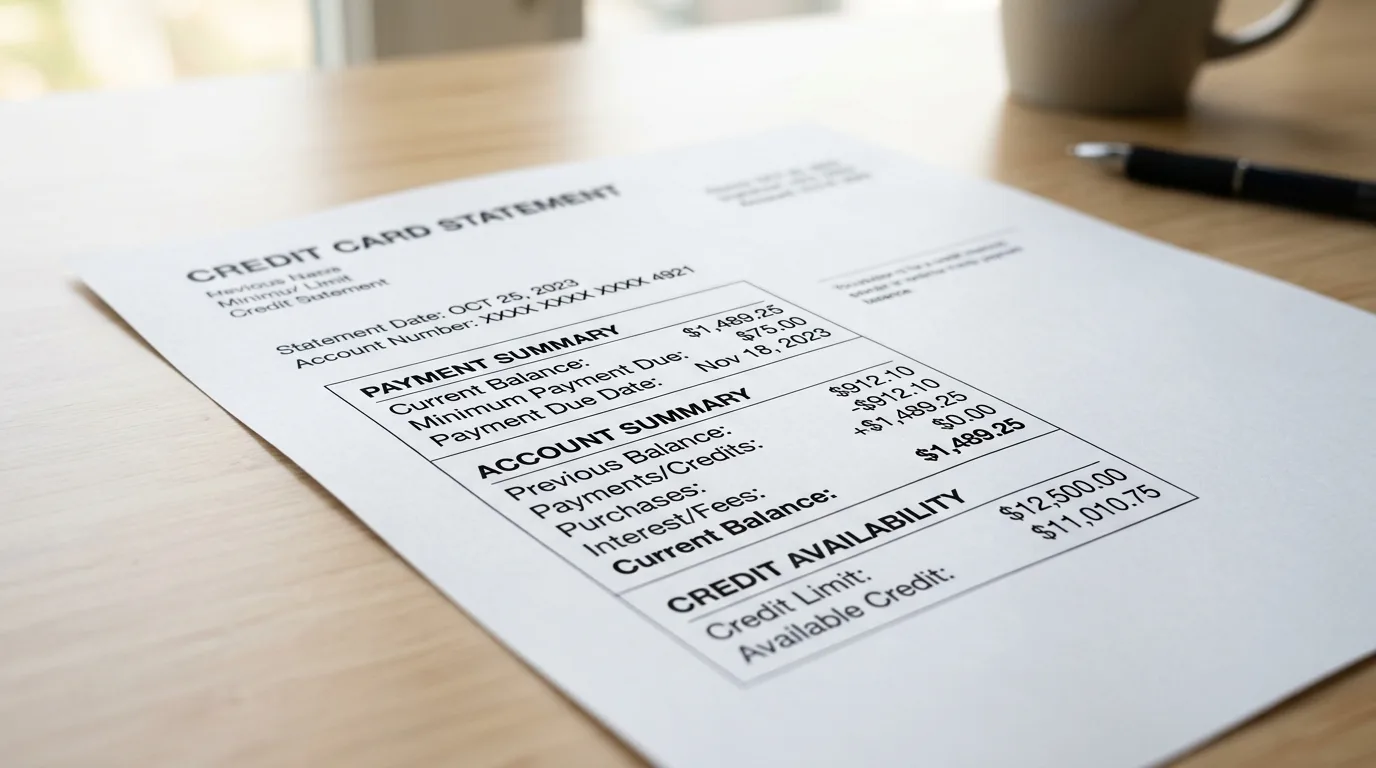
Utilization on existing cards factors heavily into how much new credit you're offered.
What limit can you realistically expect?
For context, the average bankcard credit line per consumer was about $26,834 in April 2025, but the average balance carried was only around $6,415.[4] That gap shows most cardholders build up to larger limits over time and across multiple accounts — they rarely start there on day one, especially on a single new card.
A first approval may be lower than you hoped, especially with existing revolving debt, even if you have a strong score. That isn't necessarily a reflection of your creditworthiness — issuers assess the risk of a new account based on their own criteria.
If your goal is covering an $8,000 repair, it may take combining a new card's starting limit with cash on hand, a lower-cost personal loan, or a payment plan with the repair shop — rather than expecting one 0% intro APR card to shoulder the entire cost from account opening.
0% Intro APR Offers
See which cards fit your credit profile
Smarter ways to structure the repair payment
Instead of applying for one card and hoping the limit clears $10,000, consider a few moves that stack the odds in your favor.
First, ask the repair shop if they'll split the bill — a deposit now, remainder later. That buys you time to pay down a store card balance and may help lower your reported utilization. Second, if you're approved for less than the full amount, ask the issuer whether it offers a reconsideration process and whether it can review the limit again. It doesn't always work, but it costs nothing to ask.
Third, compare current 0% intro APR offers rather than applying for just one. Different issuers weigh income and utilization differently, so your approved limit can vary meaningfully between them even with the same credit file.
- Ask the repair shop about a partial deposit plus a short payment plan
- Pay down store card balances before applying to lower reported utilization
- Compare offers across issuers instead of applying to just one card
- Request a limit reconsideration if your initial approval comes in low
Is a 0% intro APR card still worth it if the limit falls short?
Yes, even a partial limit on a 0% intro APR card is useful. If you're approved for $4,000 instead of $10,000, that portion of the repair carries no interest during the promotional window, which could help you save on interest compared with putting it on a high-rate store card.
Be clear on how the promotional period works. With a 0% intro APR offer, interest generally doesn't accrue on eligible purchases during the promotional period, subject to the card's terms. Deferred-interest offers work differently: if you don't pay the balance in full by the deadline, interest may be charged retroactively from the purchase date. Check your card's terms before relying on a promotion to cover part of the repair.
The remaining balance beyond your approved limit still needs a plan — whether that's savings, a separate card, or a short-term payment arrangement with the shop.
Compare Current Offers
Ready to compare real offers?
Check out top 0% intro APR offers available now and see which starting limits and promotional terms actually fit your repair budget.

Comparing offers side by side often reveals different starting limits for the same credit profile.
Learn More About Top OffersFrequently Asked Questions
Can a 0% intro APR card give me a $10,000 limit with a $45,000 income?
Does a high credit score guarantee a high starting limit?
What should I do if I'm approved for less than I need?
Why do store cards seem easier to get than a large general-purpose limit?
Does high utilization on other cards really affect a new application?
Is deferred interest the same as a true 0% intro APR offer?
Should I apply for one card or several when I need a large limit?
The Bottom Line
A strong score opens the door, but your income and existing balances decide how wide it opens. If you're carrying high utilization on store cards and earning around $45,000, expect issuers to weigh that heavily against a request for a $10,000 limit — and plan for a starting limit that may come in lower.
The smartest path is often a combination: pay down existing balances to improve utilization, compare several 0% intro APR offers rather than betting on one, and have a backup plan for whatever the approved limit doesn't cover.