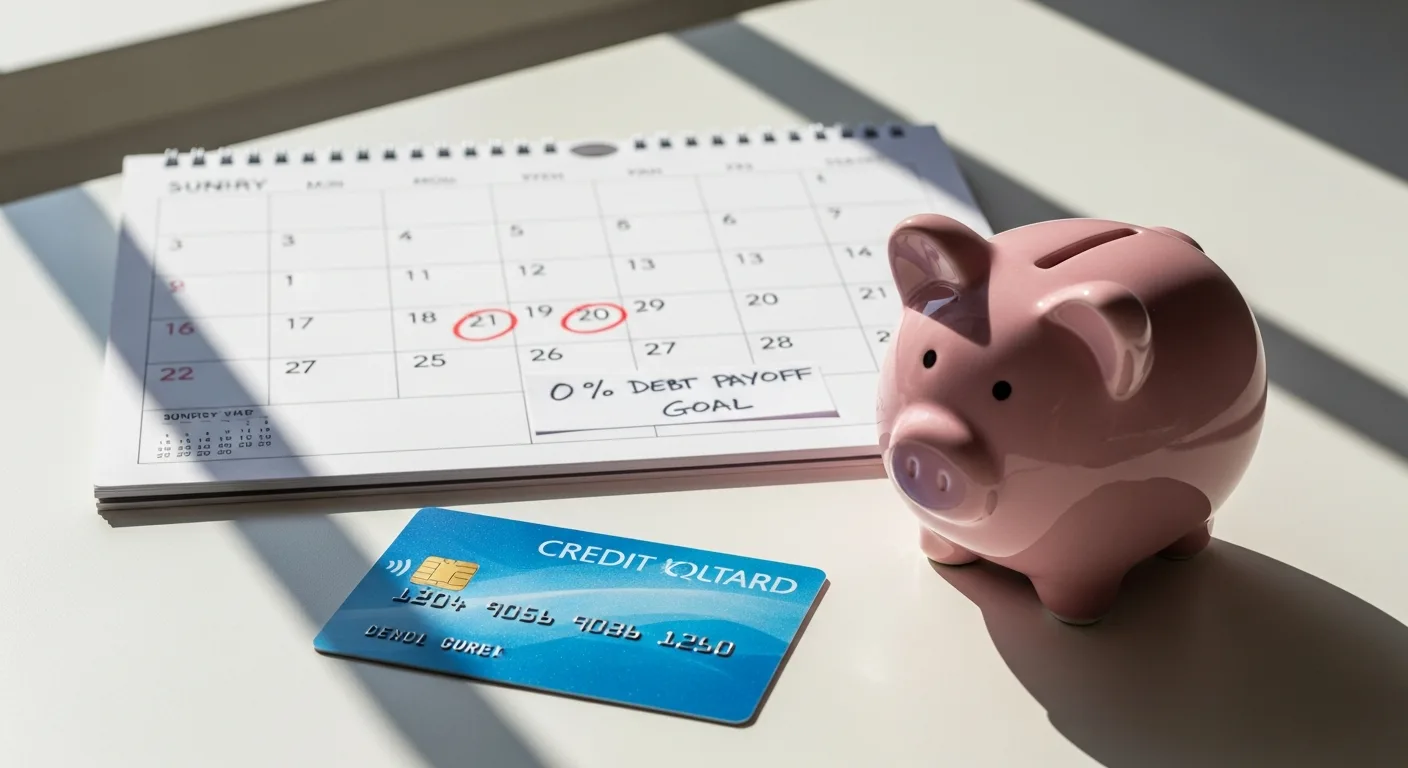
A 0% intro APR card can be a smart way to pay for a roof replacement, but only if you can pay the full bill before the intro period ends. The card doesn't make the roof cheaper. It just gives you a set number of months with no interest, and whatever you still owe after that starts collecting interest at the card's regular APR. The same logic applies whether your project is a roof, windows, emergency plumbing, or a new septic system: divide the bill by the intro months, and if that monthly payment fits your budget, the card could save you real money.
Key Takeaways
- A 0% intro APR card works for a roof, windows, plumbing, or septic work when you can pay the whole balance before the intro period ends.
- Divide the bill by the number of intro months. If that payment doesn't fit your budget, borrow less or choose a different option.
- Check your emergency savings first. Using savings for part of the job and a card for the rest is often the safest mix.
When does a 0% intro APR card make sense for a roof?
A roof is usually a big, unavoidable bill. Federal Reserve survey data shows how common that is: among adults who had a major house or appliance repair in the prior year, 27% reported paying $5,000 or more for it in 2025.[1] Compare current 0% intro APR offers.
A 0% intro APR card is built for exactly this kind of expense, as long as you treat it like a payment plan. You charge the roof, make steady payments, and clear the balance before the intro period ends. You pay the contractor the same price, but you don't add interest on top.
Here's the math. Say your roof costs $9,000 and the card has an 18-month 0% intro APR. You'd need to pay $500 a month to finish on time. If $500 fits your budget, the card works. If you could only manage $300 a month, you'd still owe about $3,600 when the intro period ends, and that balance would start collecting interest at the regular APR.
Divide the total cost by the number of intro months. If that monthly payment makes you nervous, don't open the card yet. Change the plan instead, with a smaller scope, more cash down, or a different type of financing.
Already know what you want? Compare 0% intro APR cards and match the intro period to your payoff plan before you commit to a big repair bill.
Learn MoreShould I open a 0% intro APR card for emergency plumbing or septic repairs if I can pay it off in three months?
Usually yes. A three-month payoff is the best case for a 0% intro APR card, because even a short intro period covers it with room to spare. If a septic pipe breaks or a plumbing line fails, you can pay the contractor right away and then pay the card off from your next few paychecks or an expected refund.
Two things to check. First, confirm that the 0% intro APR applies to new purchases, not just balance transfers. Second, ask the contractor whether they take cards and whether they add a surcharge, since some tradespeople pass along their processing costs.
Also be honest about the three-month plan. If it depends on money you don't have yet, such as a bonus that might not arrive, build in a buffer. Pick a card with a long intro period so a delay doesn't cost you.

Dividing the estimate by the number of intro months shows you the monthly payment you would need.
Should I open 0% intro APR cards to pay for a septic installation on a new property?
A new septic system is a much bigger job than a repair, and the cost can run well beyond what one card's limit allows. That is where people get tempted to open several cards at once. Be careful with that.
Each new application can cause a small, temporary dip in your credit score, and several new accounts in a short time add up. Carrying a large combined balance also raises your credit utilization, which can pull your score down further.
If you do use a card, a better approach is to use one card for the part of the cost you're confident you can pay off during the intro period. Cover the rest with savings or a loan designed for large projects. Septic work often comes with permits and inspections that can delay the final bill, so ask the installer for a written timeline and payment schedule before you decide how much to charge.
This type of card is recommended for good to excellent credit, and the credit limit you're given may not match the bill. Think of the card as one piece of the plan, not the whole thing.
0% Intro APR Offers
Ready to match a card to your repair timeline?
| Project | Typical payoff plan | Is a 0% intro APR card a good fit? |
|---|---|---|
| Emergency plumbing or septic repair | Pay off in about 3 months | Yes, if the card accepts the purchase and you have a clear payoff plan |
| Roof replacement | Pay over 12 to 18 months | Yes, if the monthly payment fits your budget |
| Windows | Mix of savings and card | Often, if you protect your emergency fund |
| New septic installation | Large cost, may exceed one card limit | Partly, use the card for what you can pay off and cover the rest another way |
| Large project with no payoff plan | Unknown | Probably not, interest could add up quickly |
Should I use a new 0% intro APR card for windows instead of savings?
This one is really a question about your safety net. Federal Reserve data shows that 55% of U.S. adults said they had emergency savings sufficient to cover three months of expenses in 2025.[2] If you're in that group, spending part of it on windows may be fine. If you're not, draining savings for a project can leave you exposed.
A card can be a good middle path. You charge the windows, keep your savings intact, and pay down the card from your regular income during the intro period. If something unexpected happens, you still have cash, and you haven't paid interest.
The risk is treating the card as free money. If you charge $6,000 of windows and your savings stay untouched but you can only pay $200 a month, you'd still owe a big balance when the intro period ends. In that case, using some savings up front to lower the amount you charge is the safer move.
A simple rule: use savings for what you can replace within a few months, and use the card for the rest, but only the amount you can realistically clear before the intro period ends.
What are the risks of putting home repairs on a 0% intro APR card?
The main risk is the end date. When the intro period ends, any balance left starts collecting interest at the card's regular APR, which is often much higher than what you were paying. Missing a payment during the intro period can also cause problems, so set up automatic payments for at least the minimum.
The second risk is a false sense of safety. Many people feel they have a cushion. In fact, in 2025, 63% of U.S. adults said they could cover a hypothetical $400 emergency using cash, savings, or a credit card paid off at the next statement,[3] but a roof or septic job is many times that size, so the plan has to be more deliberate.
The third risk is deferred interest. Some contractor or store financing offers look like a 0% intro APR, but they charge interest back to the original purchase date if you don't pay in full. A true 0% intro APR card only charges interest on what remains after the intro period ends. Always read the terms to see which one you're getting.
Finally, a large balance raises your utilization, which could lower your credit score while you carry it. If you're planning to apply for a mortgage or auto loan soon, factor that in.
- Set automatic payments so you never miss a due date.
- Divide the balance by the intro months and pay at least that much each month.
- Confirm the intro rate covers purchases, not only transfers.
- Avoid deferred-interest plans unless you're certain you'll pay in full.
- Keep some cash available for the next surprise.
Which type of card works best for a home repair?
Look for a card with a 0% intro APR on purchases, a long enough intro period for your payoff plan, and no annual fee. A no annual fee card keeps the cost simple, especially if you may not use the card much after the project is done.
Check the credit limit too. If your repair costs more than the limit, the card may only cover part of the bill. These cards are generally recommended for good to excellent credit.
A card with a longer intro period gives you a buffer, which is helpful when contractors run behind schedule or costs shift. If you want to compare options, you can compare current 0% intro APR offers and focus on the length of the intro period and whether it applies to purchases.
Compare Current Offers
Find a card that fits your payoff plan
If your numbers add up, a 0% intro APR card could help you spread out a big repair without paying interest. Check out top offers available now.

Reading the terms carefully helps you spot deferred interest before you charge a large repair.
Learn More About Top OffersFrequently Asked Questions
Should I open a 0% intro APR card for a roof replacement?
Should I open a 0% intro APR card for emergency plumbing or septic work if I can pay it off in three months?
Should I use a new 0% intro APR card for windows instead of my savings?
Should I open 0% intro APR cards to pay for a septic installation on a new property?
Should I open a new 0% intro APR card for a large home-improvement project if I can pay it off in a few months?
What happens if I can't pay it off before the intro period ends?
Is a 0% intro APR card the same as contractor financing?
The Bottom Line
A 0% intro APR card can be a useful tool for a roof replacement, emergency plumbing, a septic job, or new windows, as long as the plan is simple: divide the cost by the intro months and make sure that payment fits your budget. If it does, the card could help you avoid interest while keeping your cash on hand.
If it doesn't, scale back the amount you charge, use some savings, or look at other ways to pay. Whatever you choose, keep a cushion for the next surprise. Check out top offers available now if you'd like to compare intro periods.