You did the responsible thing. You paid off your credit card. And then your next statement showed interest charges on purchases you made after the payoff. What happened? In most cases, you lost your grace period when you carried a balance, and it has not come back yet.
The grace period is the interest-free window between your statement closing date and your payment due date. Most cards offer somewhere around 21 to 25 days. But here is the catch: that window only exists when you pay your statement balance in full every month. The moment you carry a balance, the grace period typically vanishes, and every new purchase starts accruing interest from the day you swipe.
This guide explains exactly how the grace period works, why it disappears, and the specific steps you need to take to get it back. We will also cover the tricky edge cases like balance transfers and residual interest that can keep you stuck in interest-accruing mode longer than you expect.
Key Takeaways
- When you carry a balance, your grace period on new purchases disappears and interest starts accruing immediately
- Restoring the grace period usually requires paying the balance to zero and then paying the next statement in full
- Residual interest can sneak onto your next bill even after payoff, so watch for it and pay it right away
Already know what you want? See top 0% introductory APR cards available right now.
Learn MoreQuick Answers
Short answers for the most common questions before you get into the details.
How do you get your credit card grace period back?
You need to pay your entire balance down to zero, then pay the next full statement balance by its due date. Most issuers restore the grace period after one complete billing cycle where the statement balance is paid in full. Some issuers may require two consecutive cycles.
Can you lose your grace period by carrying a balance?
Yes. When you carry a balance from one billing cycle to the next, the issuer typically removes the grace period on new purchases. That means every new charge starts accruing interest immediately instead of giving you the usual window to pay without interest.
Do balance transfers have a grace period?
Balance transfers generally do not receive a traditional purchase grace period. They may come with a promotional introductory rate, but that is a separate feature. Having an open balance transfer on a card can also prevent new purchases from receiving a grace period.
What Exactly Is the Grace Period?
Think of the grace period as a courtesy from your card issuer. When you pay your statement in full every month, the issuer does not charge you interest on new purchases during the billing cycle. You get a window, usually 21 to 25 days after the statement closes, to pay the balance without any interest accruing.
This is the reason many people use credit cards for everyday purchases and never pay a cent of interest. As long as they pay the full statement balance by the due date, the grace period renews automatically every cycle. It is one of the most valuable features a credit card offers, and most people do not even think about it until it is gone.
Federal law requires issuers to give you at least 21 days between the statement closing date and the payment due date if they offer a grace period. Most issuers do offer one, but the key detail is that it only applies when you start the cycle with a zero balance from the previous statement.
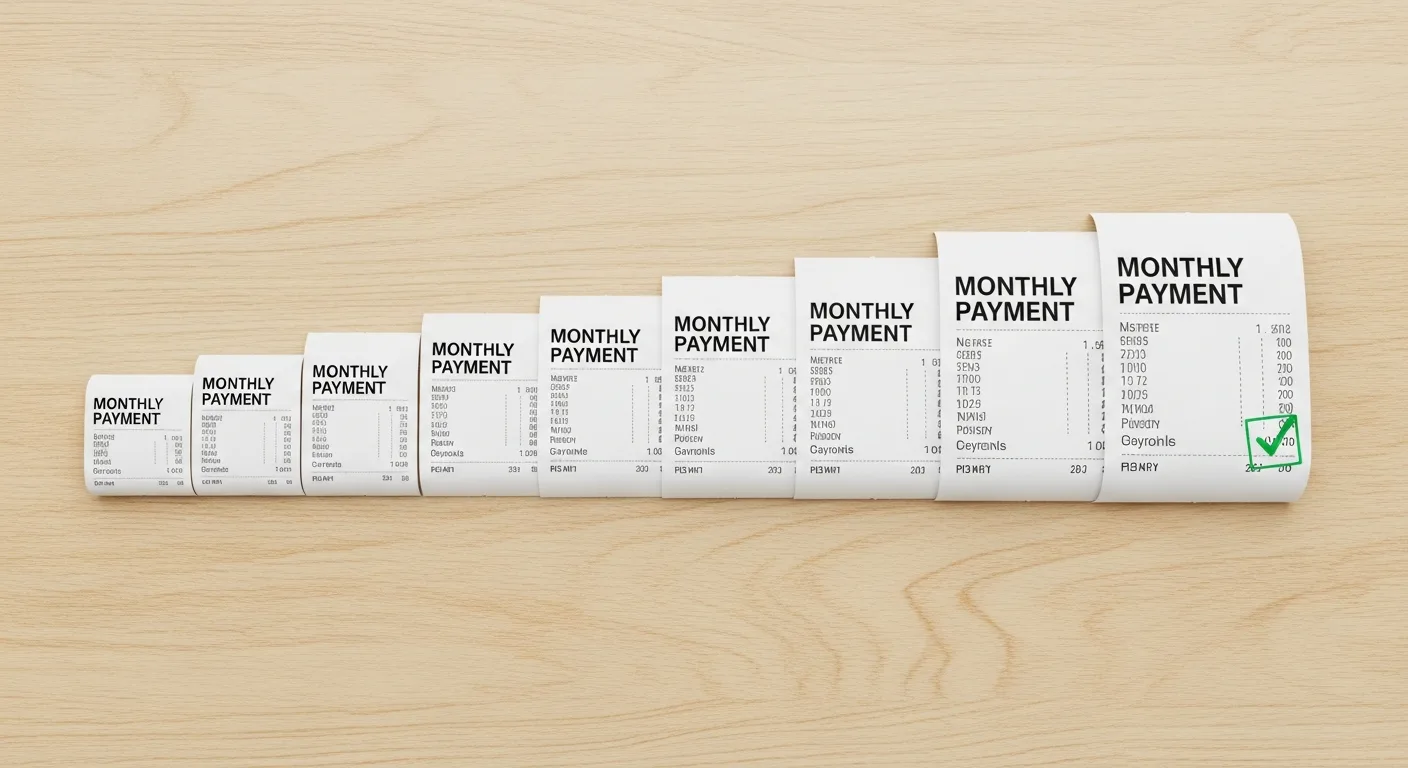
The grace period resets each billing cycle, but only when you pay the full statement balance on time.
Why Does the Grace Period Disappear?
The moment you carry any portion of your balance past the due date, the issuer treats your account differently. Since you already owe interest-bearing debt, new purchases no longer get the interest-free window. They start accruing interest from the transaction date, just like the balance you are already carrying.
This is not a penalty in the traditional sense. It is how the billing system works. The grace period is a benefit extended to accounts that are paid in full. When that condition is broken, the benefit is withdrawn. And it does not come back immediately, even if you pay the entire balance the next day.
Here is a common scenario. You normally pay in full every month. One month, an unexpected expense pushes your balance higher than you can pay, so you carry part of it. The next month, you pay the remaining balance plus new charges. But on the following statement, you see interest on the new charges you thought were in the clear. That is because the grace period had not been restored yet.
How Do You Actually Get It Back?
Restoring your grace period requires a specific sequence, and getting it right matters. Here is the step-by-step process:
- Stop using the card temporarily. If possible, put the card aside for a cycle or two. Every new purchase you make while carrying a balance starts accruing interest immediately, which works against you.
- Pay the entire current balance to zero. Not the statement balance, not the minimum payment. Pay the full current balance that your issuer shows. This includes any interest that has accrued since the last statement.
- Watch for residual interest on the next statement. Even after paying to zero, a small interest charge may appear. This is residual interest, which accrued between the statement date and the day your payment posted. Pay this immediately.
- Pay the next full statement balance by the due date. Once you have completed a full billing cycle with a zero starting balance and paid the new statement in full, most issuers restore the grace period.
- Confirm with your issuer. Call the number on the back of the card and ask directly: "Is the purchase grace period active on my account?" Some issuers can tell you exactly when it resumed.
For some issuers, one clean cycle is enough. Others may require two consecutive cycles of paying in full before the grace period fully returns. The exact rule depends on your card's terms, which is why confirming with the issuer is worth the five-minute phone call.
What About Balance Transfers?
Balance transfers create a particularly confusing situation. You might have a card with a 0% introductory APR on a balance transfer, and you might assume that new purchases also fall under that promotional rate. They usually do not.
When you have an open balance transfer on a card, new purchases may not receive a grace period. The reason is the same: the account is carrying a balance, even though that balance is at a promotional rate. The promotional rate applies to the transferred amount, but new purchases can accrue interest at the regular rate from day one.
This is one of the most common mistakes people make with balance transfer cards. They consolidate debt onto a card with a 0% intro APR offer and then use that same card for everyday purchases, not realizing those purchases are accruing interest at the regular rate. If you are using a card primarily for a balance transfer, consider using a different card for daily spending, one where you pay the full balance every month and maintain the grace period.
If you are looking for a way to manage existing debt while keeping your everyday spending interest-free, it could help to explore 0% introductory APR offers available now and dedicate that card to the transfer only.
0% Intro APR Offers
Need breathing room on a balance? See top 0% intro APR cards available now.
The Residual Interest Trap
Residual interest is one of the sneakiest charges in credit cards. You pay off your entire balance, you feel great, and then a small interest charge shows up on the next statement. It is not an error. It is interest that accrued between the day your statement closed and the day your payment actually posted.
Here is the problem: if you ignore that residual interest charge, your account technically carries a balance into the next cycle. And that means the grace period still is not restored. You are right back where you started.
The fix is simple. When that residual interest shows up, pay it immediately. Do not wait for the due date. The sooner you bring the account to a true zero, the sooner you start a clean cycle that can restore the grace period.
Instead of paying the statement balance and hoping for the best, call your issuer and ask for the "payoff amount as of today." This figure includes interest accrued since the statement closed, so paying it brings your account to a true zero with no residual surprise.
Does Paying the Minimum Help at All?
Minimum payments keep your account in good standing. They prevent late fees, protect your credit score from a missed payment mark, and stop the issuer from closing the account. But they do absolutely nothing to restore the grace period.
When you pay only the minimum, you are carrying a balance. And as we have covered, carrying a balance is exactly what causes the grace period to disappear. You could make minimum payments for years and never get it back. The only path to restoring the grace period is paying the full balance to zero and then paying the next statement in full.
Common Mistakes That Keep You Stuck
Even well-intentioned cardholders can trip over these common errors when trying to restore their grace period:
- Thinking one big payment fixes everything. Paying off a large balance is a great first step, but the grace period does not return until you complete a full billing cycle with a zero starting balance and pay the new statement in full.
- Ignoring residual interest. That small charge on the next statement is not a billing error. It is real interest, and leaving it unpaid resets the clock on your grace period recovery.
- Continuing to use the card during recovery. New purchases made while you are still carrying a balance accrue interest from day one. Using the card works against you during this process.
- Paying the statement balance instead of the current balance. If interest posted after the statement date, paying only the statement balance may leave a small remaining balance that keeps the grace period suspended.
- Assuming balance transfer balances do not count. A balance transfer at a promotional rate is still a balance on the account. It can prevent new purchases from receiving a grace period.
How Long Does the Whole Process Take?
In most cases, you can restore your grace period in one to two billing cycles. Here is a realistic timeline:
- Cycle 1: Pay the full current balance to zero. Watch for residual interest.
- Cycle 2: Pay any residual interest immediately. Pay the new statement balance in full by the due date.
- Cycle 3: The grace period should be active again. Verify with your issuer.
If you manage to pay the payoff amount (including all accrued interest) before the next statement closes, you could potentially shave off a cycle. The key is getting to a true zero balance, not just the number shown on the most recent statement.
What If You Cannot Pay the Full Balance Right Now?
If your balance is too large to pay off in one shot, you have a few options. First, you could focus on paying it down as aggressively as possible while minimizing new spending on the card. The faster you reach zero, the sooner you can start the grace period recovery process.
Second, you might consider moving the balance to a card with a 0% introductory APR on balance transfers. This stops interest from accruing on the transferred debt and frees up your original card to be paid to zero. Just remember that the balance transfer card itself probably will not give new purchases a grace period while the transferred balance is open.
Third, if your balance is relatively modest, you could simply pay it off over two or three months and accept that new purchases will accrue interest during that time. Sometimes the most practical plan is the simplest one.
Compare Current Offers
Looking for a 0% Intro APR Card?
A 0% introductory APR offer could help you pay down a balance without accruing more interest. Browse top offers and find the right fit.

Checking your statement carefully after payoff helps you catch residual interest before it resets the clock.
Learn More About Top OffersFrequently Asked Questions
How do you get your credit card grace period back?
Can you lose your grace period by carrying a balance?
Do balance transfers have a grace period?
Does paying the minimum restore my grace period?
How long does it take to get a grace period back after paying in full?
Can residual interest keep the grace period from returning?
The Bottom Line
Losing your grace period feels like a punishment, but it is really just a mechanical feature of how credit card billing works. The good news is that getting it back is straightforward: pay the balance to zero, handle any residual interest, and complete one or two clean billing cycles. The process usually takes 30 to 60 days, and once the grace period is restored, every new purchase goes back to being interest-free as long as you keep paying in full. A quick call to your issuer can confirm exactly where you stand and save you from guessing.