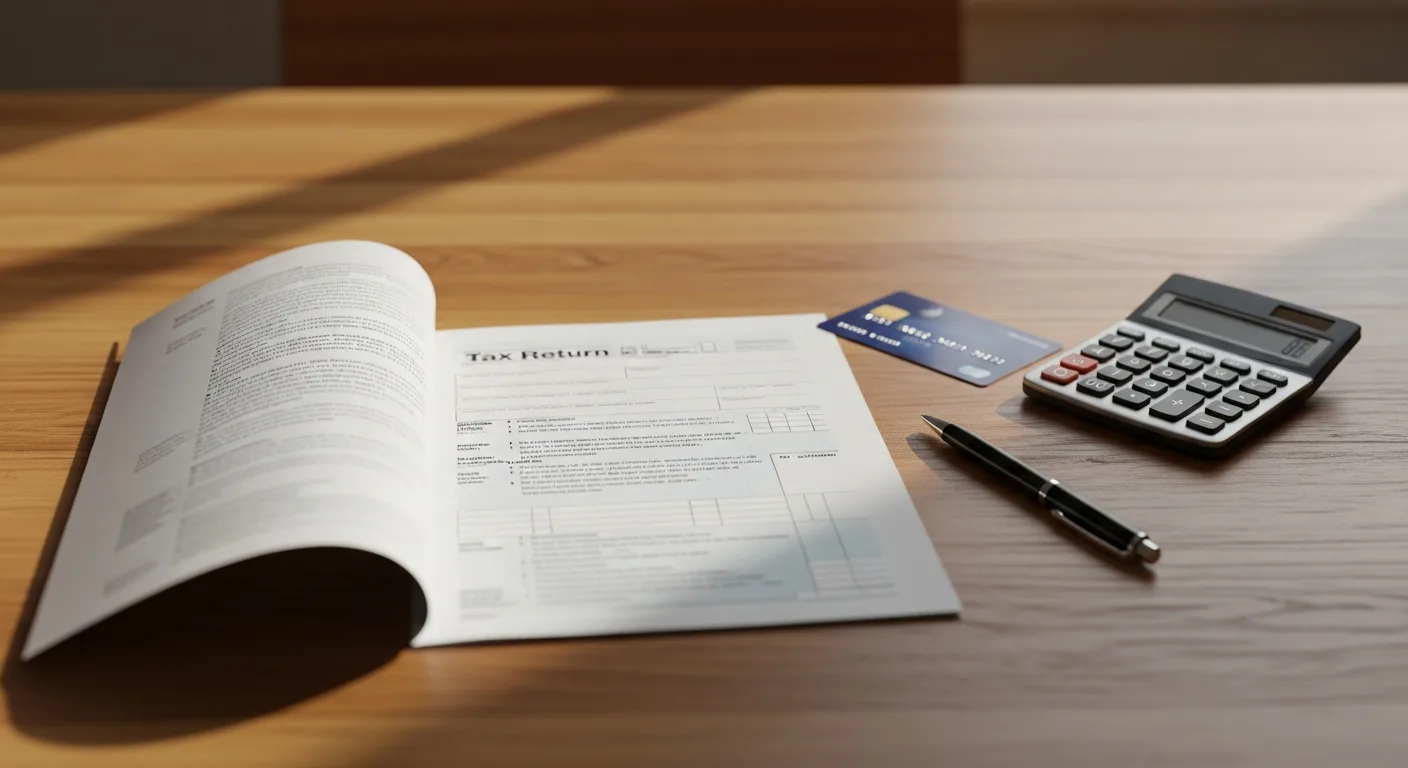
Yes, opening a 0% intro APR card to float a tax bill is a legitimate strategy — and for the right person, it beats a standard IRS payment plan on pure cost. The math only works, though, if you clear the balance before the introductory period ends, and there's a processing fee on every IRS card payment that you have to factor in from the start. Get both of those details right and you can buy yourself a year or more of breathing room without paying a dollar of interest.
Key Takeaways
- A 0% intro APR card can provide interest-free time to pay a tax bill in chunks — potentially cheaper than an IRS installment agreement.
- The IRS charges a processing fee every time you pay by card, so calculate that cost upfront before deciding this strategy makes sense.
- You must pay off the full balance before the introductory period expires; cards recommended for this strategy suit good to excellent credit.
The Math: 0% intro APR Card vs. IRS Installment Plan
Start with a concrete example and run it all the way through. Say you owe $3,000 in federal taxes. You can't pay in full today, so you're weighing two options: an IRS installment agreement or a new 0% intro APR card. compare current 0% intro APR offers
The IRS charges setup fees for installment agreements plus monthly interest and a late-payment penalty that compounds until the balance is gone. The combined rate isn't trivial — it adds up over a year. A 0% intro APR card, by contrast, charges zero interest for the introductory window, which on many cards runs twelve to twenty-one months.
The card route isn't free, though. The IRS uses third-party payment processors, and each one charges a percentage-based convenience fee on the transaction. On a $3,000 bill, that fee is a real dollar amount you pay upfront. So your actual comparison is: (IRS interest + penalties over your payoff timeline) versus (card processing fee, paid once). In many scenarios, especially if you'd take more than a few months to pay the IRS, the card could win. But you have to do your specific math — not assume.
One non-obvious insight: the IRS fee is per payment, not per card. If you split $3,000 across two card payments to stay under a credit limit, you pay the fee twice. Use one payment if at all possible.
Estimate the total IRS interest and penalties if you paid over 12 months. Then look up the current processor fee percentage and multiply it by your tax bill. If the fee is lower than the IRS cost, the card strategy could save money — assuming you clear the balance in time.
Already know what you want? A surprise tax bill can throw off your entire cash flow. A 0% intro APR card lets you spread that cost over months without paying interest — but the strategy only works if you run the numbers first.
Learn MoreWhy This Strategy Is About Keeping Cash, Not Avoiding Taxes
The real power here isn't just cost savings — it's cash flow. If you have $3,000 in savings but depleting it wipes out your emergency fund, charging the tax bill and paying $200–$300 a month instead protects your financial cushion.
About one in four U.S. adults said in April 2025 that they couldn't pay some bills or could only make partial payments in a typical month.[3] A tax bill landing on top of normal expenses is exactly the kind of shock that pushes people into that category. Spreading the payment over the introductory window smooths that spike.
Think of the 0% intro APR period as a short-term, interest-free loan you're taking from the card issuer. You're not avoiding the obligation — you're restructuring when you pay it, on terms that could cost you less than the IRS's own payment plan.
This framing also clarifies the risk. If you use the card and then don't pay it down aggressively, you've just swapped IRS debt for high-interest card debt once the introductory period ends. The average APR on new general-purpose credit card accounts reached 27.5% at the end of 2024.[2] That rate, applied to your leftover $3,000 balance, would cost far more than any IRS fee.

Running the numbers before you apply is the most important step — compare the IRS total cost against the card processing fee on your specific balance.
Who Should — and Shouldn't — Use This Strategy
This approach works best for someone with a defined payoff plan. Before you apply, divide your tax bill by the number of months in the introductory period. If that monthly payment fits your budget comfortably, the strategy is generally a better fit. If it's a stretch, the strategy is riskier than it looks.
Cards with long 0% intro APR windows are recommended for good to excellent credit. If your credit score is below that range, you may not be matched with the longest introductory periods, which shortens your repayment runway and raises the bar for making the math work.
You probably shouldn't use this strategy if you're already carrying balances on other cards, if you tend to pay only minimums, or if your income is irregular and monthly payments aren't predictable. In those cases, the IRS installment plan — while more expensive — comes with fewer catastrophic-mistake scenarios.
- Good fit: You have steady income, a clear monthly budget, and good to excellent credit.
- Good fit: Your tax bill would deplete your emergency fund if paid all at once.
- Good fit: The IRS interest and penalty cost over your payoff timeline exceeds the card processing fee.
- Poor fit: You're already carrying revolving credit card debt.
- Poor fit: You'd only make minimum payments — the balance won't clear before the introductory period ends.
- Poor fit: Your credit profile doesn't qualify you for cards with long introductory windows.
0% Intro APR Offers
Ready to Compare 0% intro APR Cards?
How to Pick the Right Card for a Tax Bill
The single most important feature is the length of the 0% intro APR window. A longer window means a lower required monthly payment to clear the balance in time. Back to our $3,000 example: over 15 months, that's $200 a month. Over 21 months, it's under $145. That difference matters if cash flow is tight.
Look for no annual fee card. Paying an annual fee on top of the IRS processing fee erodes your savings before you've made a single payment. Most competitive 0% intro APR cards carry no annual fee, so there's no reason to accept one for this specific use case.
A higher credit limit matters here too. If your tax bill approaches or exceeds your card's limit, you'll have high credit utilization — meaning the balance as a percentage of your limit — which can temporarily drag your credit score. If possible, find a card with a limit that keeps your utilization below 30% of the credit line.
Some cards also offer a welcome bonus for hitting a spending threshold in the first few months. Your tax payment could easily meet that threshold, effectively earning rewards on top of an interest-free float. Just make sure the minimum spend requirement doesn't push you to charge more than you planned.
Mark the exact last day of your 0% intro APR period in your calendar the day you open the card. Set a reminder 60 days out. If you still have a balance at that point, throw extra cash at it. The standard interest rate that kicks in after the introductory period is not forgiving.
What Happens After the 0% intro APR Period Ends?
This is where the strategy can unravel. Once the introductory period ends, any remaining balance starts accruing interest at the card's standard variable rate. Credit card balances have remained very high in recent quarters. A significant portion of that growth comes from people who opened promotional cards and didn't clear the balance in time.
Cards with 0% intro APR promotions accounted for roughly one-third of all credit card purchase volume and outstanding balances in 2024.[1] The strategy is popular — which also means issuers price their standard rates to recoup margin from people who don't pay off in time.
If you realize two months before the deadline that you can't clear your $3,000 balance, you have a few options. You could open a balance-transfer card with its own introductory period and move the remaining balance — though balance-transfer fees apply. You could take out a personal loan at a lower rate than the card's standard APR. Or you could negotiate with the IRS at that point for a payment plan on whatever you can't cover. None of these are ideal, but they're better than silently letting a high rate run.
Step-by-Step: How to Execute This Strategy Cleanly
Execution matters as much as the idea. Here's how to run this without surprises.
First, find out your exact tax liability before applying for anything. The IRS charges by payment, so knowing the precise amount helps you plan whether one payment or two makes more sense given processing fees.
Second, apply for no annual fee card with a long 0% intro APR window. These are recommended for good to excellent credit, so check your score first. Opening a new card creates a hard inquiry and temporarily lowers your score slightly — that's normal and recovers within a few months.
Third, make the IRS payment as soon as the card arrives and your credit line is confirmed. Don't wait; tax deadlines don't care about card delivery timelines. Fourth, divide the total charge — tax bill plus processing fee — by the number of months remaining in the introductory period. Set that as your fixed monthly autopay. Fifth, don't use the card for other purchases unless you've budgeted for them separately. Mixing spending complicates your payoff math.
- Confirm your exact tax amount owed before applying.
- Apply for no annual fee card with the longest available 0% intro APR window.
- Pay the IRS promptly once the card is in hand.
- Calculate: (bill + processing fee) ÷ introductory months = your required monthly payment.
- Set that amount as autopay immediately.
- Mark the introductory period end date and treat it as a hard deadline.
Compare Current Offers
Find the Right 0% intro APR Card for Your Tax Bill
The right card gives you a long introductory window and no annual fee so more of your money goes toward the balance. Check out top offers available now to find one that fits your timeline.

Mark the last day of your 0% intro APR window and treat it like a hard deadline — what happens after that date defines whether this strategy saved you money or cost you more.
Learn More About Top OffersFrequently Asked Questions
Is opening a 0% intro APR card to pay a tax bill a good idea?
Does the IRS charge a fee for credit card payments?
What happens if I don't pay off the balance before the 0% intro APR period ends?
Can I pay state taxes with a credit card too?
Will opening a new card for my tax bill hurt my credit score?
Should I split a large tax bill across two cards to stay under my credit limit?
Is there a limit to how much of my tax bill I can put on a credit card?
The Bottom Line
Opening a 0% intro APR card to pay a tax bill can be a smart move for the right person: someone with good to excellent credit, a steady income, and a firm commitment to clearing the balance before the introductory period ends. The IRS processing fee is real, but in many cases it's still less than the combined interest and penalties of an installment agreement — especially if you'd take a year or more to pay.
The strategy fails when the payoff plan is vague. If you can't answer 'exactly how much will I pay each month and exactly when will the balance hit zero,' pause before applying. A 0% intro APR card is a powerful tool for floating a tax bill — but it demands the same discipline as any debt payoff plan. Nail the execution and you keep your cash, avoid unnecessary interest, and pay no interest on the card's promotional balance. Miss the deadline and you trade one problem for a more expensive one.