Usually no: if you already have the cash in a high-yield savings account, paying a 4% card fee to use a 0% intro APR card rarely comes out ahead. The reason is simple. The fee is a guaranteed cost you pay on day one, while the interest you'd earn by keeping your cash in savings is small and the cash back on the purchase usually covers only part of the fee. This guide walks through the actual numbers so you can check your own quote, and shows the few cases where paying the fee can still make sense.
Key Takeaways
- A 4% surcharge is a certain, upfront cost, and cash back plus savings interest usually doesn't cover it.
- If you already have the cash, the 0% intro APR period mostly just lets you hold money a bit longer, which pays little.
- Paying the fee can make sense when you'd otherwise drain your emergency fund or the contractor's cash discount is small or nonexistent.
What does a 4% fee actually cost on a renovation?
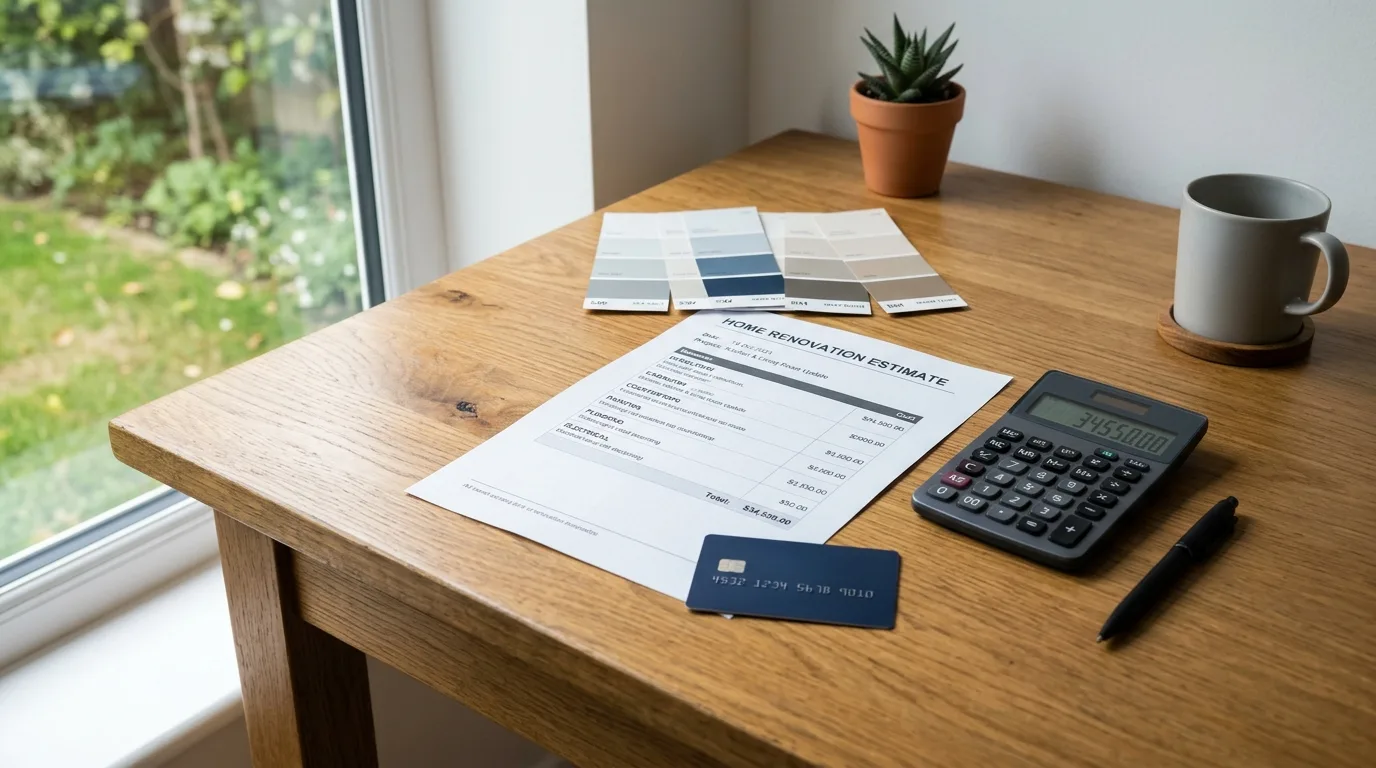
Start with the plain number. Say your contractor quotes $20,000 and adds a 4% surcharge for paying by card. That's $800 extra, due right away, and you don't get it back. Compare current 0% intro APR offers.
Now compare that with what a card could give you. A card earning 2% back on that $20,000 returns $400, if the purchase earns the full rate. That leaves you $400 behind before you consider anything else. Some cards pay less on contractor payments or cap bonus categories, so check how your card treats this kind of purchase.
Also check whether your contractor offers a discount for paying by check or bank transfer. If the surcharge only applies to cards, then a 4% fee is really the price of using a card, and you can skip it by paying another way.
Already know what you want? Quote in hand and a 4% card fee on it? Here's how to tell whether the fee is worth paying.
Learn MoreHow much interest could you earn by keeping the cash in savings?
The 0% intro APR period lets you leave your cash alone while you pay the card off. So the benefit is the interest your savings earn in the meantime. To keep this realistic, the national average savings rate was 0.38% in October 2026, according to the FDIC.[1] High-yield savings accounts pay more than that average, so use your own account's rate.
Here's an example with a generous assumption. Say your account pays 4% a year, and you keep $20,000 there for 12 months while you pay the card down evenly. Your balance shrinks as you pay, so on average you hold about $10,000 over the year. That's roughly $400 in interest.
Add that $400 to the $400 in cash back and you get $800, which just matches the $800 fee. And that's with a good savings rate, full cash back, and everything going right. At a lower savings rate or a lower cash back rate, you come out behind.
If you instead pay the card off in one lump sum at the end of the intro period, you'd hold the full $20,000 and earn closer to $800 on a 4% account. That sounds better, but it takes discipline, and a single missed payment date can cost you far more than you earned.
Fee = quote x surcharge. Gain = (quote x cash back rate) + (average cash held x savings rate x years). If the fee is bigger than the gain, paying another way is cheaper.

Dividing the total by the number of intro months shows whether the monthly payment fits your budget.
What if you don't have the cash, or don't want to use it all?
The math changes if the savings in your account are your emergency fund. Renovations often run over budget, and spending your cushion down to nothing carries its own risk. A burst pipe or job loss during a project is a bad time to have no cash.
In that case, a 0% intro APR card can let you spread the cost and keep some savings untouched. Still, the 4% fee is a real price for that flexibility, so compare it with other ways to finance the project. For many people, a 0% intro APR card without a surcharge, or paying part of the bill another way, costs less.
One useful approach is to split the bill. Pay the materials you buy yourself at a store on a card with no surcharge, and pay the contractor's labor by check or transfer. That way you can earn rewards on part of the project without paying a fee on all of it.
- Pay the contractor by check or bank transfer to skip the surcharge
- Put store-bought materials on a card if you want cash back and a longer payoff window
- Keep a cash cushion for surprise costs instead of spending every dollar
0% Intro APR Offers
Want to see what a longer intro period looks like?
| Scenario ($20,000 job) | Cost of 4% fee | Cash back at 2% | Savings interest at 4% (avg. $10,000 held) | Net result |
|---|---|---|---|---|
| Pay by card, pay down evenly over 12 months | $800 | $400 | about $400 | about break even |
| Pay by card, lump sum at end of 12 months | $800 | $400 | about $800 | about $400 ahead, with more payoff risk |
| Pay by card, savings earn a lower rate | $800 | $400 | about $100 to $200 | $200 to $300 behind |
| Pay by check or transfer, no surcharge | $0 | $0 | $0 | depends on discount; no fee risk |
What happens if you don't pay it off in time?
This is where a 0% intro APR card can go wrong. If a balance remains when the intro period ends, it starts collecting interest at the card's standard variable APR. The average rate on U.S. credit card accounts assessed interest was 22.36% in August 2026, according to the Federal Reserve.[2]
Here's what that could look like. Suppose you still owe $5,000 when the intro period ends. At the standard variable APR, that could mean substantial interest over a year if you made no payments, far more than the $800 fee you paid up front. Even paying it down slowly, you could easily lose more than you earned.
So before you commit, divide the total by the number of intro months. For $20,000 over 15 months, that's about $1,334 a month. If that payment is tight, a surcharge plus a possible interest bill makes the card a poor fit.
How does this compare with a balance transfer fee?
It helps to see how the 4% fee stacks up against other costs people accept to get a 0% intro APR period. The CFPB reported that the average balance transfer fee fell from 3.0% in 2020 to 2.8% in 2022.[3] Those fees are paid to move debt you already have, and a contractor surcharge is a similar kind of cost for a different purpose.
The key difference is that a balance transfer gives you time to pay off debt that would otherwise be charging you high interest. A surcharge on money you already have in savings buys you almost nothing, since your savings weren't costing you any interest to begin with.
That's why the fee matters most when you have the cash. Paying 4% to delay a payment you can already afford rarely adds up.
Compare Current Offers
Ready to compare your options?
If you decide a card makes sense for your project, check out top offers available now and look closely at the length of the intro period.
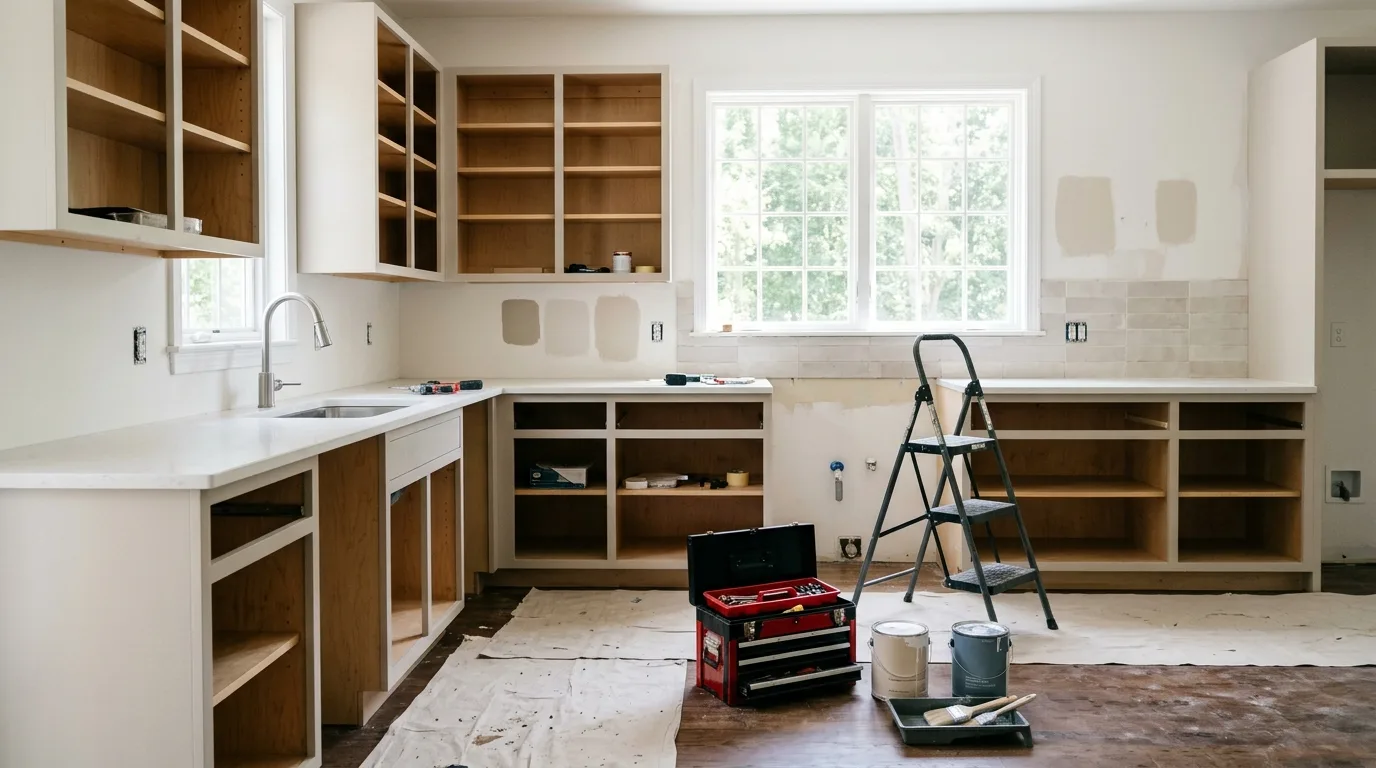
Materials bought separately from the contractor can often go on a card without a surcharge.
Learn More About Top OffersFrequently Asked Questions
Is a 4% card fee worth it on a renovation if I have the cash?
Can cash back cover the contractor's card fee?
When does a 0% intro APR card make sense for a renovation?
Can a contractor legally charge extra for paying by card?
What credit is recommended for a 0% intro APR card?
Should I ask for a discount for paying by check?
What if the project costs more than expected?
The Bottom Line
If you already have the cash for your renovation, skip the 4% fee when you can. Paying by check or transfer is usually cheaper than a card, because cash back and savings interest rarely add up to the fee after the payments are spread out.
A 0% intro APR card still has a place if you want to protect your emergency fund and have a clear plan to pay it off before the intro period ends. Look for a way to avoid the surcharge, such as using the card for materials, and check out top offers available now.