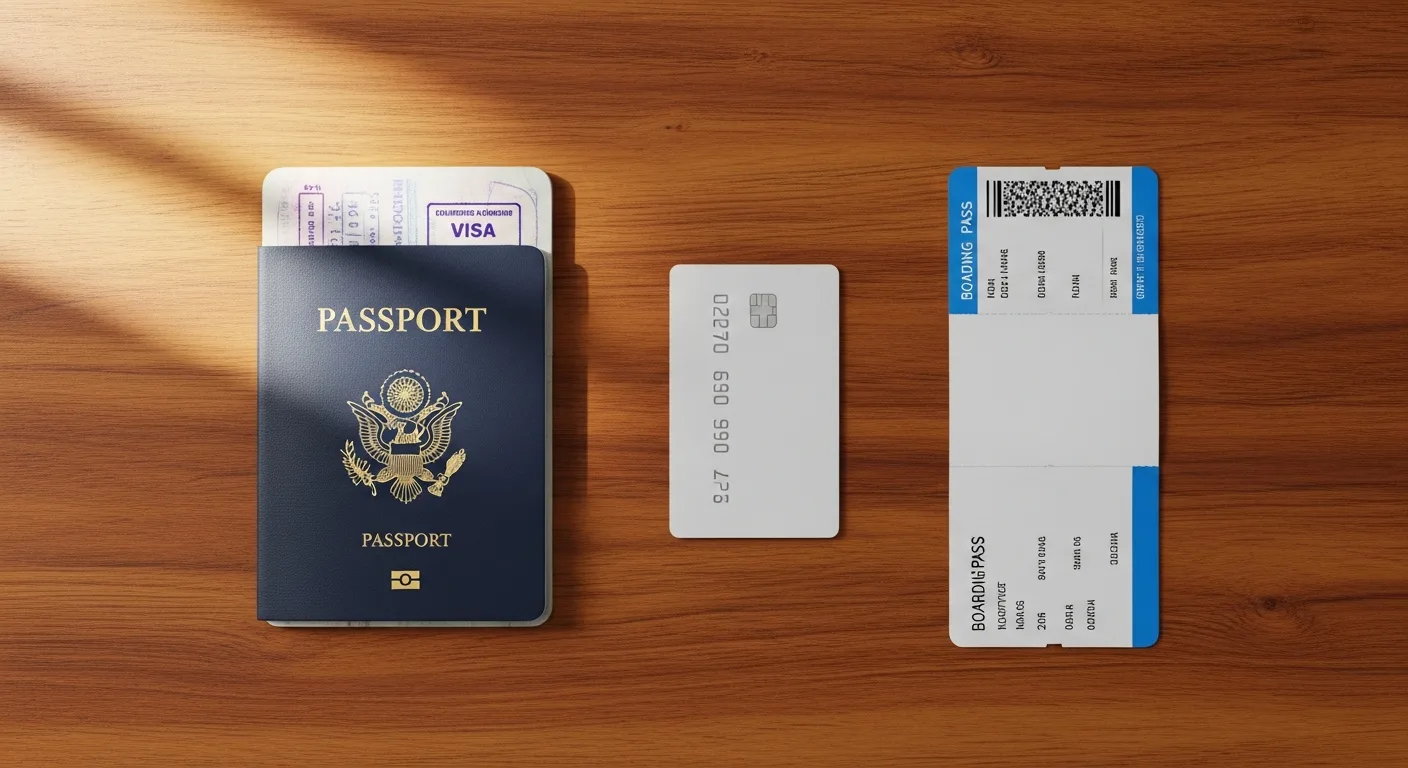
If you have a thin credit file and a trip coming up, you probably shouldn't wait for your credit to age before getting a card for the trip, but you also shouldn't count on a travel rewards card being the right one. Credit history length is only part of your score, and a card you open now can still cover your trip costs and protect you abroad. The real tradeoff is timing: a travel card's welcome bonus usually needs a minimum spend in the first few months, and an account that won't be a year old before you leave may not give you what you hoped for.
Key Takeaways
- A short credit history is not a reason to freeze everything, but a thin file can limit which travel cards you're offered, so match the card to your credit range.
- If your trip is soon, a welcome bonus is a nice extra, not a reason to apply. Only count on it if you can meet the minimum spend with money you'd spend anyway.
- A simple no-fee card that works abroad can beat a premium travel card for one trip; a travel card is worth it mainly when you travel often enough to use its perks.
Does a thin credit file mean you should wait?
A thin file simply means you have few accounts or a short history. About 25 million U.S. adults, or 9.8% of adults, had thin credit files in 2025, and the Federal Reserve said this can effectively preclude access to credit from traditional banks.[1] So you're not unusual, but you should know it can narrow your choices. Compare current travel card offers.
Waiting does help in one way: your history gets longer. Credit history length accounts for 15% of a FICO Score, including the age of the oldest account, the newest account, and the average age of all accounts.[2] That's a meaningful piece, but it's not the whole score. Payment history and how much of your limits you use matter too, and you can work on those right now.
Here's the catch with waiting. Time only helps if you're using credit well in the meantime. If you have no accounts open, nothing is aging. A starter card used lightly and paid in full each month builds history while you wait, so your profile is stronger when you do go after a travel card.
Already know what you want? Thin credit, one big trip, and a clock that won't give your account a full year of age. Here's how to decide.
Learn MoreHow does the trip date change the decision?
Your trip date is the part that matters most. A new account won't be a year old before you leave, and that's fine for travel use. A card doesn't need age to work abroad. It needs to be open, activated, and have a limit big enough for your costs.
What age does affect is your next application. If you want a stronger travel card later, a year or two of on-time payments on a first card will usually put you in a better spot. These cards are generally recommended for good to excellent credit, so a thin file may not be there yet.
So think of it in two steps. First, get a card that handles this trip. Second, build toward the travel card you really want. You don't have to choose one or the other.
Give yourself several weeks before you leave. That leaves time for the card to arrive, to activate it, and to set up a PIN or travel notice if your issuer offers them.

Mapping your spending against the trip date shows whether a welcome bonus minimum is realistic.
Is a welcome bonus a good reason to apply now?
Probably not on its own. Most welcome bonuses require you to spend a set amount in the first few months. If the trip is the spending that gets you there, it can line up nicely. If you'd have to stretch your budget to hit the number, it's not worth it.
It's also not a sure thing. In 2022, about one-fourth of cardholders eligible for a credit-card sign-up bonus failed to meet the requirements, while those who earned the bonus received an average of $326.[3] That tells you two things: the bonus can be worth having, and a lot of people miss it.
Here's a simple way to test it. Say a card asks for $1,500 in spending over three months. That's $500 a month. If you already spend $500 a month on things you'd buy anyway, plus part of your trip, you could get there without changing your habits. If not, skip the bonus in your math and judge the card on everything else.
Travel Rewards Offers
Ready to see what's out there?
Is a travel credit card worth it for one trip?
A travel card is worth it when what you get back is more than what it costs you. For one trip, that's a hard bar to clear. A card with an annual fee has to earn that fee back, and one trip may not do it.
A simpler setup often works better for a first trip. Look for a no annual fee card with no foreign transaction fees, so you don't pay extra on every purchase abroad. Those fees are usually a percentage of each charge, so on a trip with lots of small purchases they add up.
If you expect to travel more often, a travel card starts to make more sense. Then perks like points toward flights and hotels, and travel protections, have more chances to pay off. Be honest about how much you'll actually use them.
- Ask whether you'll travel at least a few times a year.
- Check whether the card has a fee and whether the perks cover it.
- Look for no foreign transaction fees on trips abroad.
- Plan to pay the balance in full so interest doesn't wipe out the rewards.
What can you do before you leave to improve your options?
You have a few moves that help no matter which card you choose. Pay every bill on time, since payment history is a big part of your score. Keep your balances low compared with your limits; under 30% is a common rule of thumb.
Also watch out for how many applications you make. Each one can cause a hard inquiry, and a lot of them in a short time can hurt a thin file more than a deep one. It's also worth knowing that among U.S. adults who applied for credit in 2025, one-third were either denied credit or approved for less credit than requested.[4] A smaller limit could matter for a trip, so plan your spending around what you're actually given.
If you can, bring a backup way to pay, such as a debit card, so a declined charge abroad doesn't leave you stuck.
Compare Current Offers
Compare Travel Cards for Your Credit Range
Check out top offers available now and match the card to your credit, your trip, and your budget.

A card that works abroad matters more than card age once you're packing for the trip.
Learn More About Top OffersFrequently Asked Questions
Should I wait to apply for a travel card until my credit profile is older?
Will a welcome bonus come in time for my trip?
Is a travel credit card worth it for one international trip?
Does the age of my account matter while I'm traveling?
What credit range are travel cards recommended for?
How can I build credit before applying for a travel card?
Should I carry a backup way to pay abroad?
The Bottom Line
You don't have to wait for your credit profile to age before you travel. For one trip, a simple no annual fee card with no foreign transaction fees can do the job, and it starts building history right away.
Save the travel card for when your credit is stronger and you travel often enough to use the perks. Treat any welcome bonus as extra, and compare current offers that are recommended for your credit range.