
The right card for study abroad is one that has no foreign transaction fees and suits a thin or short credit history — those two factors matter far more than rewards. Most premium travel cards are recommended for good to excellent credit, which rules them out for most first- or second-year students. But student-focused cards and secured cards fill that gap, and several of them skip foreign transaction fees entirely, which is the one feature you absolutely cannot compromise on abroad.
Key Takeaways
- No foreign transaction fee is the single non-negotiable feature — without it, you pay a surcharge on every overseas purchase.
- Student cards and secured cards are recommended for thin or short credit histories; most premium travel cards are not.
- Apply at least three to four weeks before your departure date so the physical card arrives in time.
Why most travel cards aren't the right starting point
Premium travel cards come loaded with perks — airport lounge access, trip cancellation coverage, points on flights and hotels. They look perfect for a semester abroad. The catch is that they're recommended for good to excellent credit, meaning a credit score typically in the mid-to-high 600s at minimum, and often higher. compare student and secured travel cards
Most students don't have that yet. According to the Federal Reserve's 2024 survey, 63% of adults aged 18–29 reported having a credit card, compared with 81% of adults overall. That gap reflects what the CFPB has also documented: roughly 26 million U.S. adults are credit invisible, and another 19 million have unscorable files due to thin or stale histories. Many students fall into exactly that group.
Applying for a card outside your credit range doesn't just mean a denial — it leaves a hard inquiry on your report. If you've already been denied once recently, adding another hard pull right before you leave is a real cost with no upside. The smarter move is to target cards built for your current credit profile, not the one you'll have in three years.
Already know what you want? Heading overseas with a thin credit file and a fixed leave date? Here's exactly what to look for — and what to skip.
Learn MoreThe one feature you can't compromise on: no foreign transaction fees
Foreign transaction fees — typically around 3% of every purchase — are charged by your card issuer whenever you pay in another currency. Swipe your card for a €40 dinner, pay a €12 museum entry, grab a €3 coffee. Those fees stack up invisibly and show up as a line item on your statement you never planned for.
Take a student spending roughly $1,200 a month abroad for four months. At 3%, that's about $144 in fees — just for the privilege of using a card. That's a weekend trip, a month of groceries, or simply money gone for nothing. A no foreign transaction fee card eliminates that entirely.
Every card you seriously consider for study abroad must have this feature. It's more important than the rewards rate, the sign-up offer, or the credit limit. Check the card's terms before you apply — this fee is always disclosed in the Schumer box.
The foreign transaction fee is listed in every card's terms under 'Transaction Fees' or 'Other Fees.' If you see anything above 0%, skip that card for overseas use.

Check the foreign transaction fee in the card's terms before applying.
Which card types actually fit a student's credit profile?
Two card types are recommended for thin or short credit histories: student credit cards and secured credit cards. Both can be found without foreign transaction fees, and both report to the major credit bureaus — so using one responsibly also builds your file while you're abroad.
Student credit cards are unsecured, meaning no deposit required. They're designed for people just starting out and typically have modest credit limits. Some earn a small percentage back on everyday categories like dining and groceries — useful when you're eating your way through a semester overseas. They are recommended for those currently enrolled at a U.S. college or university.
Secured cards require a refundable deposit, which usually equals your credit limit. So if you deposit $500, you get a $500 limit. They're a solid option if you've been denied for an unsecured card, or if you want a higher limit than a student card would give you. The deposit isn't spent — it's held as collateral and returned when you close the account or graduate to an unsecured product. The non-obvious advantage here: you control your own credit limit by choosing your deposit amount, which makes budgeting for a semester abroad more predictable.
- Student credit cards — no deposit, designed for limited credit history, some earn rewards on dining and everyday purchases
- Secured credit cards — require a refundable deposit, good fallback after a denial, deposit amount often sets your credit limit
- Both types report to the major credit bureaus, so they build your credit history while you're abroad
Travel Rewards Offers
Ready to find a card before you leave?
| Card Type | Deposit Required? | Recommended Credit Profile | Can Have No Foreign Fee? | Builds Credit? |
|---|---|---|---|---|
| Student credit card | No | Limited / short history | Yes — check terms | Yes |
| Secured credit card | Yes (refundable) | Thin / limited / recent denial | Yes — check terms | Yes |
| Premium travel card | No | Good to excellent | Usually yes | Yes |
What about the timing problem?
A tight departure date is the hidden pressure point most articles ignore. You can find the right card on paper, get approved, and still not have it in your hands when you board if you cut it too close.
Card issuers typically mail physical cards seven to ten business days after approval. Some are faster; a few take longer if they request identity verification documents. If you apply four days before your flight, you're almost certainly leaving without the card.
Apply at least three to four weeks before your departure. That gives you a week for processing, a week for mail, and a week of buffer. If the card doesn't arrive in time, most issuers will overnight a replacement to a confirmed address — but you'll need to call and ask, and it's not guaranteed.
One more timing note: if you've had a recent denial, wait at least 30 days before applying again. Stacking hard inquiries in a short window signals risk to issuers and doesn't help your odds with a thin file. Use that window to review your credit report for any errors that might have contributed to the denial.
Pull your free credit report at AnnualCreditReport.com and check for errors before your next application. A wrong address, a misreported account, or a mixed file can cause denials that have nothing to do with your actual credit behavior.
Should you bring more than one card?
Yes — and this is the advice most students skip. One card is a single point of failure. Cards get lost, stolen, swallowed by ATMs, or frozen by fraud alerts when your issuer sees unusual overseas activity. If that happens at 11 p.m. in a foreign city with no backup, you're in a genuinely difficult situation.
The practical setup: one no foreign transaction fee card as your primary, and one card you already have (even if it charges foreign fees) kept locked in your accommodation as an emergency backup. You won't use the backup for everyday spending — only if your primary card is compromised.
Before you leave, call your issuer and notify them of your travel dates and destination. Many issuers let you set this in their app. It takes three minutes and dramatically reduces the chance of a fraud freeze at the worst possible moment.
How to use your card abroad without running into trouble
Always pay in the local currency when a merchant or ATM asks whether you want to pay in dollars or local currency. Choosing dollars triggers dynamic currency conversion — a process where the merchant's bank sets the exchange rate instead of your card network, almost always at a worse rate. Even with a no foreign transaction fee card, dynamic currency conversion costs you money. Always choose local currency.
Keep your credit utilization — the percentage of your available credit you're using at any given time — below 30% if possible. On a $500 limit, that means keeping your balance under $150 before your statement closes. This matters because your credit score is being built in real time while you're abroad, and a high utilization reading on your statement date can drag it down even if you pay in full every month.
Pay your balance in full each month, even from overseas. Set up autopay for at least the minimum payment so you never miss a due date due to a time zone mix-up or a spotty internet connection. Missing a payment is far more damaging to a thin credit file than a high balance — and it adds late fees on top.
Compare Current Offers
Find the right card for your trip
Student and secured cards with no foreign transaction fees exist. Compare current offers and apply with enough runway to get your card in hand before you board.
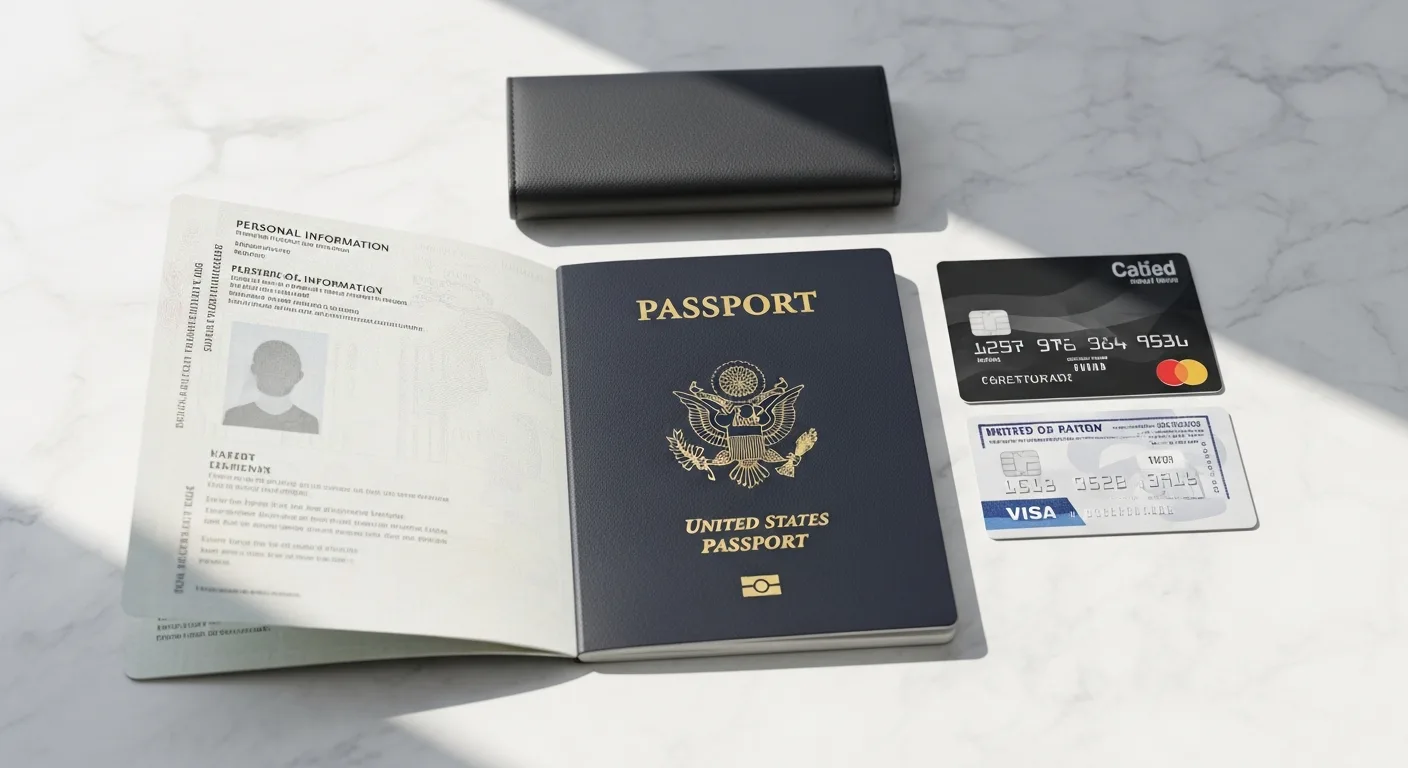
Carrying two cards gives you a safety net if one is lost or frozen abroad.
Learn More About Top OffersFrequently Asked Questions
What kind of credit card is best for study abroad if I have little credit history?
Does a secured card work overseas for study abroad?
How far in advance should I apply for a study abroad credit card?
What is a foreign transaction fee, and how much does it cost?
What is dynamic currency conversion, and should I use it?
Will using a credit card abroad hurt my credit score?
I was recently denied a credit card. Can I still get one before I leave?
The Bottom Line
For study abroad, the card that works best is the one with no foreign transaction fees that you can actually get before your flight. A student card or secured card recommended for thin credit histories is almost always the right starting point — not a premium travel card that requires a longer credit track record.
Apply three to four weeks before your departure, set a travel notice with your issuer, and keep a backup card in your luggage. Those three steps cost nothing and prevent the kind of money problems that turn a semester abroad into a stressful one.