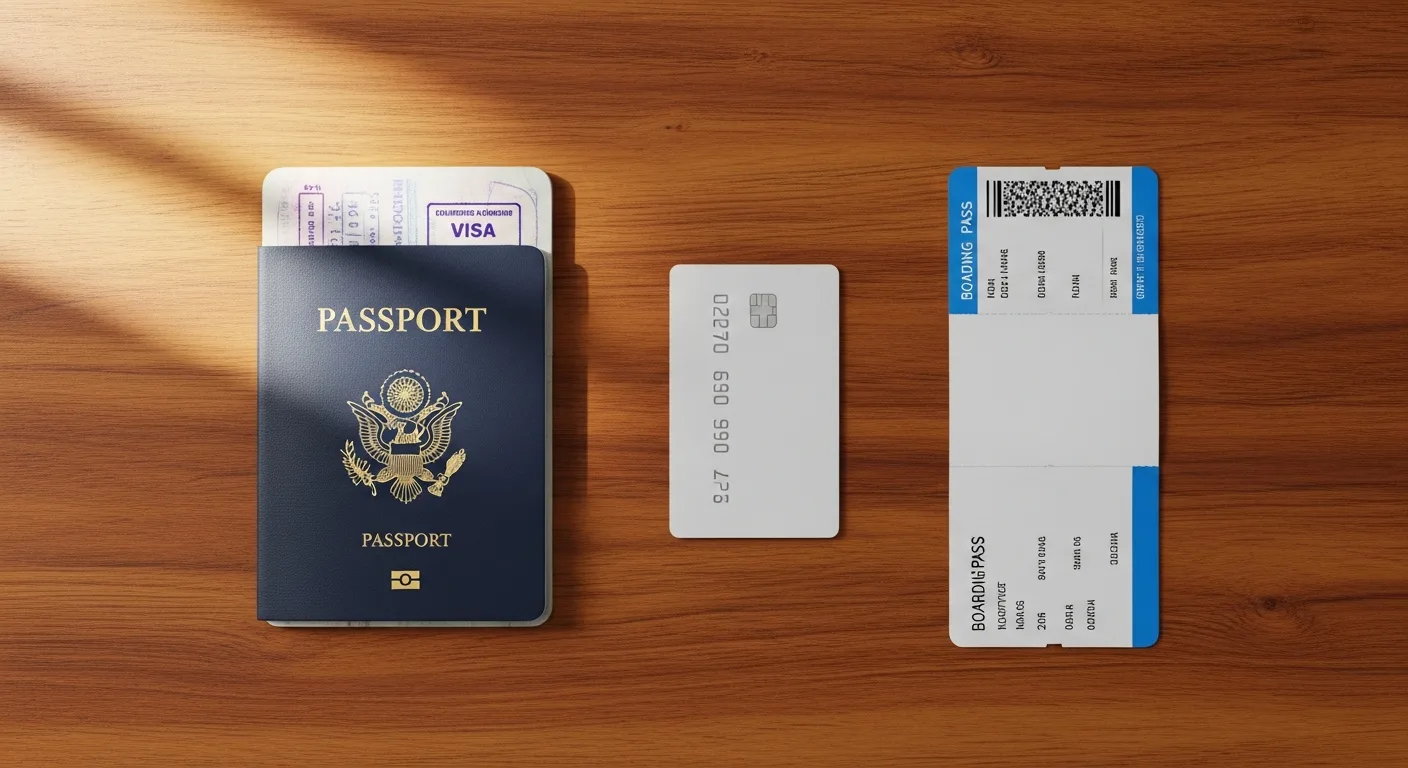
A travel credit card can be worth it if you only travel once a year, but only if the card's perks and rewards add up to more than it costs you to hold it. For most once-or-twice-a-year travelers, that points to a no annual fee or low annual fee card, or a flat-rate cash back card, rather than a premium card with a big fee. The reason is simple: a high fee needs a lot of use to pay off, and two trips don't give you much use. Below you'll find a quick way to run the math, what to look for if you travel with family or mostly visit relatives, and when cash back is the better call.
Key Takeaways
- If you travel once or twice a year, a no annual fee or low annual fee travel card usually makes more sense than a premium card with a high fee.
- A travel card beats cash back only if you will actually use its perks (like rental coverage or no foreign transaction fees) and redeem the points.
- Travel cards are built for people who pay in full each month; carrying a balance can cost more in interest than you earn in rewards.
Are Travel Credit Cards Worth It If You Only Travel Once or Twice a Year?
Often, yes, but it comes down to the fee. A travel card has two jobs: earn rewards and give you perks. If you only travel once or twice a year, you don't get many chances to use the perks, so a high annual fee is hard to win back. Compare current travel card offers.
You're not unusual, though. U.S. Travel Association research found that Americans with travel planned in the next six months expected about two trips on average.[1] Two trips a year is normal, and it's exactly where a simple, low-cost card tends to fit best.
Here's the short version. If a card has no annual fee, it only has to be as good as your current card to be worth adding. If it has a fee, it has to earn or save you more than that fee, every year, not just in year one.
Already know what you want? Want to see what's out there? Compare current travel card offers and filter by annual fee.
Learn MoreHow Do You Run the Math on Your Own Trips?
Use a simple example. Say you spend $3,000 a year on travel: flights, hotels, a rental car, and meals out. A flat-rate cash back card earning 2% back would return $60. That's your number to beat.
Now look at a travel card with a fee. Say it earns more points on travel and dining, and you'd get an extra $80 in value from perks you'd really use, like a rental car you'd otherwise pay extra to cover. If your rewards plus perks come to $140 or so, and that exceeds the annual fee, you come out ahead. If you don't need the perks, you'd be paying for things you don't use.
The welcome bonus can tip the scale in year one. Just make sure you could hit the minimum spend with normal spending, not by buying things you wouldn't have bought. Then redo the math for year two without the bonus, since that's the real test.
- Add up what you spend on travel and dining in a normal year.
- Figure out what a flat-rate cash back card would earn on that.
- Add only the perks you'd truly use, such as rental coverage or no foreign transaction fees.
- Subtract the annual fee, then repeat without the welcome bonus.

Adding up a year of trip spending shows whether a card's perks could cover its fee.
Which Perks Matter When You Only Travel a Little?
Skip the flashy stuff. Airport lounge access sounds great, but it doesn't help much if you only fly a couple of times a year. These are the perks that usually earn their keep for occasional travelers:
No foreign transaction fees matter if you leave the country, since many standard cards add a fee on purchases made abroad. If you stay in the US, this perk does nothing for you.
Primary rental coverage pays before your own car insurance, so you may avoid a claim on your policy. If you rent a car on each trip, this can be the most useful benefit on the card.
Trip cancellation and delay protection can help if you book non-refundable plans and something goes wrong. Read what's covered before you count on it.
Rewards on travel and dining help most when those two categories make up a big share of your trip spending.
Next to each perk, write how many times you'd really use it this year. If the savings don't beat the annual fee, the card isn't earning its spot.
Travel Rewards Offers
Find a Travel Card That Fits Your Trips
| Your Situation | Better Fit | Why |
|---|---|---|
| One or two simple domestic trips, no rental car | No annual fee card or flat-rate cash back | Nothing to justify and rewards are automatic |
| Trips with rental cars and hotel stays | Low annual fee travel card | Primary rental coverage and travel rewards can cover the fee |
| Occasional international trips | Card with no foreign transaction fees | Avoids the surcharge on purchases abroad |
| Mostly driving to visit family | Cash back with gas and dining bonuses | Travel perks like lounge access won't apply |
| Won't redeem points | Flat-rate cash back | Rewards arrive without any extra steps |
Travel Card or Cash Back Card: Which Is Better?
Cash back wins on simplicity. The rewards show up on their own, there's no portal to learn, and nothing expires on you in a points account you forgot about. If you travel twice a year and don't want to think about it, that's a fine answer.
A travel card wins when your trips line up with its strengths: you rent cars, go abroad, book hotels, or want trip protections. It also helps if you'll take a few minutes to redeem points. Points you earn but never use are worth nothing.
One more point: travel cards work best if you pay in full each month. The CFPB has reported that people who carry revolving balances often pay more in interest and fees than they get back in rewards.[2] J.D. Power's 2025 study found 53% of US credit card customers carried revolving debt.[3] If you carry a balance, a lower-rate card is a better first move than a rewards card.
What If You're Traveling as a Family or Mostly Visiting Relatives?
Visiting family is one of the most common reasons people travel. In U.S. Travel Association research, 48% of Americans with upcoming trips said one reason was spending time with family or friends for non-holiday reasons.[4] That kind of travel often means a flight or a drive, a few nights in a hotel or none at all, and lots of spending on gas and food.
If you stay with relatives and mostly drive, a travel card has less to work with. A cash back card with bonus rewards on gas and dining, or a no annual fee travel card, usually does the job without a fee to justify. If you fly, book hotels, or rent a car, a low annual fee travel card with primary rental coverage and trip protection can be worth a look.
For a family with two trips a year, a mid-tier card beats a premium one. Premium perks like lounge access are hard to use when you're herding a group through an airport. Use one card for the household, add an authorized user, and put all trip spending on it so rewards and any welcome bonus minimum add up faster.
If your trips are limited in scope, like one road trip and a few weekend drives, a no annual fee travel card gives you elevated rewards on gas, hotels, and dining without a fee ticking in the background. If you won't use the redemption tools, go with cash back.
What's the Best Move for You?
Here's a straight recommendation. If you travel once or twice a year, start with a no annual fee card, either travel or cash back. If your trips include a rental car or international spending, a low annual fee travel card may earn its place. Save premium cards for when you travel much more often.
Whatever you choose, compare current offers and read the terms for fees, rewards rates, and what each perk actually covers.
Compare Current Offers
Ready to Compare Travel Cards?
Check out top offers available now and match the card's perks to the trips you actually take.

For driving trips to visit family, gas and dining rewards often matter more than airline perks.
Learn More About Top OffersFrequently Asked Questions
Are travel credit cards worth it if I only travel once a year?
Is a travel credit card or a cash back card better if I travel twice a year?
What kind of travel card is best for someone who travels a few times a year?
What's the best travel rewards credit card for a family that travels twice a year?
Should I get a travel card if I mostly travel to visit family?
Is a limited-use travel rewards card worth adding?
Does a welcome bonus make a travel card worth it?
The Bottom Line
If you only travel once or twice a year, a travel credit card is worth it when the card is cheap to hold and you'll use what it offers. A no annual fee or low annual fee card is the safest bet, and flat-rate cash back is a good answer if you want zero effort.
Before you apply, add up your trip spending, subtract the fee, and be honest about whether you'll redeem the points. Pay your balance in full each month, and compare current offers to find the card that fits.