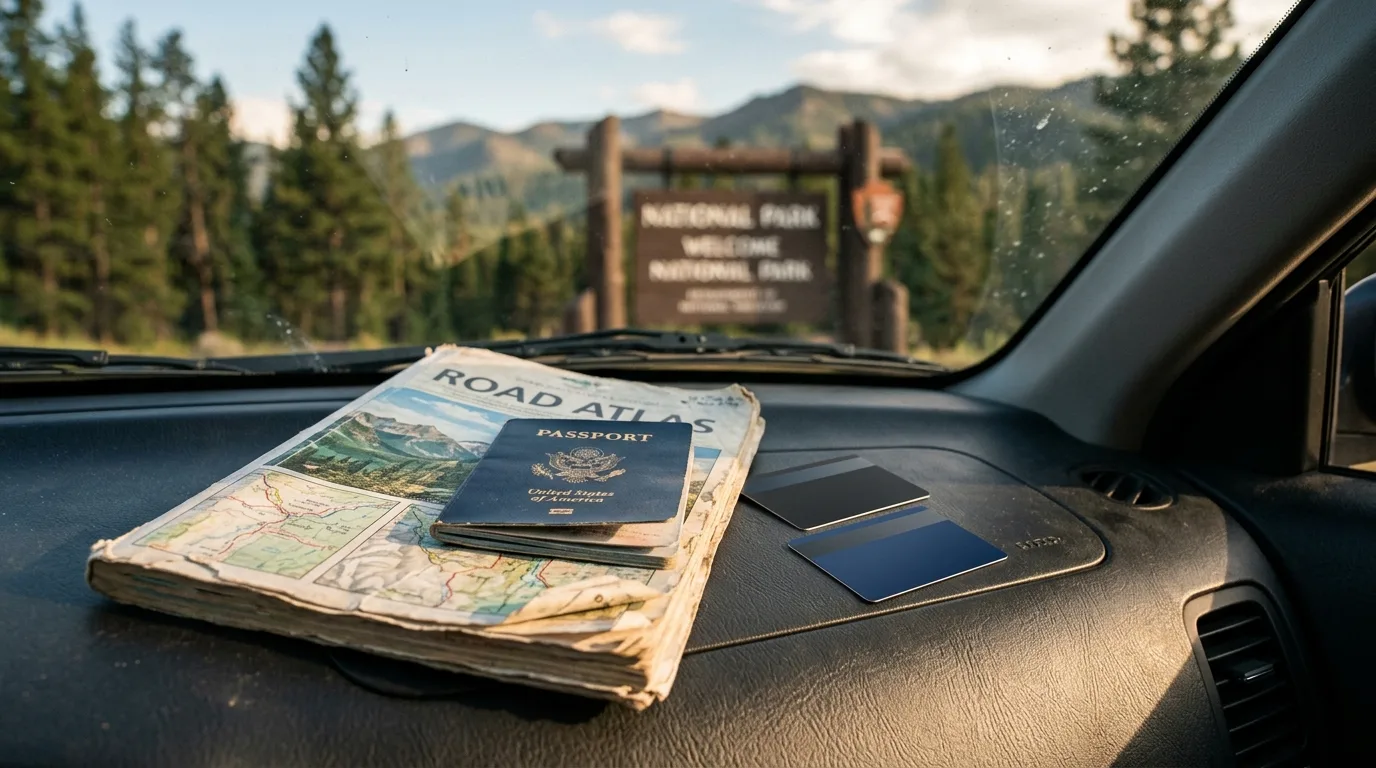
You don't need a hotel card for this trip — you need a card that doesn't care where you sleep. The common assumption is that heavy hotel spending means you should lock into one chain's card to rack up free nights. But a six-month trip that mixes hotels one week and campgrounds the next actually breaks that model: you'll bounce between properties, chains, and independent motels, and a single-brand card only earns its best rate when you stay loyal to it. What you actually want is one or two flexible rewards cards that earn well everywhere, skip foreign transaction fees, and hold up for months of gas stations, campground fees, and roadside diners.
Key Takeaways
- A single hotel-branded card underperforms on a mixed hotels-plus-camping trip because campgrounds, independent motels, and one-off chains don't all earn its bonus rate.
- A flexible, no-foreign-transaction-fee rewards card that earns well on general travel and everyday spend covers hotels, campground fees, gas, and food without gaps.
- Pairing one flexible card with a simple no-annual-fee backup protects you if a card gets declined, frozen for fraud, or flagged for unusual overseas use mid-trip.
Why a hotel-branded card doesn't fit this trip
Say you and your travel partner are planning three weeks in national parks with a tent, then a stretch of city stops in hotels, then more camping through the Southwest. If you picked up a card tied to one hotel chain, you'd only earn its top rate on nights actually booked with that chain. Every campground fee, every independent motel in a small town, and every night at a different chain because that's what was available earns the card's generic, much lower rate. compare flexible travel rewards cards
That's the trap: hotel cards are built around loyalty, and a six-month trip built around flexibility doesn't generate much loyalty. You end up carrying a card whose main selling point — free nights or upgrades at its chain — barely gets used, while your camping and gas spending, which is a real chunk of the trip, earns almost nothing extra.
Camping isn't a minor side detail either. Vehicle-accessible camping reached 42.3 million U.S. participants in 2025, rising more than 5% in one year — plenty of long-trip travelers are doing exactly what you're planning, splitting time between campgrounds and hotels rather than picking one.[2] Your card strategy should match that reality, not fight it.
Already know what you want? Six months, two lodging styles, zero brand loyalty required — here's how to pick cards that actually earn on the whole trip, not just the hotel nights.
Learn MoreWhat a flexible rewards card actually needs to do here
Think about where your money will actually go over six months: campground fees, occasional hotel nights, a lot of gas, groceries and diners, maybe a rental car swap or two. A flexible points or cash-back card that earns a solid flat rate — or a bonus rate on broad categories like travel and dining — captures nearly all of that, regardless of which chain or campground you're paying.
Lodging spending adds up faster than people expect on a long trip. U.S. consumer units spent an average of $1,347 on “other lodging”—a category that includes lodging away from home—in 2024, supporting the case for a rewards setup that can earn across hotels and other accommodations rather than one hotel chain.[1] A card that earns consistently across all of that, rather than only at one chain, could be worth more over six months than a hotel card's occasional free-night perk.
It's also worth remembering how mainstream flexible rewards have become. In 2024, 80% of U.S. general-purpose credit-card accounts offered rewards; points cards generated $23.9 billion in rewards, compared with $6.6 billion for miles cards, underscoring how broadly flexible points-based rewards are used beyond hotel-branded cards.[3] You're not settling for a lesser option by skipping a branded card — flexible points are widely used, not merely a workaround.
Roughly estimate what share of your budget goes to lodging versus gas, food, and campground fees. If lodging is under half your spending, a general flexible rewards card could be a better fit than a hotel card over six months, especially given the added flexibility.
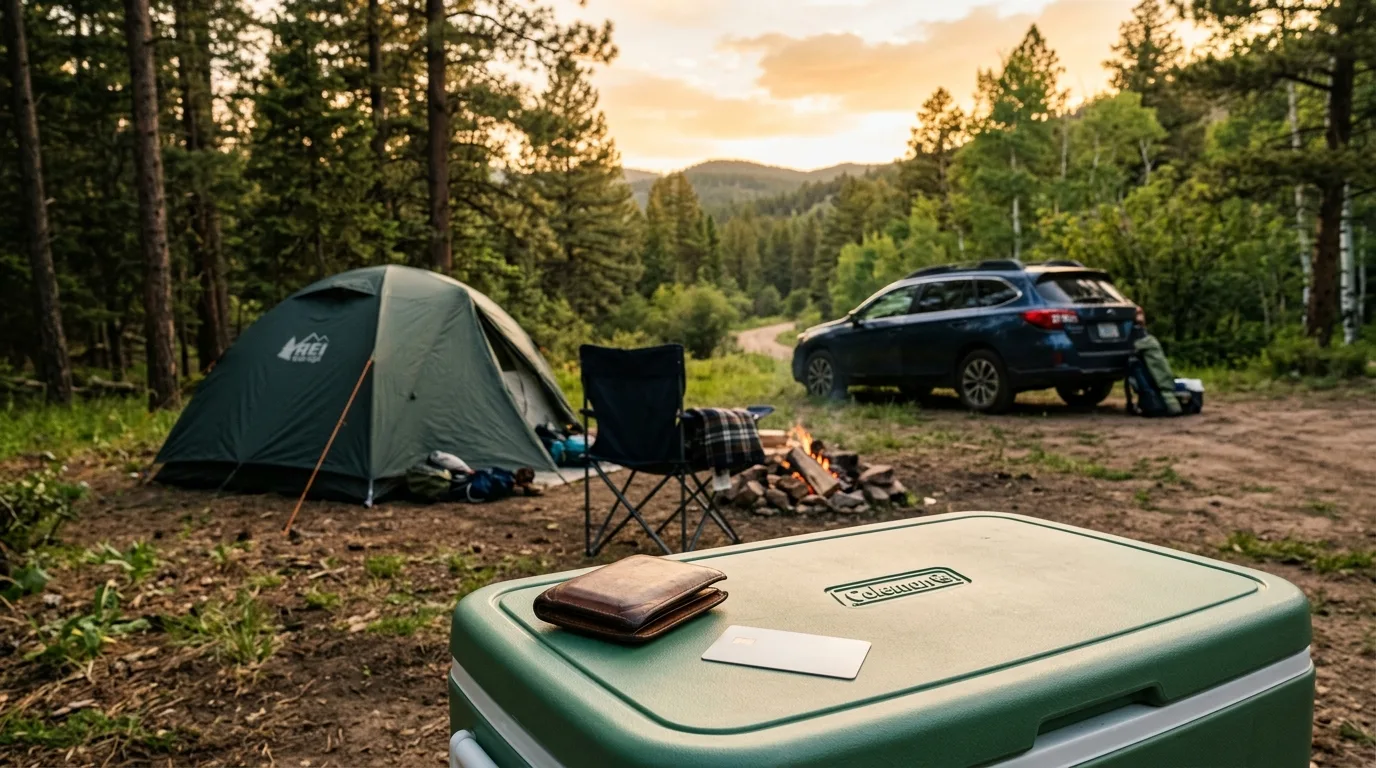
Camping nights need to earn rewards too, not just the hotel stops.
Travel Rewards Offers
Ready to compare cards built for flexible travel?
The two things Europeans planning this trip often miss
First: foreign transaction fees. Even though you're spending entirely within the U.S., some cards issued by European banks may still charge fees on U.S. dollar purchases, and the fee can quietly apply to every swipe for six months. Confirm with your card issuer whether the card is fee-free for U.S. dollar transactions specifically, not just 'international' travel generally.
Second: chip-and-PIN versus chip-and-signature quirks at unattended terminals. Rural gas stations and some campground kiosks in the U.S. run automated pumps or self-service check-ins that sometimes reject cards without a PIN set up for credit transactions. Set a PIN on your card before you leave, even if you never use it for cash advances — it can be the difference between paying at the pump and having to go inside every time.
A related, less obvious issue: fraud algorithms. U.S. issuers sometimes flag a card used continuously across dozens of small towns and states over six months as suspicious, even with prior travel notification on file. Carrying a backup card from a different network or issuer means one flagged card doesn't strand you mid-refuel in a place with no cell signal.
- Confirm no foreign transaction fees apply specifically to U.S. dollar purchases, not just travel generally
- Set a PIN on your credit card before departure for unattended pumps and kiosks
- Notify your issuer of the trip dates and route if that feature is available
- Carry a second card on a different network as backup in case of a fraud freeze
How to build a two-card lineup for six months on the road
A simple, resilient setup is one flexible rewards card as your daily driver, plus one no-annual-fee backup card that you rarely use but always carry. The primary card should earn well on broad categories — travel, dining, gas — since that's most of your spend. The backup doesn't need to be exciting; it just needs to work when the primary one doesn't.
Keep both cards active with occasional use once you're back home too, since a card that sits completely unused for months at a time can sometimes get flagged or even closed for inactivity. A recurring small charge on each, even after the trip, keeps both accounts healthy.
If you're weighing a points card against a straightforward cash-back card for this trip, the deciding factor is usually redemption flexibility abroad versus at home. Points that transfer to travel partners are appealing if you plan future U.S. or international trips, but a flat cash-back rate is simpler to value and use for a one-time long trip like this.
Compare Current Offers
Find a card that fits the whole trip, not just the hotel nights
Compare no-foreign-fee travel rewards cards recommended for good to excellent credit before you hit the road.

Splitting spending between lodging types helps decide which rewards card earns the most.
Learn More About Top OffersFrequently Asked Questions
Should we get a hotel-branded card for a six-month US trip?
What matters more than the rewards rate for this trip?
Do we need more than one card for this trip?
Will campground fees earn rewards like hotel stays do?
Do we need to tell our card issuer we're traveling for six months?
Is it worth applying for a new card just for this trip?
What credit score range fits these flexible travel cards?
The Bottom Line
A six-month trip mixing hotels and camping is exactly the situation where a flexible rewards card could be a better fit than a hotel-branded one. Your money is going too many different places for chain loyalty to reliably pay off, but a card that earns broadly on travel, gas, and dining could capture more of it.
Pair that flexible primary card with a simple no-annual-fee backup, confirm both are free of foreign transaction fees on U.S. dollar purchases, and set a PIN before you leave. That combination covers the campground nights, the hotel nights, and everything on the highway in between.