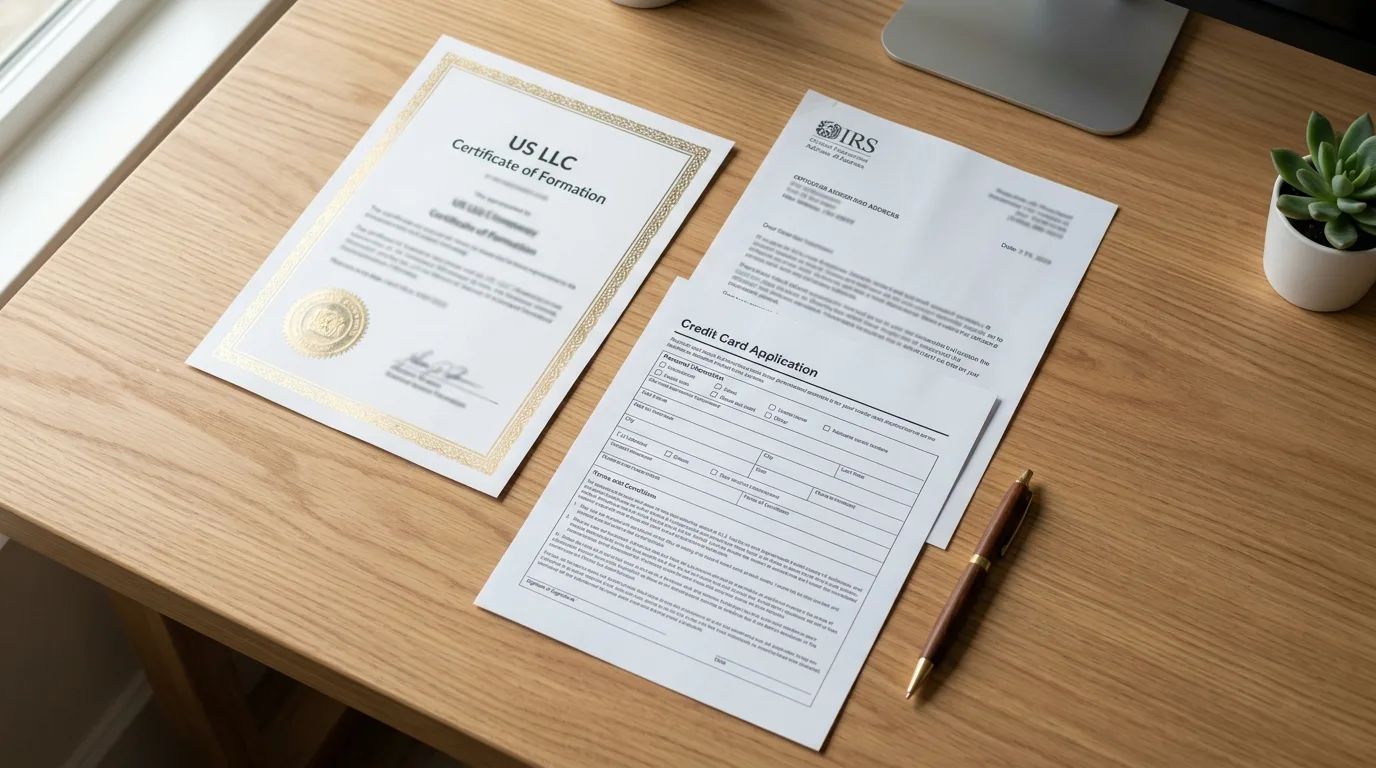
Yes, a foreign-owned US company can sometimes get a business credit card without its owner having an SSN, but the answer depends on who applies and whether that person can provide an accepted identifier and, often, a personal guarantee. A reader we'll call Mateo formed an LLC in Delaware to sell products into the US market, but he lives in Mexico City and has never had an SSN. His options may include applying with an ITIN, having an authorized US-based officer or employee apply, or choosing a product that underwrites the business rather than an individual. The right path depends on the issuer, the applicant's credit profile, and the company's financials.
Key Takeaways
- Most small-business cards still require a personal guarantee from an individual, so the owner's lack of an SSN is often the real blocker, not the company's foreign ownership.
- An ITIN can sometimes substitute for an SSN on an application, and a US-based officer, partner, or employee with their own SSN may be able to apply instead.
- Charge cards and fintech-style business cards built for underwriting the company itself (not a personal guarantor) are usually a more realistic path than traditional bank business cards.
Why does owning a US company not automatically get you a card?
Forming an LLC or corporation in the US is a paperwork exercise. It doesn't create a credit history, and it doesn't establish that any particular person can be held accountable if a bill goes unpaid. Card issuers care about both things. compare current business card offers
Foreign-born ownership of US employer businesses is far from rare — it made up about 19% of employer-business owners in one national analysis[1] — but that statistic says nothing about any specific issuer's underwriting rules. Each issuer sets its own policy on what identification it accepts, and most still default to wanting a Social Security number from the person who applies.
So Mateo's LLC being legitimate and revenue-generating doesn't remove the identity-verification step. The question becomes: who is the human being standing behind this application, and can they be verified and, in many cases, held personally liable?
Already know what you want? A quick guide to who can actually apply for a US business card when the owner lives abroad and has no SSN.
Learn MoreCan an ITIN replace the missing SSN?
An Individual Taxpayer Identification Number is issued by the IRS to people who need to file or report US taxes but aren't eligible for an SSN — which describes a lot of foreign nationals with US business income. The IRS issued nearly 878,000 of them in 2023 alone[2], so this isn't a fringe situation.
Some issuers will accept an ITIN in place of an SSN on a personal guarantor application; others won't touch it. There's no universal rule, which means this is one of the first things to check directly with an issuer before applying, rather than assuming either way.
If Mateo gets an ITIN, he's not guaranteed a card, but he's removed one hard blocker. From there it comes down to the same factors any applicant faces: credit history (which he may not have in the US yet), reported income, and the business's own financials.
Call the issuer's business card support line and ask directly whether they accept an ITIN for a foreign national guarantor. A hard pull you didn't need to take is worse than a five-minute phone call.

Confirming who will act as the personal guarantor is the first real decision.
Should someone else apply instead of the owner?
This is the option competitors gloss over. If Mateo has a US-based co-founder, officer, or even a trusted employee with signing authority for the LLC and their own SSN and credit history, that person may be able to apply as the cardholder and personal guarantor.
Say Mateo's business partner, Dana, lives in Texas and holds an officer title at the LLC. Dana applies, lists the business's revenue and structure, and signs as the guarantor. The card is a business card tied to the company's spending, but Dana — not Mateo — is the one an issuer can chase if the balance isn't paid.
That's a real trade-off, not a technicality. Dana is taking on personal liability for a company she may not own the majority of. Historical data on small-business credit shows personal guarantees are common — 54% of firms in one Federal Reserve dataset reported giving one for business credit[4] — so this arrangement isn't unusual, but everyone involved should treat it as a genuine financial commitment, ideally documented internally between the owner and the guarantor about who actually covers the bill.
Before going this route, it's worth reviewing how issuers evaluate a business with no US owner physically present; you can compare current business card offers to see which ones are explicit about accepting a non-owner officer as the applicant.
Business Cards Offers
See which business cards fit a foreign-owned company
Are there cards that skip the personal guarantee entirely?
A smaller category of business cards — often fintech-style charge cards aimed at startups — underwrite based on the company's bank balance, revenue, or funding rather than an individual's personal credit. These sometimes don't require a personal guarantee at all.
For a foreign-owned company with strong US revenue or venture funding, this can be the cleanest path, since it sidesteps the SSN/ITIN question for the guarantor entirely. The trade-off is usually stricter revenue or cash-balance minimums, and these products don't always report to personal credit bureaus, so they won't help Mateo build US personal credit even if they solve his access problem.
It's also worth remembering that business-specific credit isn't something every owner uses even when eligible — about 41% of small-business owners reported having a separate business line of credit or card in one CFPB survey[3] — so plenty of businesses run on personal cards or cash flow instead while they sort out the right long-term setup.
- No personal guarantee: often based on company revenue, funding, or bank balance
- Traditional bank business card: usually requires an individual guarantor with SSN or ITIN
- Authorized officer route: a US-based co-owner or employee applies and assumes personal liability
What should Mateo actually do first?
Start by separating two questions: does the business qualify, and does a person qualify. The business side needs an EIN, US bank account, and some evidence of revenue or funding. The person side is where the SSN gap bites.
From there, Mateo has three realistic paths: get an ITIN and apply as guarantor himself if the issuer accepts it, have a US-based officer apply and accept the liability, or target a no-personal-guarantee business card if the company's financials are strong enough. No path ensures approval—issuers evaluate credit range and business qualifications case by case—but each is a legitimate route rather than a workaround.
Whichever path he picks, he should also think about what happens later. If Dana applies and later leaves the company, or if Mateo eventually gets a US SSN, the account and its liability don't automatically transfer. That's worth planning for now, not after the fact.
Compare Current Offers
Ready to find the right business card?
Compare business card options built for varied ownership structures and credit situations before you apply.

Some business cards underwrite the company's finances instead of requiring a personal guarantor.
Learn More About Top OffersFrequently Asked Questions
Can a foreign owner with no SSN get a US business credit card?
Can an employee apply for the business card instead of the owner?
Does a personal guarantee still apply if someone else signs?
Does an ITIN work the same as an SSN for a business card application?
Will a no-guarantee business card hurt or help my personal credit?
What documents does a foreign-owned LLC typically need before applying?
What happens to the card if the guarantor later leaves the company?
The Bottom Line
Living outside the US and not having an SSN doesn't automatically disqualify a US company from getting a business credit card, but it does mean the application decision hinges on who the personal guarantor is and whether that person has an SSN, an accepted ITIN, or is willing to skip a guarantor entirely with a revenue-based card.
Mateo's best move isn't hunting for a single 'foreign owner' card — it's matching his specific situation (ITIN eligibility, a US-based partner, or strong company revenue) to the type of card built for it, and getting clear with anyone else involved about who actually carries the liability.