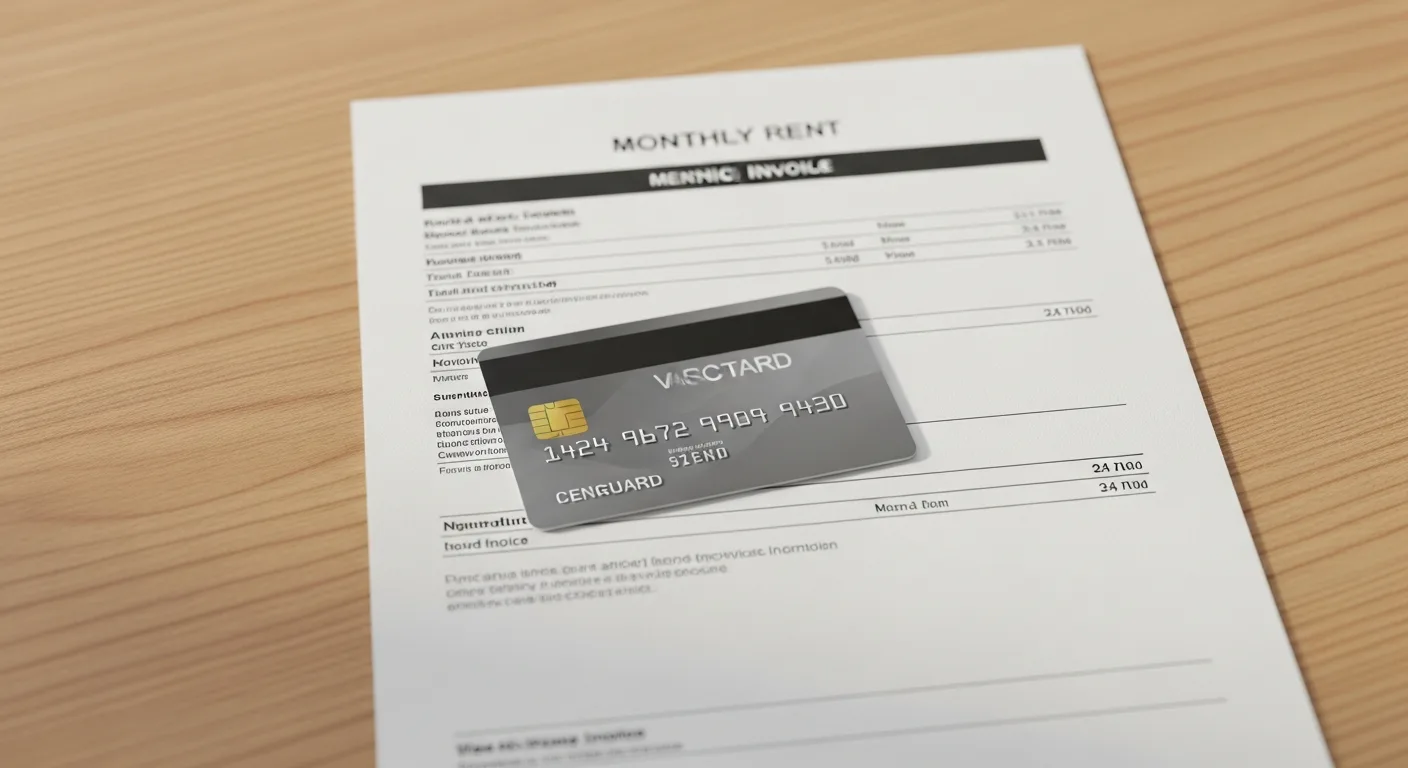
Yes — opening a no annual fee cash back card just for rent is worth considering, because rent is probably the single largest recurring charge in your budget, and earning even 1% to 2% back on it can be worthwhile if you pay the full balance every month. The catch is narrow but real: it only works if you pay the full balance every month, and the card you choose has to actually code rent as a purchase that earns rewards.
Key Takeaways
- no annual fee card costs nothing to hold, so the math on earning cash back on a large monthly bill can tilt in your favor — as long as you never carry a balance.
- Rent often codes as a generic purchase, so flat-rate cash back cards tend to be more reliable earners on it than category-specific cards.
- Opening a new card also adds a credit-building benefit: it raises your total available credit, which can lower your credit utilization ratio — the share of available credit you're using — over time.
The Math: What's Actually on the Table?
Renters averaged about $15,044 a year in rented-dwellings spending in 2023.[4] Round that to $1,250 a month. At a flat 1.5% cash back, that's $225 back over twelve months. At 2%, it's $300. A no annual fee card means every cent of that goes to you — there's no fee to subtract. Compare current no annual fee cash back offers.
Compare that to the alternative: leaving the card in a drawer and earning nothing. The opportunity cost is real and it compounds every month you skip it.
Now flip the scenario. Suppose you open the card, charge $1,250 in rent, and carry even half that balance for a month at a typical variable rate. The interest alone could erase two or three months of cash back in a single billing cycle. The math only works if you pay in full.
Take your monthly rent, multiply by 12, then multiply by your card's cash back rate (as a decimal — so 1.5% becomes 0.015). That's your annual reward. If the result is meaningful to you and the card has no annual fee, the case for opening it is straightforward.
Already know what you want? Your landlord just removed the usual barrier to earning rewards on rent. Here's whether a new card is worth the application — and how to make sure the rewards you earn actually stay in your pocket.
Learn MoreWill Rent Actually Earn Rewards?
This is the non-obvious part most renters miss. When your landlord runs your card payment, the transaction gets assigned a merchant category code — a four-digit label that tells the card network what kind of business charged you. Most landlords process rent through a payment platform, and those platforms typically code as real-estate services or a similar generic category.
Category-bonus cards — the ones that pay elevated rates at grocery stores, gas stations, or restaurants — almost never include rent as a qualifying category. A card that pays 3% at grocery stores will likely pay its base rate (often 1%) on rent.
That's why flat-rate cards are usually the smarter pick for rent. A card that earns the same rate on every purchase doesn't care what category the transaction lands in. Your $1,250 rent payment earns the same as a $1,250 flight. Consistent, predictable, no surprises.
Before you compare current offers, it's worth checking recent community discussion boards where cardholders post their actual transaction codes. If a card's base rate is 1% and rent consistently codes wrong for bonus categories, a different flat-rate card earning 1.5% to 2% everywhere will likely beat it.

Running the numbers on rent cash back takes about sixty seconds — and the answer can be yes.
What About the Credit-Building Angle?
Opening a new card adds to your total available credit. If you currently have, say, $5,000 in available credit and you're using $1,500, your utilization — the share of available credit you're carrying as a balance — is 30%. Add a new card with a $3,000 limit and suddenly your utilization drops to under 19% on the same spending. Lower utilization generally helps your credit score.
You might assume that paying rent by card would also get reported as an on-time payment, building your payment history. Probably not. As of 2025, only 8% of renters had their rent payments reported to one of the three national credit bureaus.[1] The card payment itself — the one you make to your card issuer — does get reported, but that's just your normal monthly card payment, not rent specifically.
The credit-building benefit of this card is real, but it comes from responsible card use, not from rent-reporting magic. Pay on time every month and keep the balance low, and the card can help your credit profile regardless of what you charge to it.
Cash Back Offers
Ready to Start Earning Cash Back on Rent?
| Scenario | Annual Cash Back (est.) | Annual Cost | Net Benefit |
|---|---|---|---|
| $1,250/mo rent, flat-rate cash back, no annual fee, paid in full | ~$225 | $0 | ~$225 |
| $1,250/mo rent, flat-rate cash back, no annual fee, paid in full | ~$300 | $0 | ~$300 |
| $1,250/mo rent, flat-rate cash back, no annual fee, carry half the balance one month | ~$225 | One month's interest erases ~$75–$150 of that | Reduced significantly |
| $1,250/mo rent, card has a 2.5% processing fee | ~$225–$300 | ~$375/yr in fees | Net loss |
The Carry-a-Balance Risk Is Bigger Than It Looks
Nearly half of credit card owners carried a balance at least once in the prior year.[2] Rent is a large, fixed charge that hits every month without fail. That combination — a big bill you can't skip — is exactly the scenario where a balance can quietly grow.
Almost half of all renter households in the U.S. were cost-burdened in 2023, spending more than 30% of their income on housing.[3] If your budget is already stretched, putting rent on a card and not paying it off creates a debt spiral: you owe last month's rent plus interest while this month's rent is already due.
The safest approach is to set up automatic full-statement-balance payments on the card the moment you open it. Automate it so you never forget, and treat the card as a pass-through — rent goes on the card, the card gets paid in full, and cash back accumulates on its own.
- Set up autopay for the full statement balance on day one — not the minimum payment.
- Keep your emergency fund intact so a rough month doesn't force you to carry a balance.
- Check your card's due date against your rent due date; make sure your paycheck clears before the card charges.
- If you ever miss a full payoff, pause rent payments on the card until the balance is cleared.
Should You Use This Card for Anything Else?
no annual fee flat-rate card earns the same rate on everything, so there's no reason to limit it to rent. Groceries, utilities, subscriptions — every purchase earns. But adding more spending to the card also increases the balance you need to pay off each month.
One clean approach: use the card exclusively for rent. One charge per month, one payment per month. It keeps the card's purpose clear, makes it easy to track, and reduces the temptation to overspend. If you want to maximize rewards on other categories, pair it with a separate card optimized for those purchases.
The rent-only approach also has a secondary benefit: it keeps the card active without requiring you to think about it. An inactive card can sometimes be closed by the issuer, which would reduce your available credit and could bump your utilization back up. One rent payment a month keeps the account alive with zero effort.
Link the card to your landlord's payment portal. Set the card's autopay to the full statement balance. That's two setup steps, and then the card runs itself — earning cash back on your largest monthly expense.
Who Should and Shouldn't Open This Card
This card makes clear sense if you consistently pay your balances in full, want a simple way to earn on your biggest monthly bill, and either don't have a flat-rate cash back card yet or want a dedicated card for rent. No annual fee cards recommended for good to excellent credit are the most straightforward path; options for fair credit also exist, though they may carry lower reward rates.
It makes less sense if you're already carrying balances on existing cards. In that case, every dollar of interest you're paying is eclipsing any cash back you'd earn. Paying down existing debt first will help your finances more than a new card.
It also doesn't make sense if your landlord's platform charges a processing fee for card payments — that's the whole premise here. If a fee crept back in, do the math: a 2% to 3% processing fee against 1.5% to 2% cash back is a net loss every month.
Compare Current Offers
Find the Right No Annual Fee Card for Your Rent
Rent is likely your biggest monthly expense. A no annual fee cash back card can turn it into a reliable earner at zero cost to hold. Compare current offers and pick the card that fits how you spend.

Setting up autopay for the full balance is the one step that keeps the math in your favor.
Learn More About Top OffersFrequently Asked Questions
Is it worth opening a card just to pay rent with no processing fee?
Will paying rent with a credit card help my credit score?
What's the biggest risk of opening a card just for rent?
Why is a flat-rate card better than a category card for rent?
Should I use the rent card for other purchases too?
What if my landlord's platform starts charging a processing fee later?
What credit range are these cards recommended for?
The Bottom Line
If your landlord genuinely accepts cards with no processing fee, opening a no annual fee flat-rate cash back card for rent can be a low-effort win in personal finance. You're already paying rent every month — you might as well earn something on it at no cost to hold the card.
The one rule that makes or breaks the whole setup: pay the full balance every month, automatically. Do that and you've turned your biggest monthly expense into a quiet, reliable source of cash back. Skip it and the interest charges turn a smart idea into an expensive one.