The math makes curbside pickup a useful spending category to optimize. U.S. households spent an average of $6,224 on food at home in 2024, and if you run even part of that through the right card, the difference between a flat 1.5% and a category-boosted 3–6% could add up in extra cash back.[3] The catch at this retailer specifically: the card that sounds perfect for groceries may earn nothing special there, because it often codes as a general merchandise retailer, not a grocery store. Getting this right starts with understanding that coding problem — then deciding whether your current card solves it or whether a new one is worth opening.
Key Takeaways
- This retailer frequently codes as a general merchandise retailer, not a grocery store, so grocery-category bonus cards may earn only the base rate on your curbside pickup orders.
- A flat-rate cash back card earning on every purchase regardless of merchant category is often the most reliable choice for grocery curbside spending.
- Opening a new card is worth it only if your annual grocery spend is high enough that the category earnings gap — or a welcome bonus — meaningfully offsets the cost of applying.
Why Walmart Curbside Pickup Is a Rewards Blind Spot
Here's the problem in one sentence: your card doesn't see 'groceries' — it sees a merchant category code, and this retailer's code is often not the grocery one. Credit card networks assign every merchant a four-digit category code when they set up their account. A general merchandise supercenter typically receives a code for discount stores or department stores — not supermarkets or grocery stores. Compare current offers.
That matters enormously because grocery-boosting cards define their bonus category by code, not by what's in your cart. You could fill your curbside order with nothing but produce, dairy, and meat, and your card would still see the general retailer and pay the default base rate instead of a grocery bonus.
This isn't unique to one retailer. Warehouse clubs face the same issue. But the combination of low prices and curbside convenience makes it one of the most common spots where shoppers assume they're earning grocery rewards and discover later they're not. Nearly one in five U.S. grocery shoppers bought groceries online at least once a month in 2022, and pickup was the most popular method — so this blind spot affects a lot of people.[1]
Look at a recent transaction in your card's app or statement. Many issuers display the category or the rewards rate earned per transaction. If it shows your base rate instead of a grocery bonus, the merchant code isn't triggering the category.
Already know what you want? Grocery curbside pickup is convenient, but it creates a hidden rewards problem. Most grocery-boosting cards don't recognize every retailer as a grocery store — so you could be leaving cash back on the table every week.
Learn MoreThe Three Card Strategies — and Which Actually Wins
Think of the options as three buckets. The first is a grocery-category card that doesn't cover this retailer. This is the most common situation, and it's a quiet loser for curbside shoppers — you pay for the card's grocery benefit and never collect it at your primary store.
The second is a flat-rate cash back card. It earns the same percentage on every single purchase, regardless of merchant category. Grocery, gas, a dentist — all the same rate. For a curbside-heavy household spending, say, $300 a month on groceries, even a small rate improvement over a base-rate card compounds quickly over 12 months. Flat-rate cards recommended for good to excellent credit often earn in the 1.5–2% range with no annual fee, which makes them a reliable workhorse.
The third — and most interesting — is a card that explicitly includes supercenter or wholesale-club merchants in its grocery definition. A handful of cash back cards define 'grocery' broadly enough to cover general merchandise retailers or have a dedicated 'supercenters' subcategory. These cards are worth hunting for if this retailer is your primary grocery channel. The caveat: they typically require good to excellent credit and sometimes carry an annual fee, so you'll want to run the math on whether the extra earnings justify the cost.
The hidden insight here is opportunity cost. Many shoppers chase a grocery-category card, earn nothing extra at the retailer, and miss the fact that a simple flat-rate card with a welcome bonus would have outperformed it in year one by a wide margin.
- Grocery-category card (narrow definition): earns base rate only — often a poor fit for curbside-first shoppers
- Flat-rate cash back card: earns the same rate everywhere, no coding surprises, often no annual fee
- Card with broad grocery definition covering supercenters: earns bonus rate at this retailer — verify before applying
- Store-affiliated card: may offer special perks at one retailer but limits flexibility everywhere else
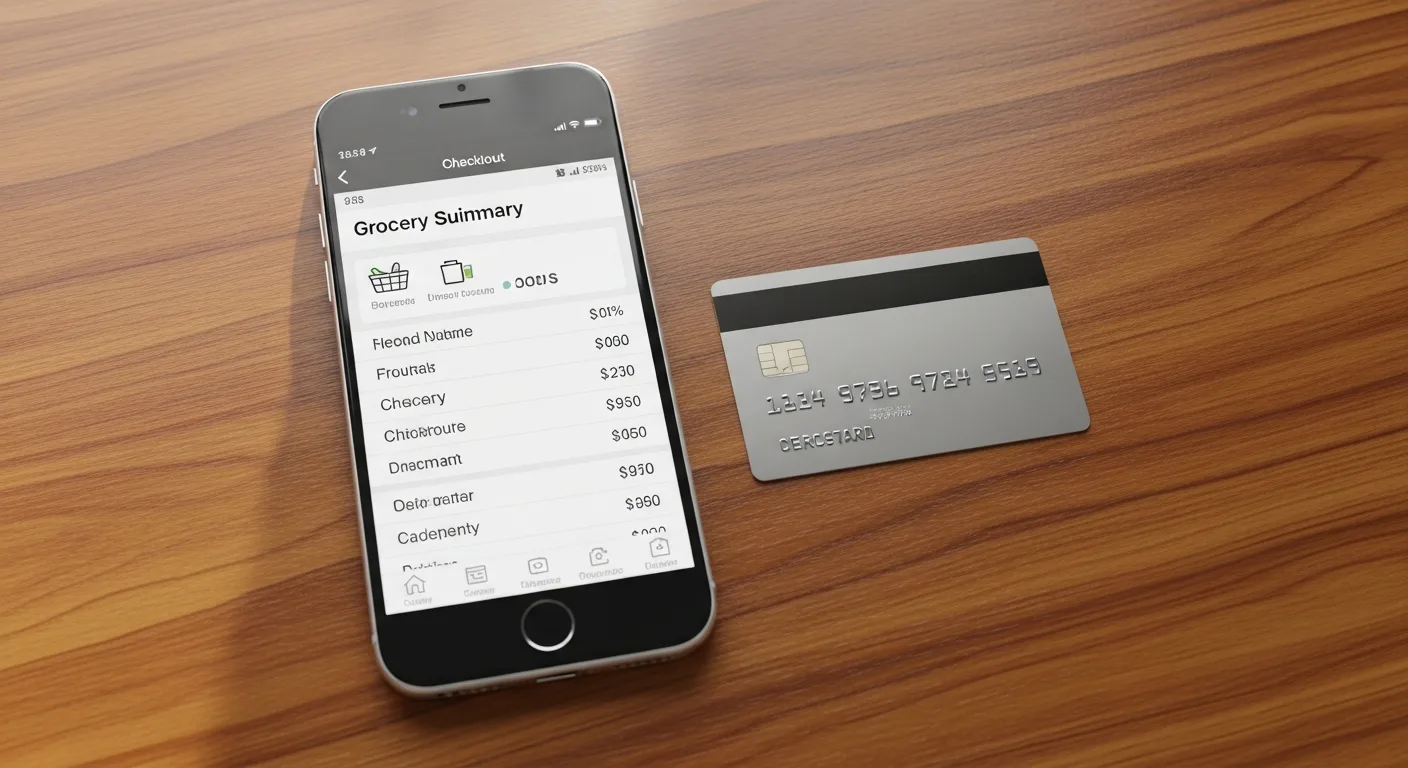
Most curbside orders are placed through an app — your stored card determines what you earn.
Should You Open a New Card for Walmart Grocery Pickup?
Start with the numbers from our running example: $300 a month at Walmart is $3,600 a year. At a flat 1.5% on a card you already own, that's $54 back. A card earning 3% on that same spend returns $108 — a $54 annual difference. If you add a sign-up bonus into the equation, year one looks far more attractive, and the decision often hinges on whether that bonus requires a spend level you'd hit naturally.
Over half of the top 100 U.S. retailers now offer some type of store card, and one in four credit card accounts is a store card.[4] That's relevant context because store cards tied to a specific retailer often surface as the first recommendation when you search for grocery rewards. Before you go that route, weigh the tradeoff: a retailer-specific card may offer perks at that store, but it earns little or nothing elsewhere, and grocery spending doesn't stop at one merchant.
A general flat-rate or broad-grocery card earns everywhere — which matters because even dedicated Walmart curbside shoppers still buy groceries at other stores occasionally. The portability of a general card means the rewards don't strand you.
The case for opening a new card is strongest when: (1) your current card earns only the base rate on grocery purchases, (2) your annual grocery spend is substantial, and (3) a welcome bonus is available that you'd earn through normal spending. If all three are true, a new card can pay for itself in the first few months.
About 40.5% of online grocery shoppers cite time constraints as the main reason they buy online.[2] If curbside pickup is a permanent habit, not a one-off, the math for opening a better-suited card gets stronger each year you'd otherwise leave rewards behind.
Cash Back Offers
See Which Cards Earn the Most on Everyday Grocery Spending
What to Look for When Comparing Cards
When you evaluate a card for Walmart curbside pickup specifically, the most important feature isn't the headline grocery rate — it's whether Walmart is actually included in the bonus category. Look for language in the card's terms like 'superstores,' 'supercenters,' 'discount stores,' or an explicit list that covers general merchandise retailers. If the terms only say 'supermarkets' or 'grocery stores,' Walmart very likely won't qualify.
Beyond that, flat-rate cards are the safest choice because they sidestep the coding question entirely. Compare the ongoing earn rate, whether there's an annual fee, and the size and attainability of any welcome bonus. A no annual fee flat-rate card that earns 1.5–2% is a strong baseline. A card with a higher grocery rate that genuinely includes this retailer can edge it out — but only if you confirm the inclusion before you apply.
Also consider how you pay at Walmart curbside. Most curbside orders are placed through the Walmart app or website and charged to the card you save on file. The card you choose should work seamlessly as a stored payment method. There's no cashier interaction at pickup, so contactless features matter less here than the rate you earn.
- Confirm Walmart is included in the bonus grocery definition — don't assume
- Compare flat-rate cards as a guaranteed fallback if coverage is unclear
- Check annual fee vs. annual earnings at your realistic Walmart spend level
- Factor in the sign-up bonus as part of year-one math
- Verify the card can be stored in the Walmart app for seamless curbside checkout
A Simple Framework to Make the Decision
Run this quick check. Pull three months of curbside transactions and annualize them. That's your baseline spend. Then find your current card's actual earn rate on those transactions — not the bonus rate advertised, but the rate showing on your purchases specifically. Multiply your annual spend by the rate difference between your current card and the best alternative you can find. That gap is your maximum annual upside from switching.
If the gap is small — say, under $30 a year — the friction of applying for a new card, managing another account, and the temporary credit-score dip from a hard inquiry probably outweigh the benefit. Stay with your current card, or simply move grocery spend to a flat-rate card you already own.
If the gap is meaningful — $50, $80, or more — and a welcome bonus is in the picture, opening a new card is a reasonable move. These are recommended for good to excellent credit, so check your score range before applying. The goal is one targeted card that does one job well: earning reliably on your biggest recurring spend category without any coding surprises at the curb.
Some flat-rate cards you might already carry earn the same rate across all purchases — including grocery pickup. Before applying for anything new, check whether a card already in your wallet is quietly your best option.
Compare Current Offers
Ready to Stop Leaving Cash Back on the Table?
The right card turns every grocery pickup into a small win. Compare current offers and find one that reliably rewards how and where you actually shop.

Checking your actual earn rate on grocery transactions takes two minutes and could help you save real money.
Learn More About Top OffersFrequently Asked Questions
Does Walmart grocery curbside pickup earn bonus grocery rewards?
What type of card works best for Walmart curbside pickup?
Is it worth opening a new card just for Walmart grocery curbside pickup?
How do I find out what category my card assigns to Walmart purchases?
Should I get a Walmart store card instead of a general cash back card?
Does it matter whether I pick up in-store vs. use curbside for how the purchase codes?
What credit range are the better flat-rate and broad-grocery cash back cards recommended for?
The Bottom Line
Grocery curbside pickup is one of the most common places cash back quietly disappears. A card advertised for groceries may earn nothing special there because of how the retailer codes. The fix is simple once you know it: either find a card that explicitly includes supercenter merchants in its grocery bonus, or default to a flat-rate card that earns reliably everywhere, no category codes required.
Run the annual spend math for your household, check what your current card actually earns on grocery transactions, and compare that gap against the best alternatives available now. For most grocery-first households, the right answer is already achievable with a no annual fee flat-rate card — or a broad-grocery card that genuinely covers the supercenter category. Either way, the goal is simple: stop leaving money at the curb.