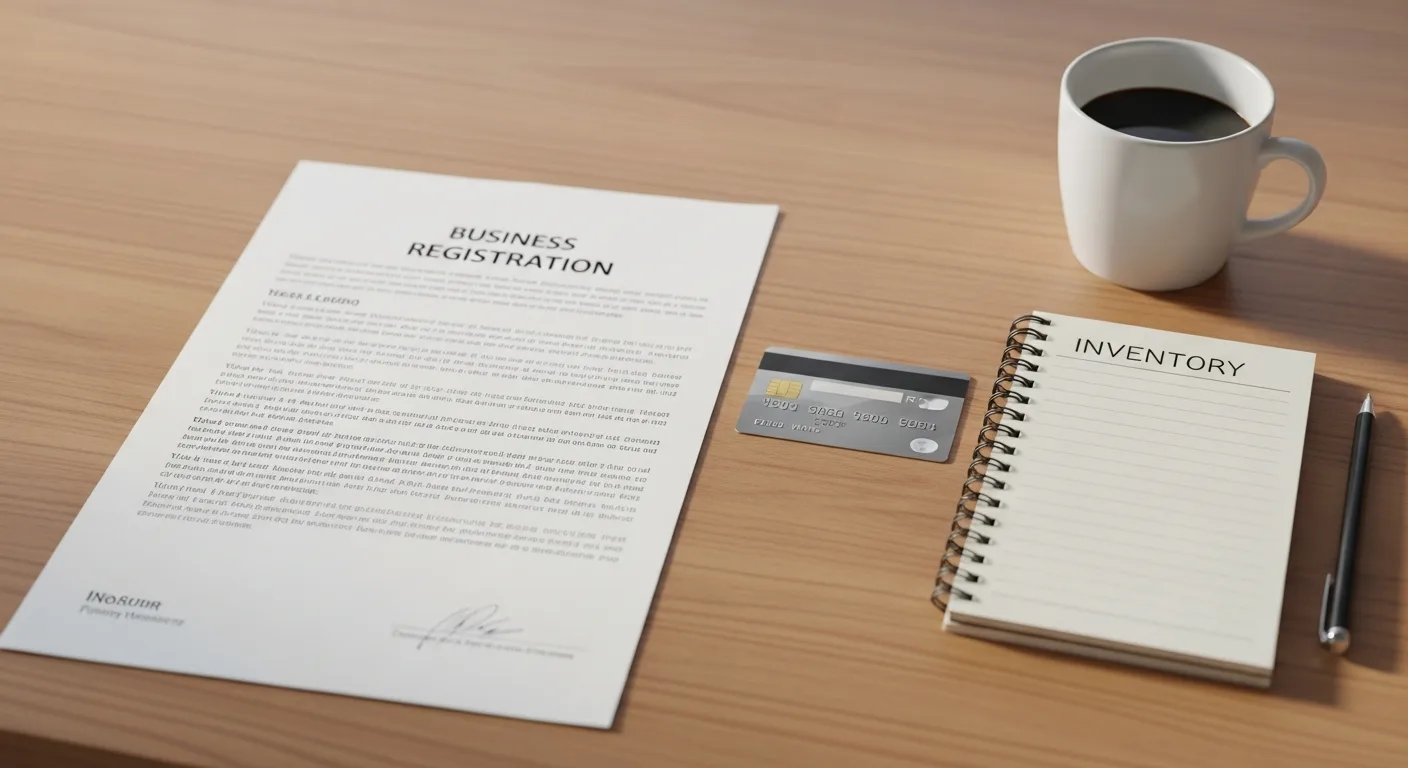
Yes, in most cases you should register your business and get an EIN first, then apply for the card, and only then buy your inventory. The reason is simple: the application asks for business details, and the card only does its job (rewards, a clean paper trail, business credit history) on purchases you make after you have it. If you've already bought inventory, you haven't ruined anything. This guide walks through the order, what to do when the order gets messy, and where you have more flexibility than you might think.
Key Takeaways
- The best order is: register the business (or at least get an EIN), apply for the card, then buy inventory on it.
- You can often apply as a sole proprietor without forming an LLC, so registration is a smart first step but not always a hard requirement.
- Inventory you bought before you had the card can't be moved onto it later, so time big purchases after the card arrives when you can.
What Is the Right Order: Register, Apply, or Buy First?
The order that works best for most new owners is three steps: register the business and get an EIN, apply for the business card, then buy inventory on that card. Compare current business card offers.
Each step sets up the next one. Registration gives you the details the application asks for. The card gives your spending a home. And buying after the card arrives means every dollar of inventory lands on a statement tied to your business.
None of this has to take long. An EIN from the IRS is free and can be issued online the same day, and many states let you file an LLC online. The card itself may take a few days to a week to arrive after you apply.
Already know what you want? Getting the order right can mean rewards and a clean paper trail on your first inventory order instead of nothing to show for it. Here's the sequence, step by step.
Learn MoreWhy Does Registering First Help the Application?
A business card application asks for a business name, address, industry, expected revenue, and a tax ID. If you've registered, you can answer each one with something real. If you haven't, you may end up guessing, and guesses make for a shaky application.
An EIN also helps separate you from your business on paper. Some cards ask for one. Others accept a Social Security number instead. Having the EIN ready means you aren't limited to the second group.
Keep in mind that most small business cards still look at your personal credit and ask for a personal guarantee. That means you're responsible for the balance even if the business is an LLC. Business cards like these are recommended for good to excellent credit, so it's worth checking where your own credit stands before you apply.

Inventory bought before you have a business card can't be moved onto it later.
Do You Need an LLC, or Is an EIN Enough?
You don't always need an LLC. If you freelance, resell, or run a side business on your own, you can usually apply as a sole proprietor, using your name as the business name and your Social Security number if you don't have an EIN.
Still, get the EIN even if you skip the LLC. It's free, it takes a short online form, and it keeps you from handing out your Social Security number to every supplier who asks for a tax ID.
An LLC is worth the extra step when the stakes are higher, like a large first inventory order or a risky supplier deal. It can help limit some business liabilities, though it won't erase a personal guarantee on the card.
- Small test run, modest spending: EIN plus sole proprietor application can be enough.
- Big first order or real risk: register the LLC first, then apply.
- Not sure yet: get the EIN now and decide on the LLC before the large purchases.
Make sure the business name on your application matches the name on your registration and EIN paperwork. Mismatched names are a common source of delays.
Business Cards Offers
Ready to Compare Business Cards?
| Step | What you do | Why it comes in this order |
|---|---|---|
| 1 | Register the business and get an EIN | Gives you real answers for the application and a tax ID that isn't your Social Security number |
| 2 | Apply for a business credit card | Sets up the account your business spending will run through |
| 3 | Buy inventory on the card | Purchases land on a business statement and can earn rewards |
What Happens If You Buy Inventory Before You Register?
Buying before you've registered or opened a card isn't a disaster, but it costs you some benefits. The purchase is a business expense paid personally. It won't earn business card rewards, it won't show up on a business statement, and it may not count toward a business payment history.
Here's a simple example. Say you spend $3,000 on opening inventory with a debit card. If the card you open next week earns 2% back, that same order on the card could have earned $60. Instead you don't get those card rewards, and you can't move the purchase over afterward.
If you can wait a week or two, waiting is usually the better move. If you can't, put the order on a personal credit card rather than debit, so you may get stronger fraud protection and possibly rewards. Then keep the receipts and write the purchase down as a startup cost, since it will help your bookkeeping later. A tax professional can tell you how to treat it.
If you truly can't wait, use a personal credit card instead of debit, save every receipt, and run all future orders through the business card once it arrives.
What If You Want to Apply First and Register Later?
Applying before you register can work if you're a sole proprietor, since your business and you are legally the same person. In that case the main thing you give up is the EIN and the clearer paper trail.
It's harder if you plan to form an LLC soon. If you open a card as a sole proprietor and then form the LLC, the card is still tied to you, not the new company. You may need to ask the issuer how to update the account or open a new one, and the rules vary by issuer.
That's the main reason to register first. You avoid sorting out a mismatch between the account and your business later.
How Do You Choose the Card Once You're Registered?
Start with how you'll spend. If inventory is your biggest cost, a flat-rate cash back card can be simpler than a category card, since supplier purchases don't always fall into bonus categories.
If you expect to carry a balance while the stock sells, a card with a 0% intro APR period could help you save on interest during that window. Just have a plan: divide the purchase by the number of intro months and make sure the payment fits your budget, because the regular rate applies to whatever is left when the intro period ends.
For a brand-new business with uncertain income, a no annual fee card keeps your fixed costs low while you find your footing. You can always switch to something with more perks later.
Compare Current Offers
Registered and Ready? Check Out Top Offers Available Now
Once your registration and EIN are sorted, you can compare business cards and match one to how you'll actually spend.
A short checklist of register, apply, then buy keeps the steps in order.
Learn More About Top OffersFrequently Asked Questions
Should I register my business before applying for a business credit card?
Can I buy inventory before I register or have a business card?
Can I move inventory I already bought onto a new business card?
Do I need an EIN to apply for a business credit card?
Can I apply for a business card without an LLC?
Will applying for a business card affect my personal credit?
How long should I wait for the card before buying inventory?
The Bottom Line
Register first, get your EIN, then apply for the card, and place your inventory order after the card arrives. That order gives your application real details to work with and puts your first big purchase where it can do the most good.
If you've already bought stock or can't wait, don't panic. Use a personal credit card rather than debit, keep your receipts, and run everything after that through the business card.