
Here's the myth worth busting: opening a travel card for your wedding is not automatically a smart move, and it's not automatically a bad one either. Whether it pays off depends almost entirely on two things — your timing and whether you plan to carry a balance. Get both right, and wedding spend could help cover part of your honeymoon. Get either one wrong, and interest charges can quickly erase the value of any rewards you earn.
Key Takeaways
- Wedding spend is large enough to help you earn a welcome bonus and meaningful travel rewards — but only if you pay the balance in full each month.
- Open the card about 1–2 months before your first big vendor payment so you can meet the welcome-bonus spending window without rushing.
- Carrying a balance flips the math against you: cardholders who revolve a balance earn a disproportionately small share of rewards relative to the interest they pay.
The myth: big wedding spend automatically means big rewards
Most couples assume that because weddings are expensive, putting them on a credit card is a no-brainer windfall. The logic sounds right — the average U.S. wedding cost $33,000 in 2024, which is more than enough spend to help trigger a welcome bonus.[1] At a typical travel rewards earning rate, that spend alone could generate enough points or miles to cover a round-trip flight for two or even a few nights at a hotel. compare current offers
But the assumption quietly buries the most important variable: are you paying that balance off, or are you financing it? Those are two completely different financial situations with completely opposite outcomes. A travel card is a powerful tool when it accelerates rewards on money you were already going to spend and pay back. It becomes an expensive trap the moment it becomes a way to defer a bill you can't yet cover.
So before you start comparing welcome bonuses, ask yourself one honest question: do I have the cash in the bank to pay off every vendor charge before interest kicks in? If yes, keep reading. If not, a travel card is the wrong tool for this moment — and a 0% intro APR card designed for large purchases would be a smarter fit while you save up.
Already know what you want? Wedding expenses are one of the best natural opportunities to earn a massive pile of travel rewards — but the strategy only works if the money to pay the card off is already in your account.
Learn MoreWhen the math actually works in your favor
Picture a couple — call them Jordan and Sam — with $33,000 in wedding expenses spread across a venue deposit, catering, photography, florals, and attire. They open a travel rewards card two months before their first payment and route every vendor charge through it. They pay the statement balance in full each month from savings they'd already set aside.
By the time the last invoice is paid, they've hit the welcome bonus threshold and earned rewards on top of it. The average honeymoon cost was $5,300 in 2024, and 74% of couples paid for it out of their own savings.[2] Jordan and Sam's rewards could cover a meaningful slice of those honeymoon flights or hotel nights — money that would otherwise come straight out of pocket.
That's the scenario where a travel card shines. The spend was happening regardless. The card just redirected the existing cash flow through a rewards engine on its way to the vendors. Nothing was borrowed; the card was used as a payment tool, not a financing tool.
Some wedding vendors — especially smaller ones — charge a processing fee to accept credit cards. Before assuming you'll put everything on the card, confirm each vendor's policy. For large checks where a surcharge eats into your rewards margin, it may make more sense to pay by bank transfer and reserve the card for vendors who accept it fee-free.

Mapping vendor payment dates before you apply is the key timing move most couples skip.
Timing is everything — when should you actually open the card?
Most travel cards attach their welcome bonus to a spending requirement that must be met within a set window after account opening — typically three to six months. Open the card too late and you'll scramble to hit the threshold, potentially overspending to reach it. Open it at exactly the right moment and the wedding timeline does the heavy lifting for you.
The ideal window: open the card one to two months before your first major vendor payment. That's usually the venue deposit, which tends to be the largest single charge. Getting the card in hand before that payment means the clock starts at the right time and the biggest spend hits first.
Jordan and Sam opened their card in January, knowing their venue deposit was due in February and catering was due in March. By April, the welcome bonus was already secured — without any artificial spending. They didn't change how much they spent; they just changed which piece of plastic the payments flowed through.
- Map out your vendor payment schedule before applying — list each vendor, the amount due, and the due date.
- Identify your single largest upcoming payment. That's your target first charge.
- Count back 4–6 weeks from that payment date. That's when to apply.
- Confirm the card's spending window length (3 months vs. 6 months) and match it against your payment calendar.
- Keep one month of buffer — don't plan on the final week of the spending window to hit the last dollar of the threshold.
Travel Rewards Offers
Ready to put your wedding spend to work?
| Situation | Best card type | Why |
|---|---|---|
| Paying balance in full each month | Travel rewards card | Maximizes points on large spend; welcome bonus could help cover honeymoon flights or hotel |
| Need 6–12 months to pay off balance | 0% intro APR card | Avoids interest that would outweigh any rewards earned |
| Mix: some charges paid fast, some slowly | Both — travel card + 0% intro APR card | Each card handles the spend it's designed for |
| Vendor charges processing fee on cards | Bank transfer for that vendor | A processing surcharge often exceeds the rewards earned on that charge |
What happens if you carry a balance — the interest trap
In 2024, 46% of credit card owners carried a balance at least once in the prior 12 months.[3] Weddings are exactly the kind of high-emotion, high-pressure purchase that can push people into that category even when they didn't plan on it. A vendor moves up a deposit deadline. An unexpected expense appears. The card balance lingers a little longer than intended.
Here's why that matters more with a travel rewards card than almost any other card type: research from the Consumer Financial Protection Bureau found that cardholders who carried a balance paid 94% of total interest and fees charged to major credit cards but earned just 27% of total rewards — while cardholders who paid in full earned 73% of rewards.[4] Travel cards, which are recommended for good to excellent credit, often carry higher interest rates than basic cards to fund their richer rewards programs. Carrying a balance on one, even briefly, is disproportionately expensive.
For Jordan and Sam, carrying just a portion of that $33,000 for two or three months at a typical travel card rate could cost more in interest than their rewards are worth. The points don't disappear, but the net value of the strategy does. This is the scenario where a 0% intro APR card — designed specifically for large purchases you need time to pay off — makes far more sense than a travel rewards card.
If you're confident about paying off most of the balance but worried about one or two large charges, you don't have to choose just one card. Some couples open a travel card for vendors they can pay off immediately and use a separate 0% intro APR card for the larger deposits they need more time to clear. Each card does the job it's designed for.
Which type of travel card fits wedding spend best?
Not all travel cards are built the same. The core choice is between a general travel rewards card — which earns flexible points redeemable across multiple airlines and hotels — and a co-branded card tied to a single airline or hotel brand. For wedding spend, a general travel rewards card almost always wins.
The reason: wedding vendor payments don't fall neatly into bonus categories like dining or flights. Most of the spend hits as miscellaneous purchases. A general travel card with a solid flat earn rate on all purchases captures value on every dollar, not just the ones spent in a specific category. Co-branded cards tend to reward their partner brand's purchases most — which doesn't help when you're paying a florist or a photographer.
Annual fees are worth considering too. A card with an annual fee makes sense here if the welcome bonus value and ongoing earn rate clearly outweigh the fee over the first year — which is often the case given the volume of wedding spend. If you're unsure whether you'll use the travel benefits long-term, look for a card whose first-year value is obvious. You can always reassess whether to keep it at the one-year mark.
The honeymoon payoff: what to realistically expect
The goal of this whole strategy is to use wedding rewards to reduce what you pay out of pocket for your honeymoon. With $33,000 running through a travel card, the rewards earned — welcome bonus included — can realistically cover round-trip flights for two or a several-night hotel stay, depending on the card's earn rate and how you redeem.
Redemption strategy matters as much as earning. Travel points tend to deliver their best value when redeemed for flights or hotel stays through a card's travel portal or transfer partners — not when converted to cash back or used for gift cards. If you're aiming to fund a honeymoon flight, make sure the card's points transfer to airlines or hotel programs you'd actually use. Check the transfer partners before you apply, not after.
Jordan and Sam's strategy worked because they treated the rewards like a rebate on spending they were doing anyway — not like a windfall to chase. They picked a destination, checked which airline served it, confirmed the card's transfer partners covered that airline, and then structured their entire payment plan around maximizing points on the path to that specific trip. That kind of intentionality is what separates a strategy that pays off from one that generates a points balance nobody ever uses.
Compare Current Offers
Find the right travel card before the deposits go out
The best time to open your card is before the venue deposit, not after. Check out top offers available now and pick one before the big payments start.
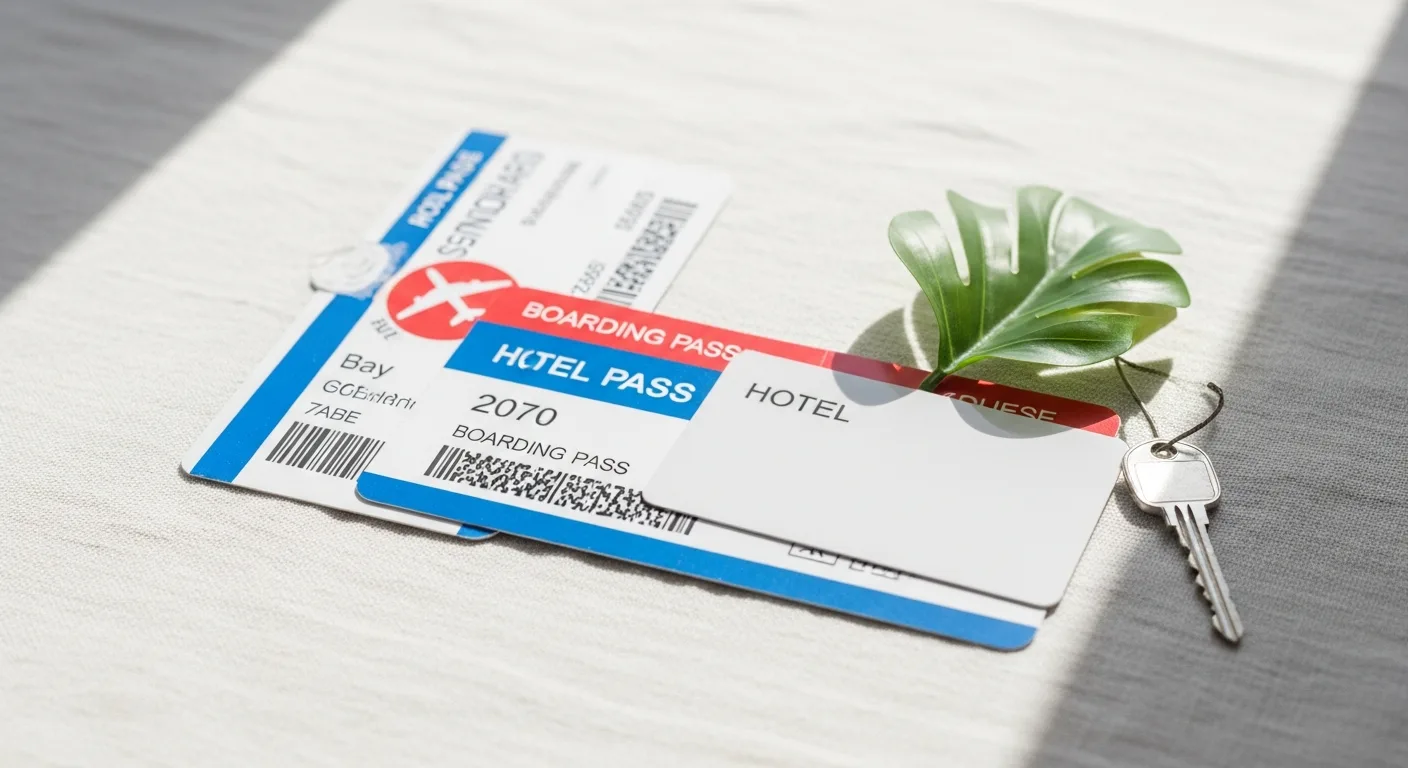
The end goal: travel rewards from wedding spend that offset real honeymoon costs.
Learn More About Top OffersFrequently Asked Questions
Is it worth opening a travel card just for wedding expenses?
When should I open the travel card before my wedding?
What happens if I carry a balance on a travel rewards card?
Should I get a general travel card or an airline-specific card for wedding spend?
What if my vendor charges a fee for credit card payments?
Can I use a travel card for wedding expenses if I also need time to pay off some charges?
How do I actually redeem the rewards for a honeymoon?
The Bottom Line
Opening a travel card for wedding expenses can be a strong strategy — but only when the money to pay the balance is already there. The spend volume is ideal for triggering a welcome bonus, and the rewards can help offset a chunk of honeymoon costs that many couples cover from savings anyway. The card has to be a payment tool, not a financing tool.
Get the timing right — open the card about one to two months before your first major vendor payment — and route every charge you can through it. Pay the balance in full each month. Then redeem intentionally for the trip you actually want. Done that way, your wedding can help pre-fund your honeymoon. Check out top travel card offers available now before the big deposits start going out.