
Yes, a business card can still make sense if you won't charge much, as long as it has no annual fee and you pay the balance in full. The main reason is that the biggest benefits at low spend aren't rewards. They're cleaner records, easier tax time, and a start on a credit history for your business. Rewards on $150 or $300 a month will be small, so the decision comes down to whether a separate card would make your life easier, not whether your spending is big enough.
Key Takeaways
- A no annual fee business card costs nothing to hold, so low spend can't make it a money-loser on fees.
- At low spend, the real value is separate books, an easy paper trail at tax time, and business credit history, not cash back.
- Skip cards with annual fees at tiny spend levels, since a fee can easily be larger than a year of rewards.
What does the math look like when you spend very little?
Let's use real numbers. Say you charge $300 a month to your business: software, a few supplies, some shipping. At 2% back, that's $6 a month, or $72 a year. At 1.5% it's $54. Not exciting. Compare current no annual fee business card offers.
Now add an annual fee. Even a modest one can eat most or all of that $72. That's the first rule of low spend: an annual fee is hard to justify.
Take the fee away and the picture changes. With no annual fee, every dollar of cash back is a small bonus, and the card costs you nothing to keep. You're no longer asking whether you'll earn enough. You're asking whether there are other reasons to hold it.
Multiply your monthly business spend by 12, then by your cash back rate. If a card's annual fee is bigger than that number, the card costs you money. At $300 a month and 2% back, you'd earn $72 a year.
Already know what you want? Small spend doesn't rule out a business card. Here's the simple math, what you actually gain, and the cases where you should pass.
Learn MoreWhat do you actually get from a business card at low spend?
Rewards are the flashy reason, but they aren't the lasting one. At low spend, three quieter benefits matter more.
First, bookkeeping. Every business charge lands on one statement, away from your groceries and gym membership. At tax time you're not scrolling through a mixed statement trying to flag what's deductible. That friction costs time even if it never shows up as dollars.
Second, a paper trail. Clear records make it easier to back up deductions if you're ever asked. Mixing personal and business charges on one card blurs the line between you and your business.
Third, business credit. Paying on time and keeping balances low can help build a credit profile for your business, which may matter later if you want a higher limit, a loan, or vendor terms. Starting early means a longer history when you need it.
Many small firms don't lean heavily on outside financing, so a business card can be a light, low-risk way to start. About half of U.S. nonemployer firms had no debt in the 2025 survey, and 31% did not regularly use external financing.[1] Using a card you pay in full fits that way of running things.
- Cleaner books: one statement for business charges only
- Tax-time clarity: deductible expenses are easy to spot
- Business credit history: on-time payments can help build a track record
- A clearer line between personal and business money
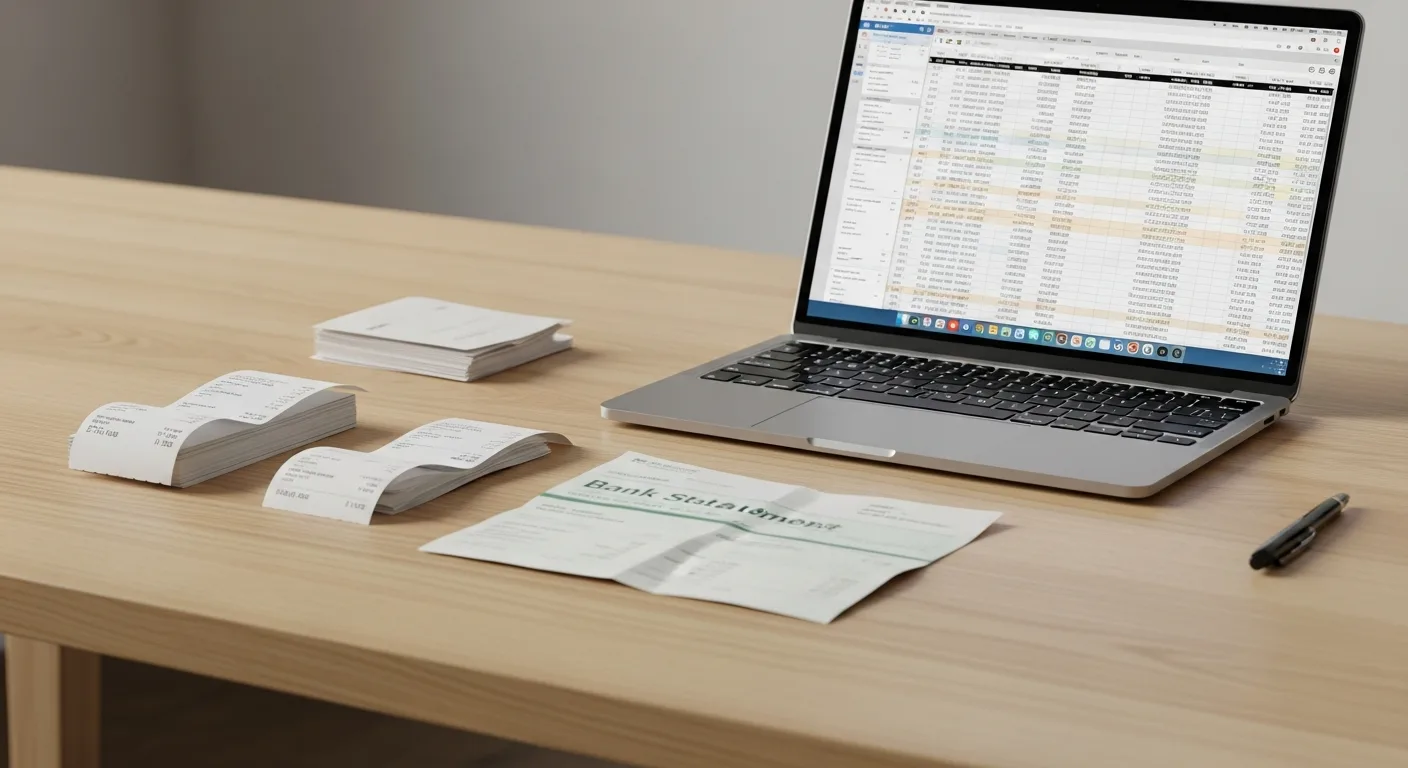
Running the numbers on a small monthly spend shows quickly whether an annual fee could ever pay off.
Does a side business or sole proprietorship qualify?
Yes. This stops a lot of people before they start, but you don't need an LLC, a registered business name, or a separate EIN for most business cards. Freelancers, gig workers, and side-hustlers can generally apply with their own name as the business name and their Social Security number as the tax ID.
Issuers look at your personal credit, since you're personally responsible as a sole proprietor. These cards are generally recommended for good to excellent credit, so it's worth knowing where your score stands before you apply.
Small businesses with modest revenue do use business cards. Among employer firms with annual revenue of $100,000 or less that regularly use or carry a balance on a credit card, 45% use a business credit card only, 17% use a personal card only, and 37% use both.[2] Using a business card with a small operation is completely normal.
Enter your legal name as the business name and your Social Security number as the tax ID. You don't need to invent a business name or file paperwork first.
Business Cards Offers
Want to see no annual fee business cards side by side?
| What you want | Best fit at low spend | Annual fee? |
|---|---|---|
| Clean books and business credit | No annual fee flat-rate cash back | No |
| Small rewards on scattered purchases | No annual fee flat-rate cash back | No |
| Bonus rewards on one steady category | No annual fee category card | No |
| Premium travel perks or a big bonus | Annual fee travel or rewards card | Yes, usually not worth it at low spend |
Which type of card fits a tiny monthly spend?
Start with no annual fee. That's the one non-negotiable at low spend.
After that, keep it simple. A flat-rate cash back card pays the same on everything, so you don't have to track categories. Category cards can work, but only if your spending clusters in one place. Picture a freelancer whose $200 a month is mostly software subscriptions. A card that bonuses software could beat flat-rate. If your charges are scattered, flat-rate usually wins.
Also look for downloadable transaction records or accounting software connections, since clean records are the main prize. If you might hire help later, free employee cards are a nice extra. And if building business credit is a goal, check whether the card reports to business credit bureaus.
Will a business card hurt your personal credit?
The application usually triggers a hard inquiry on your personal credit, which can cause a small, temporary dip. That's a one-time cost.
After that, many business cards report ongoing activity mainly to business credit bureaus, though this varies by issuer, so check the card's terms. When it works that way, moving recurring business charges off your personal card can keep your personal utilization lower. Keeping utilization low is generally recommended.
If you plan to apply for a mortgage or auto loan in the next few months, the timing is worth thinking about. It may be better to wait until after that loan closes.
When should you skip the business card?
There are real reasons to pass. If your business is a short experiment that might end in a couple of months, an extra account may not be worth it. If your charges are so rare that the card would sit in a drawer, it won't build much history.
If your personal card already earns strong rewards where you spend and you can filter business charges easily, the benefit shrinks. And if you tend to carry a balance, a business card won't fix that. Interest at a regular rate can wipe out any rewards you earn.
But if your charges are steady, even at $150 to $300 a month, and you'll pay in full, a no annual fee card is a low-risk way to organize things. A good habit is to put every recurring charge on it, like subscriptions and domain renewals, so it stays active without any effort.
- Skip it if the business may not last a few months
- Skip it if you're about to apply for a major loan
- Skip it if you tend to carry balances
- Open one if charges are steady and you'll pay in full
Compare Current Offers
Compare business cards built for light spending
A no annual fee card keeps the cost at zero while giving you cleaner books. Check out top offers available now.

One dedicated statement can replace a pile of receipts when tax time comes around.
Learn More About Top OffersFrequently Asked Questions
Is a business card worth it if I barely charge anything?
Should I get a business card with an annual fee if I spend very little?
Do I need an LLC to get a business card for a small side business?
Is there a minimum monthly spend that makes a business card worthwhile?
Will a business card affect my personal credit score?
What kind of rewards work best when spending is low?
Can I just use my personal card and track business charges by hand?
The Bottom Line
A business card is often worth having even when you won't charge much, as long as it has no annual fee and you pay the balance in full each month. The rewards will be modest, and that's fine. The real value is the separate statement, the easier tax time, and the business credit history you start building.
Keep it simple: pick a no annual fee card, ideally flat-rate, put your recurring business charges on it, and skip any card with an annual fee until your spending grows. If your business is too new or uncertain to count on, wait until it shows staying power.