
Costco accepts Visa-network cards in its US warehouses[1], so a general-purpose cash back card on that network is needed for an in-store purchase. On a $2,000 TV, a card earning flat 2% back would return about $40, while one earning 3% in a bonus category would return about $60. That gap is small in dollars, so compare the rate you can actually use on this purchase with the card's other terms.
Key Takeaways
- Costco warehouses accept Visa-network cards, so a general cash back card must use that network to work in-store[1].
- On a $2,000+ TV, the difference between a 2% and 3% cash back rate is roughly $20-$60 — small in dollars but still the deciding factor between similar cards.
- Paying the full balance before interest accrues matters more than the rewards rate, since nearly half of cardholders carry a balance at some point and interest can erase any cash back earned[3].
Why does Costco only take Visa?
Costco has a long-standing exclusive arrangement with the Visa network in the US, which means cards on other major networks won't work at checkout, online or in-store[1]. compare current cash back Visa offers
This trips up new members constantly. You join, wander the warehouse, find the TV, get to the register, and discover your favorite cash back card is on the wrong network. It's worth checking the back of your current cards for the Visa logo before you even leave the house.
If none of your existing cards use the accepted network, that's a practical reason to consider another one — you're filling an actual gap in your wallet, not just chasing a bonus.
Already know what you want? New Costco membership, big-ticket TV, and a network-specific checkout rule — here's how to pick a cash back card without overthinking it.
Learn MoreHow much does the cash back rate actually matter on a $2,000 TV?
Run the numbers on your specific purchase instead of guessing. A flat-rate card earning 2% cash back would return about $40 on a $2,000 TV. A card earning 3% back in a relevant category would return about $60. That's a real difference, but it's not life-changing — don't let a bonus category chase talk you into a card that's worse for everything else you buy.
Where the math gets more interesting is if the TV pushes your monthly spending into a new tier or triggers a spending threshold for a sign-up bonus. If you're already planning other purchases this month — furniture, appliances, whatever else came with a new place — timing this TV purchase to help you hit a bonus threshold could be worth more than the ongoing cash back rate itself.
Cash back rewards are common enough that you have real choices here: more than a third of general-purpose credit card accounts now offer some form of cash back[2], so you're not settling for a niche product by avoiding a store card.
Multiply the purchase price by each card's relevant cash back rate. On $2,000, the spread between 1%, 2%, and 3% back is $20, $40, and $60. Compare that gap against any annual fee or category restriction before deciding a 'better' card is worth switching for.
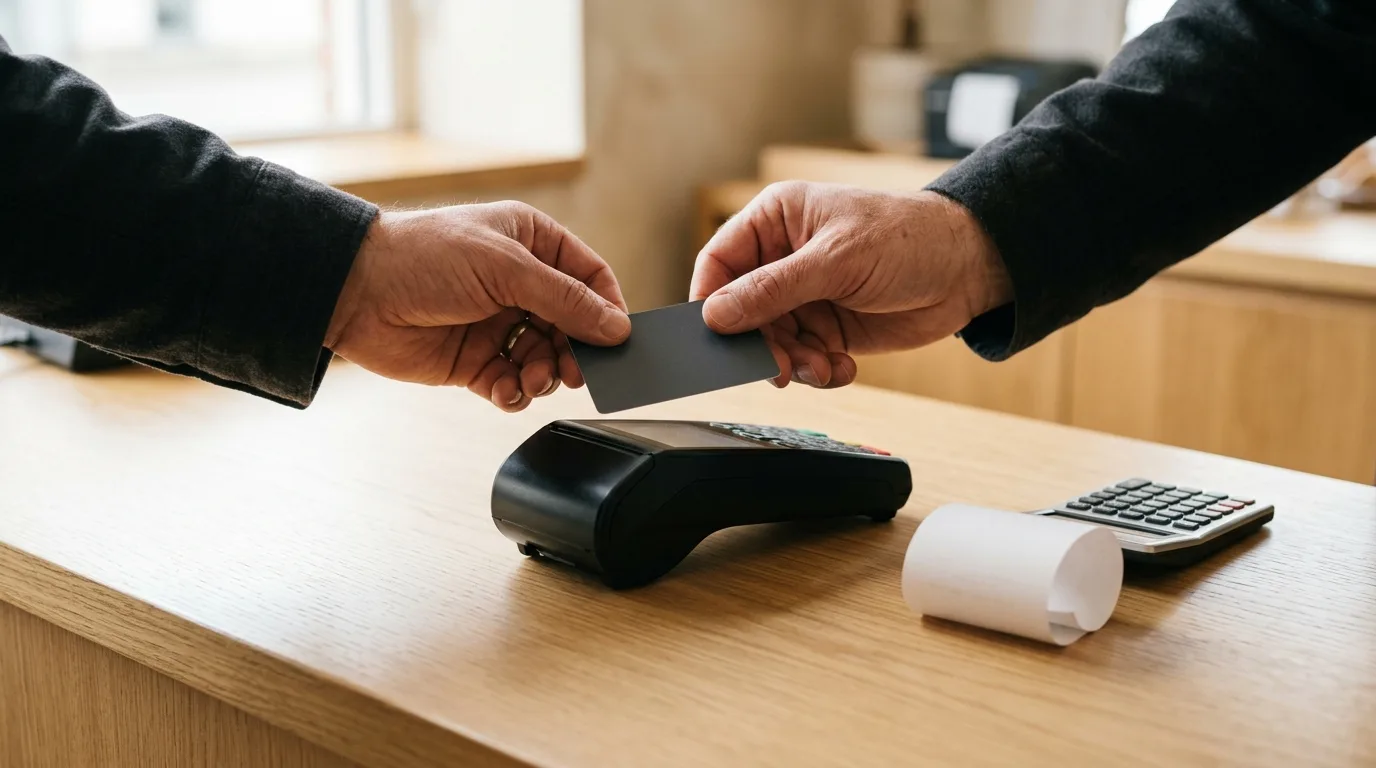
Running the cash back math on a $2,000 purchase only takes a minute and clarifies which card actually wins.
Should you skip cash back and use 0% intro APR financing instead?
It depends on whether you'll actually pay it off. A 0% intro APR card lets you spread the $2,000+ TV cost across several months without interest, which helps cash flow but usually earns little or no rewards. A cash back card earns rewards immediately but charges the standard variable APR if you carry a balance.
The decision comes down to your own track record. Nearly half of cardholders report carrying a balance at some point in a given year[3], and interest charges on a $2,000 balance could wipe out any cash back you earned. If you're confident you'll pay this off within a month or two, a cash back card is simpler and gets you the rewards. If you need more time, a 0% intro APR card could help you avoid interest — just calendar the end date so you're not caught paying the standard variable APR on whatever's left.
Don't assume you need to choose store financing just because you're standing in a warehouse. General cash back cards and 0% intro APR cards can both work at the register; the store's own financing offer is only one option among several.
Cash Back Offers
Ready to compare cash back cards that work at Costco?
What should you check before swiping for $2,000+?
A purchase this size deserves a quick gut-check beyond the rewards rate. First, confirm your new card's credit limit can actually absorb the charge without pushing your utilization — the share of your limit you're using — above roughly 30%, since that can affect your credit score even if you plan to pay it off fast.
Second, think about fraud protection. Large one-time purchases at a big retailer are exactly the kind of transaction fraud monitoring systems flag, and identity theft and card misuse reports remain common — the FTC logged more than 400,000 reports in 2024 tied to credit card misuse or fraudulent applications[4]. A card with strong purchase alerts and an easy dispute process is worth more peace of mind than an extra half-percent in rewards.
Third, check if the card includes purchase protection or extended warranty coverage as a built-in benefit. For an item like a TV that can develop issues after the manufacturer's warranty ends, that kind of built-in protection can matter more than the sign-up bonus.
- Confirm the card uses the Visa network before applying
- Check your available credit limit against the $2,000+ purchase to avoid a utilization spike
- Look for purchase protection or extended warranty benefits on electronics
- Set a plan to pay off the balance quickly, or confirm the 0% intro APR window if you're financing
Is it worth opening a new card just for this one purchase?
If you don't already own a cash back card on the network Costco accepts, yes — you're not opening a card purely for a one-time bonus, you're filling a real gap that Costco's network rule exposed. That's a more durable reason to apply than most.
If you already own a cash back card on the accepted network, run the math from the earlier section before applying for a second one. A new card means a hard credit inquiry and a new account age, both of which have a small, temporary effect on your credit profile. Unless the new card's rate is meaningfully better for this purchase and your future spending, using the card you already have is often the simpler move.
Compare Current Offers
Find a cash back card that works for your Costco run
See current cash back card offers recommended for various credit profiles before you head back to the warehouse.

Deciding between cash back and 0% intro APR financing comes down to how quickly you can pay off the balance.
Learn More About Top OffersFrequently Asked Questions
Do I need Costco's own credit card to buy a TV there?
Which cash back card is best for a $2,000+ electronics purchase?
Should I use 0% intro APR financing instead of a cash back card for the TV?
Can I use a card on another major network at Costco?
Will opening a new card hurt my chances before this purchase?
Is it better to pay off the TV in one payment or over a few months?
Do I need to worry about fraud on a purchase this large?
The Bottom Line
For a new Costco member buying a $2,000+ TV in-store, the practical path is a general-purpose cash back card on the Visa network — Costco's checkout rule makes that a requirement, not a preference[1]. From there, compare the cash back rates of the cards you're considering, factor in whether you'll pay the balance off quickly or need a 0% intro APR window instead, and make sure the card's limit and protections fit a purchase this size.
Skip the temptation to overthink this into a rewards-optimization project. A solid flat-rate or category cash back card, paid off promptly, gets you the TV, some cash back, and no interest — which beats chasing an extra half-percent on a card that doesn't fit your spending otherwise.