Yes, a business card could make sense for reimbursed trucking costs if you can pay the statement in full and your employer reimburses you promptly. For example, $300 a month in parking, scale fees, and truck supplies on a personal card with a $1,500 limit would use 20% of that limit for work costs alone—before rent, groceries, or anything else hits the card. A dedicated business card could keep those expenses off your personal card, though business-card reporting practices vary. The CFPB says experts advise using no more than 30% of available credit, and that you don't need to carry a balance to build a good credit score.[3] With a low-600s score, consider options recommended for fair credit and weigh the risks before applying.
Key Takeaways
- Moving reimbursed work costs off a personal card can lower your utilization ratio, which matters more when your score is already in the fair range.[2]
- A low-600s score sits near the line between 'medium' and 'high' credit risk for business financing; secured options may be worth considering, and cards recommended for fair credit may have more modest features.[1]
- If a side hustle is even a possibility, a business card used responsibly could help establish a business credit file, depending on whether the issuer reports the account to business credit bureaus.
Why even bother if the company reimburses you?
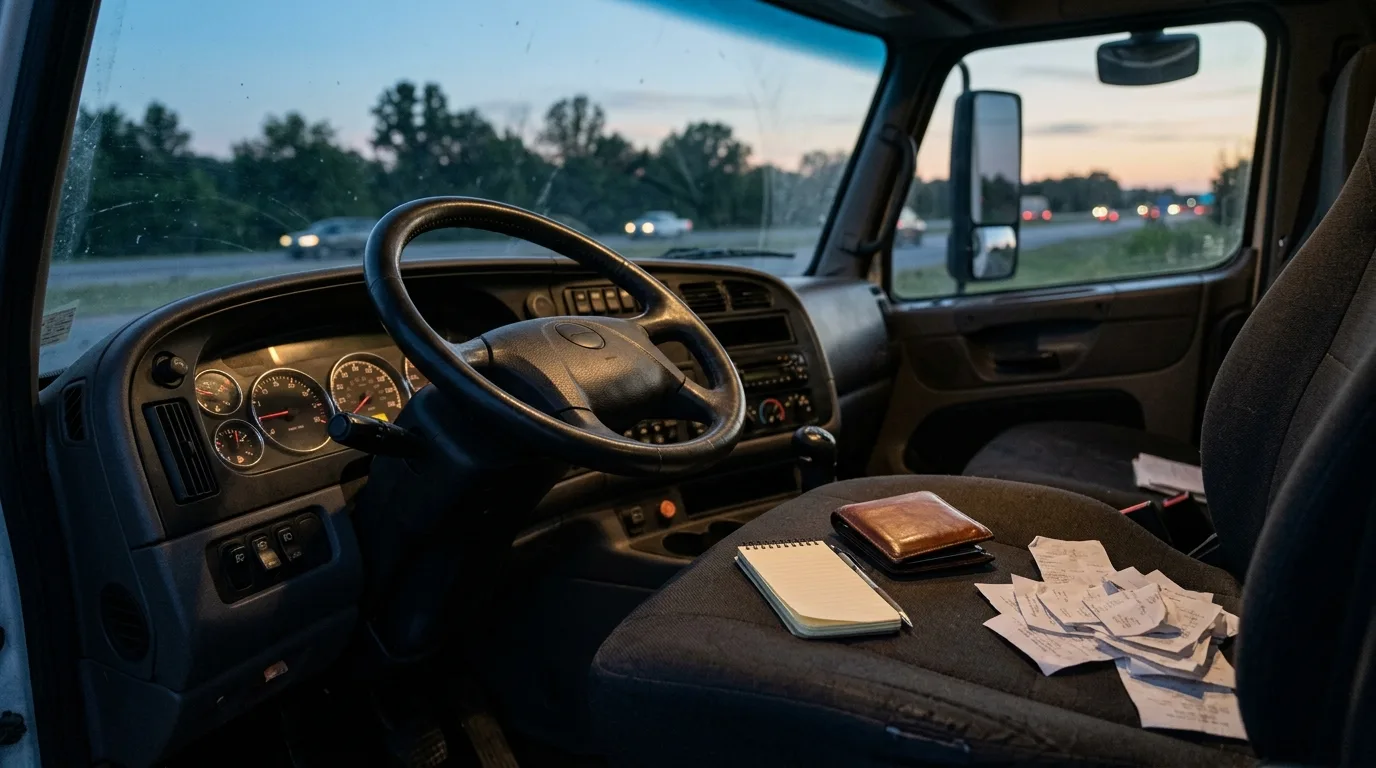
Say you're spending around $300 a month across parking, scale fees, and truck supplies like straps, gloves, or a new logbook. You front the cost, submit receipts, and get reimbursed a week or two later. In the meantime, that $300 sits on your personal card as a balance. compare current business card offers
If your personal limit is $1,500, that's 20% utilization from work costs alone, and utilization is one factor in your credit score. Fair-credit consumers had an average utilization rate of 61.4% in Experian's Q3 2024 data, so adding reimbursable work spending on top of personal spending can make it harder to stay within the CFPB-cited expert guidance to use no more than 30% of available credit.[2][3]
A dedicated business card could keep that $300 off your personal accounts, depending on how the issuer reports it. If it does, your personal utilization may be lower; the business card carries a balance you know is temporary, and you pay it off when reimbursement lands. The spending doesn't disappear—it moves to a separate account, though it may still affect your personal credit if reported.
Already know what you want? A quick look at whether a business card makes sense for reimbursed trucking costs when your credit sits in the low 600s.
Learn MoreWhat business cards are recommended for a low-600s score?
Be realistic about which options are recommended for this range. Federal Reserve survey data draws the line at 620: below that is treated as high credit risk for business financing, and 620–719 is medium risk.[1] A low-600s score sits near that boundary, so compare options recommended for fair credit rather than assuming cards aimed at established businesses will be a fit.
Options recommended for that range may include a secured business card, where you put down a deposit that becomes your limit, or a basic no-annual-fee business card marketed toward newer or fair-credit applicants. Neither may come with rich rewards, but that's not really the point here—the point is separating the spending and, if reported, building a business credit history.
As a sole proprietor, you can apply using your own Social Security number and describe your trucking work as the business, even without an LLC. Issuers will look at your personal credit and reported income, since a company driver's earnings still count even though the card is labeled 'business.'
Many business cards still report to your personal credit file, and almost all require a personal guarantee. That means missed payments can hurt your personal score even though the card says 'business' on it.

Keeping reimbursable expenses on one dedicated card makes matching receipts to statements much easier.
What if there's no per diem — does that change anything?
Without a per diem, every dollar you spend on the road needs a receipt and a reimbursement claim, which makes a dedicated card more useful, not less. A single account for parking, scales, and supplies gives you one clean statement to match against your reimbursement log instead of digging through a personal statement full of unrelated purchases.
This also protects you if a reimbursement gets delayed or disputed. If your employer questions a scale fee or a supply purchase, having it isolated on one card with a clear pattern of similar charges makes it easier to show it was a legitimate work expense, not a guess pulled from a mixed personal statement.
Just don't treat the card as a stand-in for a per diem you don't have. If reimbursements slow down and the balance sits unpaid for a couple of billing cycles, you're paying interest on money the company owes you — which erases any utilization benefit you were trying to capture.
Business Cards Offers
See which business cards fit fair credit
| Approach | Effect on personal utilization | Best fit |
|---|---|---|
| Keep using personal card | Reimbursed spend adds to your utilization until repaid | Simplest, but riskiest for a fair-credit score |
| Secured business card | May keep work spend off personal utilization, depending on issuer reporting | A secured option to consider for someone with a low-600s score; a deposit may set the limit |
| Basic unsecured business card | May keep work spend off personal utilization; issuer may report to personal file | Low-600s to fair credit, steady income to show |
Is this worth it if a side hustle is only a maybe?
If you're considering owner-operator work, local hauling on the side, or any kind of independent trucking down the road, a business card could have a second benefit: if the issuer reports it to business credit bureaus, it may help establish a business credit file before you need one.
Business credit takes time to build, the same way personal credit does. A card used lightly for parking and supplies and paid in full each cycle may help build a record of on-time payments if the issuer reports it. That history could be useful if you later need a business loan, a fuel card, or equipment financing for a truck of your own.
You may be able to build that history in the background while you're a company driver, since the spending is happening anyway. You're choosing where it lives, but check whether the issuer reports to business credit bureaus.
- Use the card only for reimbursable work costs, not general spending, to keep the paper trail clean.
- Pay the statement in full each cycle rather than letting reimbursement timing create a carried balance.
- Check whether the issuer reports to personal and business credit bureaus, since that affects whether the account may appear on either credit file.
- Keep the credit limit request modest and honest about your income as a company driver.
What should you watch out for with a reimbursed-expense card?
The biggest risk isn't the card itself — it's timing. If your employer's reimbursement cycle is slower than your card's billing cycle, you could carry a balance into interest charges while waiting to get paid back. Ask about the reimbursement turnaround before you lean on the card heavily.
The second risk is account security. Any card used repeatedly at truck stops, scale houses, and parking kiosks calls for careful monitoring. The FTC recorded 406,110 identity-theft reports involving new credit-card accounts in 2024.[4] Set up transaction alerts and check the account weekly, not just at statement time.
Finally, be cautious about opening multiple new cards at once. Each application may involve a hard inquiry, and opening new accounts can affect your credit; consider the potential impact before applying.
Compare Current Offers
Ready to separate work costs from personal credit?
Compare business card options built for fair credit before you decide how to handle reimbursed trucking expenses.

Monitoring a reimbursement-linked card regularly helps catch fraud early and keep balances from lingering.
Learn More About Top OffersFrequently Asked Questions
Should a company driver get a business card for reimbursed expenses?
What types of business cards are recommended for someone with a low-600s credit score?
Does using a business card for reimbursed expenses actually help my credit?
Do I need an LLC to get a business card as a company driver?
What happens if my employer's reimbursement is late?
Will a business card hurt my personal credit if something goes wrong?
Is it worth opening a business card if I'm only maybe starting a side hustle?
The Bottom Line
For a company driver with low-600s credit, a business card for reimbursed parking, scale fees, and supplies may be more about managing personal utilization and potentially building a business credit file than about rewards. It may make sense if you can pay the statement in full each cycle and your employer reimburses reasonably fast, but issuer reporting practices matter.
Where it stops making sense is if reimbursements are slow or unpredictable, or if you'd be tempted to let a balance ride. In that case, the interest cost can outweigh the utilization benefit you were chasing in the first place.